Limited time only! Get a free 1GB eSIM* with your campervan booking. T&Cs apply.
Call us
Language & Currency

RV Rental in Calgary

Compare top rental fleets in Calgary. Pick up downtown or at YYC Airport.

Pick-up Location
CACalgary
Pick-up 15 Jun 2026
MoTuWeThFrSaSu
Drop-off 25 Jun 2026
MoTuWeThFrSaSu
Google
4.7 ★★★★★
2,340 Reviews
4.8 ★★★★★
1,200 Reviews
Tripadvisor
5.0 ★★★★★
534 Reviews
Planning

Best Time to Rent an RV in Calgary

Choose the ideal season for your Calgary road trip.

Apr–Jun

Spring

Temp: 5°C–22°C • Weather: Cherry blossoms, warming days

Calgary & Rockies travellers. Alberta Parks campgrounds start opening in May.

€€ from €89/day
Jul–Aug

Summer

Temp: 20°C–30°C • Weather: Peak cottage season, long days

Peak season with warm days across Alberta. Explore Banff’s cottage country, camp at Kananaskis Provincial Park, enjoy the Banff Lake Shore, and explore Banff National Park. Book RVs and campgrounds well in advance.

€€€ from €119/day
Sep–Oct

Fall

Temp: 5°C–18°C • Weather: World-famous foliage, crisp air

Alberta’s fall foliage is legendary. Kananaskis Park and the Icefields turn into a sea of red, orange, and gold. This is arguably the best time for an RV trip from Calgary. Fewer crowds, comfortable temperatures, and stunning scenery at every turn.

€€ from €89/day
Nov–Mar

Winter

Temp: -15°C–0°C • Weather: Snow season, limited RV availability

Calgary & Rockies travel, Blue Mountain offers world-class skiing and some winter-ready campgrounds remain open.

€ from €79/day
Get Started

Pick-up Locations in Calgary

Choose your preferred rental location across Canada.

Canada

Montreal

Cultural capital • Old Montreal cobblestones, vibrant food scene & gateway to Québec

Canada

Vancouver

Pacific coast • Stanley Park, mountains & the Sea-to-Sky Highway to Whistler

Canada

Toronto

Canada's largest city • CN Tower, Niagara Falls day trips & lakeside campgrounds

Canada

Calgary You are here

Gateway to the Rockies • Banff, Lake Louise & the Icefields Parkway start here

Canada

Edmonton

Northern Alberta • Jasper National Park, Elk Island & vast boreal wilderness

Canada

Halifax

Maritime charm • Cabot Trail, Peggy's Cove & Atlantic Canada's rugged coastline

Explore

Best Routes from Calgary

Discover the best road trips starting from Calgary, from Banff and Lake Louise to Jasper and the Canadian Rockies.

Banff and Lake Louise turquoise lakes in the Canadian Rockies
3 days 180 km Easy
01

Calgary to Banff & Lake Louise

May – October

The most iconic short road trip in Canada. Drive west from Calgary through the foothills into Banff National Park, turquoise lakes, towering peaks, and wildlife around every bend. Lake Louise alone is worth the entire trip.

Calgary Canmore Banff Lake Louise
VehicleAny RV/Campervan
Must-seeLake Louise & Moraine Lake
BudgetC$50–80/night
Icefields Parkway glaciers and mountains Alberta
5 days 415 km Moderate
02

Icefields Parkway (Calgary to Jasper)

June – September

Often called the most scenic highway in the world, the Icefields Parkway (Highway 93N) connects Banff to Jasper through a corridor of glaciers, waterfalls, and alpine meadows. Stop at the Columbia Icefield to walk on ancient ice.

Calgary Lake Louise Columbia Icefield Jasper
VehicleCampervan/Motorhome
Must-seeColumbia Icefield
BudgetC$40–70/night
Drumheller Badlands hoodoos Alberta desert landscape
3 days 280 km Easy
03

Calgary to Drumheller Badlands

April – October

Head east from Calgary into a landscape that looks like another planet. The Alberta Badlands are home to the Royal Tyrrell Museum, one of the world's greatest dinosaur collections, and the eerie hoodoo formations of Drumheller.

Calgary Drumheller Dinosaur Provincial Park
VehicleAny RV/Campervan
Must-seeRoyal Tyrrell Museum
BudgetC$30–50/night
Questions?

Calgary RV Rental FAQ

Everything you need to know about renting an RV in Calgary, Alberta.

Where can I pick up an RV in Calgary? +
You can pick up an RV in downtown Calgary or at Calgary International Airport (YYC). The airport is ideal for fly-and-drive trips, while downtown locations put you close to the Bow River pathways and Calgary Tower.
What is the best time to rent an RV in Calgary? +
June through September offers the best weather for exploring the Rockies. July and August are peak season with warm days perfect for Banff and Jasper. September brings fall colours and fewer crowds. Winter RV camping is possible but requires a winterized vehicle.
Can I drive my rental RV to Banff? +
Absolutely! Banff is just 130 km (1.5 hours) west of Calgary via the Trans-Canada Highway. It's the #1 reason people rent RVs in Calgary. Most rental agreements include unlimited mileage within Alberta and Western Canada.
What are the driving rules in Alberta? +
Alberta drives on the right. Speed limits: 110 km/h on major highways, 80 km/h on secondary roads, 50 km/h in urban areas. Alberta has no provincial sales tax, making fuel and supplies cheaper than neighbouring BC. Winter tires are recommended October–April.
Are there RV-friendly campgrounds near Calgary? +
Plenty! Bow Valley Provincial Park (45 min west) and Kananaskis Country offer excellent RV campgrounds close to Calgary. Inside Banff National Park, Tunnel Mountain and Two Jack Lake have full RV hookups. Book Parks Canada sites early, they fill fast in summer.
How much does an RV rental in Calgary cost? +
Expect to pay C$120–250/day in peak season (July–August) for a standard campervan, and C$80–150/day in shoulder season (May–June, September). Larger motorhomes range from C$200–400/day. Book 3+ months ahead for the best rates.

Ready to Explore the Canadian Rockies?

Start your adventure today. Compare RVs, find the best deal, and drive the Canadian Rockies' most scenic roads.

Search RVs Now

Stay Updated

Get Calgary & Rockies travel tips, seasonal deals, and route guides straight to your inbox.

Your Road Trip Guide

Your Calgary Road Trip

Calgary is your gateway to the Canadian Rockies. From world-class national parks to the stunning Icefields Parkway and charming mountain towns, here's everything you need to plan the perfect road trip from Calgary.

Highway Speed Limits

Alberta follows standard North American driving conventions with drivers on the right side of the road. Speed limits are posted in kilometres per hour: 110 km/h is the maximum on major divided highways (like the Trans-Canada), 100 km/h on secondary highways, 80 km/h on rural roads, and 50 km/h in urban areas. In some cases, lower limits apply near schools (30 km/h) and residential zones (40 km/h).

Winter Driving & Tire Requirements

From October through April, winter tires or all-season tires with the Three-Peak Mountain Snowflake symbol are strongly recommended, and required in some provinces neighbouring Alberta. The Trans-Canada Highway sees heavy winter traffic from Calgary through Banff, so extra caution is advised. Keep an emergency kit in your RV: jumper cables, sand/kitty litter for traction, a shovel, blankets, and flashlight.

Wildlife Crossing Safety

The Icefields Parkway and Banff National Park highways have frequent wildlife crossings, especially in early morning and dusk. Elk, deer, bears, and bison can suddenly step onto the road. Reduce speed in these areas (watch for signs) and never approach wildlife. If you hit an animal, report it to Parks Canada immediately.

No Provincial Sales Tax

Alberta is unique in Canada for having no provincial sales tax (GST at 5% only applies). This makes fuel, groceries, and supplies noticeably cheaper than neighbouring British Columbia or Saskatchewan, a major cost saver for long RV trips.

License & Insurance Requirements

Your home country driver's license is valid in Alberta if it's in English; an International Driving Permit is recommended as backup. Your rental company's insurance will cover you throughout Western Canada, but confirm coverage limits and deductibles before leaving Calgary. The RCMP (Royal Canadian Mounted Police) conduct roadside checks for speed and sobriety.

Parks Canada Campgrounds

The crown jewels of Alberta camping are the national parks: Banff, Lake Louise (technically within Banff NP), and Jasper. These are managed by Parks Canada and reservations are essential in summer, they often sell out by May for July/August dates. Book via reserve.pc.gc.ca. Popular sites like Tunnel Mountain (Banff), Two Jack Lake, and Wapiti (Jasper) have full RV hookups (electrical, water, sewage). Backcountry camping permits are also available for those seeking wilderness.

Alberta Provincial Parks

Beyond the national parks, Alberta Parks manages provincial parks and recreation areas throughout the province. Bow Valley Provincial Park (near Canmore, 45 min west of Calgary) is excellent for RVs and far less crowded than Banff. Kananaskis Country offers rustic camping with stunning mountain views. Many provincial sites have no hookups, so bring water and plan waste management carefully.

Reservation System & Booking Tips

Book Parks Canada sites online starting in early January for the summer season, slots for popular July dates are claimed within hours. For provincial parks, reservations open 3–6 months ahead. Always have a backup plan: private RV parks (like Kalyna Country Campground near Calgary) accept walk-ins and offer full services. Summer weekends are busiest; weekdays are much easier to find sites.

Fire Bans & Bear Safety

During dry periods (typically July–September), Alberta Parks may impose total fire bans. Listen to park announcements and respect all fire restrictions. For bear safety: never leave food, toiletries, or scented items outside your RV or tent. Use bear-proof food storage lockers provided at campgrounds. If you encounter a bear, back away slowly, don't run, and speak in calm, firm tones. Carry bear spray when hiking.

Full-Hookup vs. Backcountry Comfort

Banff and Jasper offer both: full-service campgrounds with electricity, water, and sewage for modern RVs, and backcountry sites for adventurers with composting toilets and minimal facilities. Most fly-and-drive visitors choose full-hookup sites for comfort. If you do backcountry camping, pack a portable toilet, water storage, and waste disposal supplies.

Lake Louise & Moraine Lake

These are bucket-list destinations reachable on a day trip from Calgary (2 hours to Lake Louise). Lake Louise is famous for its pristine turquoise water, mountain backdrop, and hiking trails ranging from easy 2 km loops to strenuous 9 km routes. Moraine Lake (15 km beyond Lake Louise) is equally stunning and less crowded in the morning. Both offer paddling opportunities in summer.

Banff Gondola & Town Exploration

The Banff Gondola whisks you 700 m up Sulphur Mountain in 8 minutes, rewarding you with 360-degree views of the Rocky Mountain peaks. At the summit, hike the ridge trail for even more dramatic vistas. The town of Banff itself is charming with galleries, restaurants (reserve ahead!), and shops. Don't miss the Cave and Basin Historic Site, where hot springs were first discovered in 1883.

Kananaskis Hiking & Outdoor Adventure

Just 50 km southwest of Calgary, Kananaskis Country is a massive wilderness area with world-class hiking, fishing, and wildlife viewing. Popular day hikes include Rawson Lake (moderate, 3 hrs), Incan Lake (easy, 2 hrs), and Tent Ridge (strenuous, 6 hrs with 360-degree summit views). Many trails are less crowded than Banff and perfect for catching elk, deer, and bighorn sheep.

Royal Tyrrell Museum & Drumheller Hoodoos

An hour east of Calgary, Drumheller is famous for its otherworldly badlands landscape and the world-class Royal Tyrrell Museum of Palaeontology. The museum houses Canada's best dinosaur collection and offers fascinating exhibits on Alberta's prehistoric past. Don't miss the Hoodoos, towering rock formations carved by water erosion that look like a alien landscape at sunset.

Calgary Attractions & Culture

Before hitting the mountains, spend a day in Calgary itself. The Calgary Stampede (July) is one of North America's largest rodeos and country music festivals. Year-round attractions include the Glenbow Museum (art, culture, world cultures), Telus Spark (science centre), and the Calgary Tower for city views. The Bow River pathway is perfect for evening walks and spotting wildlife (deer, coyotes occasionally) within the city.

Altitude & Weather Preparation

Banff and Jasper sit at 1,300–1,600 m elevation; the Icefields Parkway climbs to 2,035 m at Sunwapta Pass. If coming from sea level, expect mild altitude effects: shortness of breath, fatigue, headaches. Drink extra water, take it easy on Day 1, and eat light meals. Weather can change rapidly in the mountains, a sunny morning can turn to snow by afternoon, even in summer. Pack layers: t-shirt, fleece, waterproof jacket, and warm hat year-round.

Wildlife Safety & Respect

The Canadian Rockies are home to grizzly bears, black bears, wolves, cougars, elk, and bison. Never approach or feed any wildlife. Keep at least 100 m from bears and wolves, 25 m from elk and bison. If hiking in bear country (especially early season), make noise to avoid surprising bears, talk or use a bear bell. Carry bear spray in Banff and Jasper and know how to use it (practice at ranger stations).

Fuel, Cell Coverage & Communication

Gas stations are sparse once you leave Calgary. Fill up in Calgary, Canmore, or Banff town before heading to remote areas. The Icefields Parkway has a single fuel stop at Saskatchewan River Crossing (halfway point), prices are 20% higher than Calgary. Cell coverage is patchy between Banff and Jasper; download offline maps on Google Maps or Gaia GPS. Emergency SOS works even without coverage in national parks.

Currency, Tipping & Groceries

Canada uses CAD (Canadian dollars). Most places accept cards, but some remote spots are cash-only. Tipping culture in Canada is similar to the US: 15–20% in restaurants, $1–2 per drink at bars. Alcohol is pricey (no private sales tax helps, but liquor is a federal monopoly). Groceries in Canmore and Banff are expensive; shop in Calgary before you leave. Parks Canada visitor centres sell snacks and maps.

Day Trip Packing & Time Management

Mountain weather demands constant readiness. For any hike, bring: water (at least 2 L per person), snacks, sun protection (sunscreen, hat, sunglasses), rain jacket, and a headlamp. Start hikes early, sudden afternoon thunderstorms are common June–September. The drive from Calgary to Lake Louise takes 2 hours with the scenic route through Canmore; plan accordingly. Some hikes are easier at dawn (fewer crowds, cooler temps).


Calgary Stampede (July)

The Calgary Stampede is one of North America's largest rodeos and country music festivals, held every July for 10 days. It features live bull riding, barrel racing, chuckwagon racing, parades, and a giant midway. Hotels and RV parks fill months ahead, so book early. Even if you're not a rodeo fan, the city energy and live music make it a quintessential Canadian summer experience.

Banff Mountain Film Festival (November)

Held each November, this prestigious film festival showcases documentaries about mountaineering, adventure sports, and the outdoors from around the world. It's a weeklong celebration of climbing, skiing, and exploration. The festival town of Banff becomes packed, but if you're there in the shoulder season, you'll get amazing deals on accommodation and quieter trails.

Canmore Highland Games (September)

Just 20 km east of Banff, the Canmore Highland Games celebrate Scottish heritage with heavy athletics competitions, pipe bands, ceilidh dances, and food. It's a fun, quirky event in early September when summer crowds have thinned out. Combine it with late-summer hiking for a perfect long weekend.

Calgary Folk Festival (July) & Jazz Festival (June)

Calgary has a vibrant music scene. The Calgary Folk Festival (July) brings world-class acoustic acts and folk performers to Prince's Island Park. The TD Calgary International Jazz Festival (June) features free outdoor performances across downtown. Both are excellent reasons to spend extra days in Calgary before heading to the Rockies.

Dark Sky Festival (Jasper, October) & Canada Day (July 1)

Jasper's Dark Sky Festival celebrates one of North America's largest dark-sky preserves with stargazing events and astrophotography workshops, perfect for RV campers. Canada Day (July 1) is celebrated everywhere with Canada Day fireworks, parades, and community barbecues in every town, big and small. The parks put on special events, making it an ideal time to visit if you don't mind crowds.

Highway Speed Limits

Alberta follows standard North American driving conventions with drivers on the right side of the road. Speed limits are posted in kilometres per hour: 110 km/h is the maximum on major divided highways (like the Trans-Canada), 100 km/h on secondary highways, 80 km/h on rural roads, and 50 km/h in urban areas. In some cases, lower limits apply near schools (30 km/h) and residential zones (40 km/h).

Winter Driving & Tire Requirements

From October through April, winter tires or all-season tires with the Three-Peak Mountain Snowflake symbol are strongly recommended, and required in some provinces neighbouring Alberta. The Trans-Canada Highway sees heavy winter traffic from Calgary through Banff, so extra caution is advised. Keep an emergency kit in your RV: jumper cables, sand/kitty litter for traction, a shovel, blankets, and flashlight.

Wildlife Crossing Safety

The Icefields Parkway and Banff National Park highways have frequent wildlife crossings, especially in early morning and dusk. Elk, deer, bears, and bison can suddenly step onto the road. Reduce speed in these areas (watch for signs) and never approach wildlife. If you hit an animal, report it to Parks Canada immediately.

No Provincial Sales Tax

Alberta is unique in Canada for having no provincial sales tax (GST at 5% only applies). This makes fuel, groceries, and supplies noticeably cheaper than neighbouring British Columbia or Saskatchewan, a major cost saver for long RV trips.

License & Insurance Requirements

Your home country driver's license is valid in Alberta if it's in English; an International Driving Permit is recommended as backup. Your rental company's insurance will cover you throughout Western Canada, but confirm coverage limits and deductibles before leaving Calgary. The RCMP (Royal Canadian Mounted Police) conduct roadside checks for speed and sobriety.

Parks Canada Campgrounds

The crown jewels of Alberta camping are the national parks: Banff, Lake Louise (technically within Banff NP), and Jasper. These are managed by Parks Canada and reservations are essential in summer, they often sell out by May for July/August dates. Book via reserve.pc.gc.ca. Popular sites like Tunnel Mountain (Banff), Two Jack Lake, and Wapiti (Jasper) have full RV hookups (electrical, water, sewage). Backcountry camping permits are also available for those seeking wilderness.

Alberta Provincial Parks

Beyond the national parks, Alberta Parks manages provincial parks and recreation areas throughout the province. Bow Valley Provincial Park (near Canmore, 45 min west of Calgary) is excellent for RVs and far less crowded than Banff. Kananaskis Country offers rustic camping with stunning mountain views. Many provincial sites have no hookups, so bring water and plan waste management carefully.

Reservation System & Booking Tips

Book Parks Canada sites online starting in early January for the summer season, slots for popular July dates are claimed within hours. For provincial parks, reservations open 3–6 months ahead. Always have a backup plan: private RV parks (like Kalyna Country Campground near Calgary) accept walk-ins and offer full services. Summer weekends are busiest; weekdays are much easier to find sites.

Fire Bans & Bear Safety

During dry periods (typically July–September), Alberta Parks may impose total fire bans. Listen to park announcements and respect all fire restrictions. For bear safety: never leave food, toiletries, or scented items outside your RV or tent. Use bear-proof food storage lockers provided at campgrounds. If you encounter a bear, back away slowly, don't run, and speak in calm, firm tones. Carry bear spray when hiking.

Full-Hookup vs. Backcountry Comfort

Banff and Jasper offer both: full-service campgrounds with electricity, water, and sewage for modern RVs, and backcountry sites for adventurers with composting toilets and minimal facilities. Most fly-and-drive visitors choose full-hookup sites for comfort. If you do backcountry camping, pack a portable toilet, water storage, and waste disposal supplies.

Lake Louise & Moraine Lake

These are bucket-list destinations reachable on a day trip from Calgary (2 hours to Lake Louise). Lake Louise is famous for its pristine turquoise water, mountain backdrop, and hiking trails ranging from easy 2 km loops to strenuous 9 km routes. Moraine Lake (15 km beyond Lake Louise) is equally stunning and less crowded in the morning. Both offer paddling opportunities in summer.

Banff Gondola & Town Exploration

The Banff Gondola whisks you 700 m up Sulphur Mountain in 8 minutes, rewarding you with 360-degree views of the Rocky Mountain peaks. At the summit, hike the ridge trail for even more dramatic vistas. The town of Banff itself is charming with galleries, restaurants (reserve ahead!), and shops. Don't miss the Cave and Basin Historic Site, where hot springs were first discovered in 1883.

Kananaskis Hiking & Outdoor Adventure

Just 50 km southwest of Calgary, Kananaskis Country is a massive wilderness area with world-class hiking, fishing, and wildlife viewing. Popular day hikes include Rawson Lake (moderate, 3 hrs), Incan Lake (easy, 2 hrs), and Tent Ridge (strenuous, 6 hrs with 360-degree summit views). Many trails are less crowded than Banff and perfect for catching elk, deer, and bighorn sheep.

Royal Tyrrell Museum & Drumheller Hoodoos

An hour east of Calgary, Drumheller is famous for its otherworldly badlands landscape and the world-class Royal Tyrrell Museum of Palaeontology. The museum houses Canada's best dinosaur collection and offers fascinating exhibits on Alberta's prehistoric past. Don't miss the Hoodoos, towering rock formations carved by water erosion that look like a alien landscape at sunset.

Calgary Attractions & Culture

Before hitting the mountains, spend a day in Calgary itself. The Calgary Stampede (July) is one of North America's largest rodeos and country music festivals. Year-round attractions include the Glenbow Museum (art, culture, world cultures), Telus Spark (science centre), and the Calgary Tower for city views. The Bow River pathway is perfect for evening walks and spotting wildlife (deer, coyotes occasionally) within the city.

Altitude & Weather Preparation

Banff and Jasper sit at 1,300–1,600 m elevation; the Icefields Parkway climbs to 2,035 m at Sunwapta Pass. If coming from sea level, expect mild altitude effects: shortness of breath, fatigue, headaches. Drink extra water, take it easy on Day 1, and eat light meals. Weather can change rapidly in the mountains, a sunny morning can turn to snow by afternoon, even in summer. Pack layers: t-shirt, fleece, waterproof jacket, and warm hat year-round.

Wildlife Safety & Respect

The Canadian Rockies are home to grizzly bears, black bears, wolves, cougars, elk, and bison. Never approach or feed any wildlife. Keep at least 100 m from bears and wolves, 25 m from elk and bison. If hiking in bear country (especially early season), make noise to avoid surprising bears, talk or use a bear bell. Carry bear spray in Banff and Jasper and know how to use it (practice at ranger stations).

Fuel, Cell Coverage & Communication

Gas stations are sparse once you leave Calgary. Fill up in Calgary, Canmore, or Banff town before heading to remote areas. The Icefields Parkway has a single fuel stop at Saskatchewan River Crossing (halfway point), prices are 20% higher than Calgary. Cell coverage is patchy between Banff and Jasper; download offline maps on Google Maps or Gaia GPS. Emergency SOS works even without coverage in national parks.

Currency, Tipping & Groceries

Canada uses CAD (Canadian dollars). Most places accept cards, but some remote spots are cash-only. Tipping culture in Canada is similar to the US: 15–20% in restaurants, $1–2 per drink at bars. Alcohol is pricey (no private sales tax helps, but liquor is a federal monopoly). Groceries in Canmore and Banff are expensive; shop in Calgary before you leave. Parks Canada visitor centres sell snacks and maps.

Day Trip Packing & Time Management

Mountain weather demands constant readiness. For any hike, bring: water (at least 2 L per person), snacks, sun protection (sunscreen, hat, sunglasses), rain jacket, and a headlamp. Start hikes early, sudden afternoon thunderstorms are common June–September. The drive from Calgary to Lake Louise takes 2 hours with the scenic route through Canmore; plan accordingly. Some hikes are easier at dawn (fewer crowds, cooler temps).

Calgary Stampede (July)

The Calgary Stampede is one of North America's largest rodeos and country music festivals, held every July for 10 days. It features live bull riding, barrel racing, chuckwagon racing, parades, and a giant midway. Hotels and RV parks fill months ahead, so book early. Even if you're not a rodeo fan, the city energy and live music make it a quintessential Canadian summer experience.

Banff Mountain Film Festival (November)

Held each November, this prestigious film festival showcases documentaries about mountaineering, adventure sports, and the outdoors from around the world. It's a weeklong celebration of climbing, skiing, and exploration. The festival town of Banff becomes packed, but if you're there in the shoulder season, you'll get amazing deals on accommodation and quieter trails.

Canmore Highland Games (September)

Just 20 km east of Banff, the Canmore Highland Games celebrate Scottish heritage with heavy athletics competitions, pipe bands, ceilidh dances, and food. It's a fun, quirky event in early September when summer crowds have thinned out. Combine it with late-summer hiking for a perfect long weekend.

Calgary Folk Festival (July) & Jazz Festival (June)

Calgary has a vibrant music scene. The Calgary Folk Festival (July) brings world-class acoustic acts and folk performers to Prince's Island Park. The TD Calgary International Jazz Festival (June) features free outdoor performances across downtown. Both are excellent reasons to spend extra days in Calgary before heading to the Rockies.

Dark Sky Festival (Jasper, October) & Canada Day (July 1)

Jasper's Dark Sky Festival celebrates one of North America's largest dark-sky preserves with stargazing events and astrophotography workshops, perfect for RV campers. Canada Day (July 1) is celebrated everywhere with Canada Day fireworks, parades, and community barbecues in every town, big and small. The parks put on special events, making it an ideal time to visit if you don't mind crowds.

Recommended campgrounds from Calgary

  • Kananaskis Provincial Park: Alberta’s flagship park, 3 hours northeast. Multiple campgrounds with RV-friendly sites. Peter Lougheed Provincial Park is the jewel of Kananaskis Country.
  • Moraine Lake (Banff): 1.5 hours north of Calgary. Beautiful rocky shoreline, excellent swimming, and spacious RV sites. One of Alberta’s most scenic parks.
  • Sandbanks Provincial Park: 2.5 hours east in Prince Edward County. The world’s largest freshwater baymouth barrier dune system, with stunning beaches.
  • Sibbald Point Provincial Park: Just 1 hour north on Lake Simcoe. Sandy beach, great for families, and easy day-trip access to Banff.

Highway Speed Limits

Alberta follows standard North American driving conventions with drivers on the right side of the road. Speed limits are posted in kilometres per hour: 110 km/h is the maximum on major divided highways (like the Trans-Canada), 100 km/h on secondary highways, 80 km/h on rural roads, and 50 km/h in urban areas. In some cases, lower limits apply near schools (30 km/h) and residential zones (40 km/h).

Winter Driving & Tire Requirements

From October through April, winter tires or all-season tires with the Three-Peak Mountain Snowflake symbol are strongly recommended, and required in some provinces neighbouring Alberta. The Trans-Canada Highway sees heavy winter traffic from Calgary through Banff, so extra caution is advised. Keep an emergency kit in your RV: jumper cables, sand/kitty litter for traction, a shovel, blankets, and flashlight.

Wildlife Crossing Safety

The Icefields Parkway and Banff National Park highways have frequent wildlife crossings, especially in early morning and dusk. Elk, deer, bears, and bison can suddenly step onto the road. Reduce speed in these areas (watch for signs) and never approach wildlife. If you hit an animal, report it to Parks Canada immediately.

No Provincial Sales Tax

Alberta is unique in Canada for having no provincial sales tax (GST at 5% only applies). This makes fuel, groceries, and supplies noticeably cheaper than neighbouring British Columbia or Saskatchewan, a major cost saver for long RV trips.

License & Insurance Requirements

Your home country driver's license is valid in Alberta if it's in English; an International Driving Permit is recommended as backup. Your rental company's insurance will cover you throughout Western Canada, but confirm coverage limits and deductibles before leaving Calgary. The RCMP (Royal Canadian Mounted Police) conduct roadside checks for speed and sobriety.

Parks Canada Campgrounds

The crown jewels of Alberta camping are the national parks: Banff, Lake Louise (technically within Banff NP), and Jasper. These are managed by Parks Canada and reservations are essential in summer, they often sell out by May for July/August dates. Book via reserve.pc.gc.ca. Popular sites like Tunnel Mountain (Banff), Two Jack Lake, and Wapiti (Jasper) have full RV hookups (electrical, water, sewage). Backcountry camping permits are also available for those seeking wilderness.

Alberta Provincial Parks

Beyond the national parks, Alberta Parks manages provincial parks and recreation areas throughout the province. Bow Valley Provincial Park (near Canmore, 45 min west of Calgary) is excellent for RVs and far less crowded than Banff. Kananaskis Country offers rustic camping with stunning mountain views. Many provincial sites have no hookups, so bring water and plan waste management carefully.

Reservation System & Booking Tips

Book Parks Canada sites online starting in early January for the summer season, slots for popular July dates are claimed within hours. For provincial parks, reservations open 3–6 months ahead. Always have a backup plan: private RV parks (like Kalyna Country Campground near Calgary) accept walk-ins and offer full services. Summer weekends are busiest; weekdays are much easier to find sites.

Fire Bans & Bear Safety

During dry periods (typically July–September), Alberta Parks may impose total fire bans. Listen to park announcements and respect all fire restrictions. For bear safety: never leave food, toiletries, or scented items outside your RV or tent. Use bear-proof food storage lockers provided at campgrounds. If you encounter a bear, back away slowly, don't run, and speak in calm, firm tones. Carry bear spray when hiking.

Full-Hookup vs. Backcountry Comfort

Banff and Jasper offer both: full-service campgrounds with electricity, water, and sewage for modern RVs, and backcountry sites for adventurers with composting toilets and minimal facilities. Most fly-and-drive visitors choose full-hookup sites for comfort. If you do backcountry camping, pack a portable toilet, water storage, and waste disposal supplies.

Lake Louise & Moraine Lake

These are bucket-list destinations reachable on a day trip from Calgary (2 hours to Lake Louise). Lake Louise is famous for its pristine turquoise water, mountain backdrop, and hiking trails ranging from easy 2 km loops to strenuous 9 km routes. Moraine Lake (15 km beyond Lake Louise) is equally stunning and less crowded in the morning. Both offer paddling opportunities in summer.

Banff Gondola & Town Exploration

The Banff Gondola whisks you 700 m up Sulphur Mountain in 8 minutes, rewarding you with 360-degree views of the Rocky Mountain peaks. At the summit, hike the ridge trail for even more dramatic vistas. The town of Banff itself is charming with galleries, restaurants (reserve ahead!), and shops. Don't miss the Cave and Basin Historic Site, where hot springs were first discovered in 1883.

Kananaskis Hiking & Outdoor Adventure

Just 50 km southwest of Calgary, Kananaskis Country is a massive wilderness area with world-class hiking, fishing, and wildlife viewing. Popular day hikes include Rawson Lake (moderate, 3 hrs), Incan Lake (easy, 2 hrs), and Tent Ridge (strenuous, 6 hrs with 360-degree summit views). Many trails are less crowded than Banff and perfect for catching elk, deer, and bighorn sheep.

Royal Tyrrell Museum & Drumheller Hoodoos

An hour east of Calgary, Drumheller is famous for its otherworldly badlands landscape and the world-class Royal Tyrrell Museum of Palaeontology. The museum houses Canada's best dinosaur collection and offers fascinating exhibits on Alberta's prehistoric past. Don't miss the Hoodoos, towering rock formations carved by water erosion that look like a alien landscape at sunset.

Calgary Attractions & Culture

Before hitting the mountains, spend a day in Calgary itself. The Calgary Stampede (July) is one of North America's largest rodeos and country music festivals. Year-round attractions include the Glenbow Museum (art, culture, world cultures), Telus Spark (science centre), and the Calgary Tower for city views. The Bow River pathway is perfect for evening walks and spotting wildlife (deer, coyotes occasionally) within the city.

Altitude & Weather Preparation

Banff and Jasper sit at 1,300–1,600 m elevation; the Icefields Parkway climbs to 2,035 m at Sunwapta Pass. If coming from sea level, expect mild altitude effects: shortness of breath, fatigue, headaches. Drink extra water, take it easy on Day 1, and eat light meals. Weather can change rapidly in the mountains, a sunny morning can turn to snow by afternoon, even in summer. Pack layers: t-shirt, fleece, waterproof jacket, and warm hat year-round.

Wildlife Safety & Respect

The Canadian Rockies are home to grizzly bears, black bears, wolves, cougars, elk, and bison. Never approach or feed any wildlife. Keep at least 100 m from bears and wolves, 25 m from elk and bison. If hiking in bear country (especially early season), make noise to avoid surprising bears, talk or use a bear bell. Carry bear spray in Banff and Jasper and know how to use it (practice at ranger stations).

Fuel, Cell Coverage & Communication

Gas stations are sparse once you leave Calgary. Fill up in Calgary, Canmore, or Banff town before heading to remote areas. The Icefields Parkway has a single fuel stop at Saskatchewan River Crossing (halfway point), prices are 20% higher than Calgary. Cell coverage is patchy between Banff and Jasper; download offline maps on Google Maps or Gaia GPS. Emergency SOS works even without coverage in national parks.

Currency, Tipping & Groceries

Canada uses CAD (Canadian dollars). Most places accept cards, but some remote spots are cash-only. Tipping culture in Canada is similar to the US: 15–20% in restaurants, $1–2 per drink at bars. Alcohol is pricey (no private sales tax helps, but liquor is a federal monopoly). Groceries in Canmore and Banff are expensive; shop in Calgary before you leave. Parks Canada visitor centres sell snacks and maps.

Day Trip Packing & Time Management

Mountain weather demands constant readiness. For any hike, bring: water (at least 2 L per person), snacks, sun protection (sunscreen, hat, sunglasses), rain jacket, and a headlamp. Start hikes early, sudden afternoon thunderstorms are common June–September. The drive from Calgary to Lake Louise takes 2 hours with the scenic route through Canmore; plan accordingly. Some hikes are easier at dawn (fewer crowds, cooler temps).
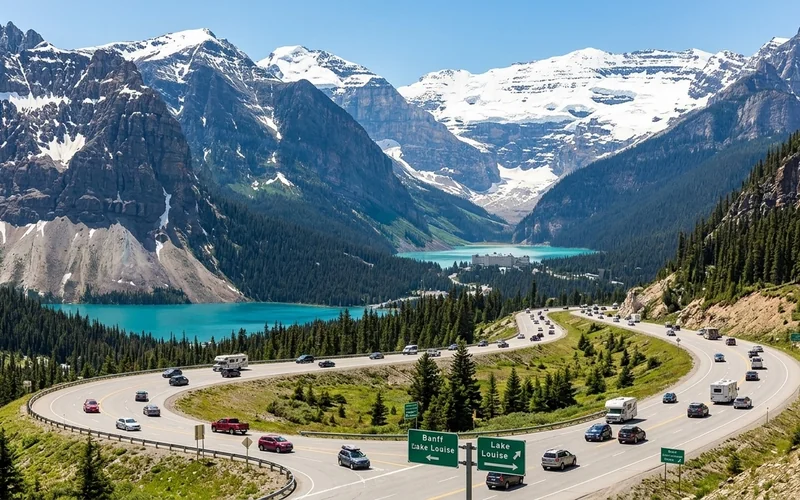
Calgary Stampede (July)

The Calgary Stampede is one of North America's largest rodeos and country music festivals, held every July for 10 days. It features live bull riding, barrel racing, chuckwagon racing, parades, and a giant midway. Hotels and RV parks fill months ahead, so book early. Even if you're not a rodeo fan, the city energy and live music make it a quintessential Canadian summer experience.

Banff Mountain Film Festival (November)

Held each November, this prestigious film festival showcases documentaries about mountaineering, adventure sports, and the outdoors from around the world. It's a weeklong celebration of climbing, skiing, and exploration. The festival town of Banff becomes packed, but if you're there in the shoulder season, you'll get amazing deals on accommodation and quieter trails.

Canmore Highland Games (September)

Just 20 km east of Banff, the Canmore Highland Games celebrate Scottish heritage with heavy athletics competitions, pipe bands, ceilidh dances, and food. It's a fun, quirky event in early September when summer crowds have thinned out. Combine it with late-summer hiking for a perfect long weekend.

Calgary Folk Festival (July) & Jazz Festival (June)

Calgary has a vibrant music scene. The Calgary Folk Festival (July) brings world-class acoustic acts and folk performers to Prince's Island Park. The TD Calgary International Jazz Festival (June) features free outdoor performances across downtown. Both are excellent reasons to spend extra days in Calgary before heading to the Rockies.

Dark Sky Festival (Jasper, October) & Canada Day (July 1)

Jasper's Dark Sky Festival celebrates one of North America's largest dark-sky preserves with stargazing events and astrophotography workshops, perfect for RV campers. Canada Day (July 1) is celebrated everywhere with Canada Day fireworks, parades, and community barbecues in every town, big and small. The parks put on special events, making it an ideal time to visit if you don't mind crowds.

Highway Speed Limits

Alberta follows standard North American driving conventions with drivers on the right side of the road. Speed limits are posted in kilometres per hour: 110 km/h is the maximum on major divided highways (like the Trans-Canada), 100 km/h on secondary highways, 80 km/h on rural roads, and 50 km/h in urban areas. In some cases, lower limits apply near schools (30 km/h) and residential zones (40 km/h).

Winter Driving & Tire Requirements

From October through April, winter tires or all-season tires with the Three-Peak Mountain Snowflake symbol are strongly recommended, and required in some provinces neighbouring Alberta. The Trans-Canada Highway sees heavy winter traffic from Calgary through Banff, so extra caution is advised. Keep an emergency kit in your RV: jumper cables, sand/kitty litter for traction, a shovel, blankets, and flashlight.

Wildlife Crossing Safety

The Icefields Parkway and Banff National Park highways have frequent wildlife crossings, especially in early morning and dusk. Elk, deer, bears, and bison can suddenly step onto the road. Reduce speed in these areas (watch for signs) and never approach wildlife. If you hit an animal, report it to Parks Canada immediately.

No Provincial Sales Tax

Alberta is unique in Canada for having no provincial sales tax (GST at 5% only applies). This makes fuel, groceries, and supplies noticeably cheaper than neighbouring British Columbia or Saskatchewan, a major cost saver for long RV trips.

License & Insurance Requirements

Your home country driver's license is valid in Alberta if it's in English; an International Driving Permit is recommended as backup. Your rental company's insurance will cover you throughout Western Canada, but confirm coverage limits and deductibles before leaving Calgary. The RCMP (Royal Canadian Mounted Police) conduct roadside checks for speed and sobriety.

Parks Canada Campgrounds

The crown jewels of Alberta camping are the national parks: Banff, Lake Louise (technically within Banff NP), and Jasper. These are managed by Parks Canada and reservations are essential in summer, they often sell out by May for July/August dates. Book via reserve.pc.gc.ca. Popular sites like Tunnel Mountain (Banff), Two Jack Lake, and Wapiti (Jasper) have full RV hookups (electrical, water, sewage). Backcountry camping permits are also available for those seeking wilderness.

Alberta Provincial Parks

Beyond the national parks, Alberta Parks manages provincial parks and recreation areas throughout the province. Bow Valley Provincial Park (near Canmore, 45 min west of Calgary) is excellent for RVs and far less crowded than Banff. Kananaskis Country offers rustic camping with stunning mountain views. Many provincial sites have no hookups, so bring water and plan waste management carefully.

Reservation System & Booking Tips

Book Parks Canada sites online starting in early January for the summer season, slots for popular July dates are claimed within hours. For provincial parks, reservations open 3–6 months ahead. Always have a backup plan: private RV parks (like Kalyna Country Campground near Calgary) accept walk-ins and offer full services. Summer weekends are busiest; weekdays are much easier to find sites.

Fire Bans & Bear Safety

During dry periods (typically July–September), Alberta Parks may impose total fire bans. Listen to park announcements and respect all fire restrictions. For bear safety: never leave food, toiletries, or scented items outside your RV or tent. Use bear-proof food storage lockers provided at campgrounds. If you encounter a bear, back away slowly, don't run, and speak in calm, firm tones. Carry bear spray when hiking.

Full-Hookup vs. Backcountry Comfort

Banff and Jasper offer both: full-service campgrounds with electricity, water, and sewage for modern RVs, and backcountry sites for adventurers with composting toilets and minimal facilities. Most fly-and-drive visitors choose full-hookup sites for comfort. If you do backcountry camping, pack a portable toilet, water storage, and waste disposal supplies.

Lake Louise & Moraine Lake

These are bucket-list destinations reachable on a day trip from Calgary (2 hours to Lake Louise). Lake Louise is famous for its pristine turquoise water, mountain backdrop, and hiking trails ranging from easy 2 km loops to strenuous 9 km routes. Moraine Lake (15 km beyond Lake Louise) is equally stunning and less crowded in the morning. Both offer paddling opportunities in summer.

Banff Gondola & Town Exploration

The Banff Gondola whisks you 700 m up Sulphur Mountain in 8 minutes, rewarding you with 360-degree views of the Rocky Mountain peaks. At the summit, hike the ridge trail for even more dramatic vistas. The town of Banff itself is charming with galleries, restaurants (reserve ahead!), and shops. Don't miss the Cave and Basin Historic Site, where hot springs were first discovered in 1883.

Kananaskis Hiking & Outdoor Adventure

Just 50 km southwest of Calgary, Kananaskis Country is a massive wilderness area with world-class hiking, fishing, and wildlife viewing. Popular day hikes include Rawson Lake (moderate, 3 hrs), Incan Lake (easy, 2 hrs), and Tent Ridge (strenuous, 6 hrs with 360-degree summit views). Many trails are less crowded than Banff and perfect for catching elk, deer, and bighorn sheep.

Royal Tyrrell Museum & Drumheller Hoodoos

An hour east of Calgary, Drumheller is famous for its otherworldly badlands landscape and the world-class Royal Tyrrell Museum of Palaeontology. The museum houses Canada's best dinosaur collection and offers fascinating exhibits on Alberta's prehistoric past. Don't miss the Hoodoos, towering rock formations carved by water erosion that look like a alien landscape at sunset.

Calgary Attractions & Culture

Before hitting the mountains, spend a day in Calgary itself. The Calgary Stampede (July) is one of North America's largest rodeos and country music festivals. Year-round attractions include the Glenbow Museum (art, culture, world cultures), Telus Spark (science centre), and the Calgary Tower for city views. The Bow River pathway is perfect for evening walks and spotting wildlife (deer, coyotes occasionally) within the city.

Altitude & Weather Preparation

Banff and Jasper sit at 1,300–1,600 m elevation; the Icefields Parkway climbs to 2,035 m at Sunwapta Pass. If coming from sea level, expect mild altitude effects: shortness of breath, fatigue, headaches. Drink extra water, take it easy on Day 1, and eat light meals. Weather can change rapidly in the mountains, a sunny morning can turn to snow by afternoon, even in summer. Pack layers: t-shirt, fleece, waterproof jacket, and warm hat year-round.

Wildlife Safety & Respect

The Canadian Rockies are home to grizzly bears, black bears, wolves, cougars, elk, and bison. Never approach or feed any wildlife. Keep at least 100 m from bears and wolves, 25 m from elk and bison. If hiking in bear country (especially early season), make noise to avoid surprising bears, talk or use a bear bell. Carry bear spray in Banff and Jasper and know how to use it (practice at ranger stations).

Fuel, Cell Coverage & Communication

Gas stations are sparse once you leave Calgary. Fill up in Calgary, Canmore, or Banff town before heading to remote areas. The Icefields Parkway has a single fuel stop at Saskatchewan River Crossing (halfway point), prices are 20% higher than Calgary. Cell coverage is patchy between Banff and Jasper; download offline maps on Google Maps or Gaia GPS. Emergency SOS works even without coverage in national parks.

Currency, Tipping & Groceries

Canada uses CAD (Canadian dollars). Most places accept cards, but some remote spots are cash-only. Tipping culture in Canada is similar to the US: 15–20% in restaurants, $1–2 per drink at bars. Alcohol is pricey (no private sales tax helps, but liquor is a federal monopoly). Groceries in Canmore and Banff are expensive; shop in Calgary before you leave. Parks Canada visitor centres sell snacks and maps.

Day Trip Packing & Time Management

Mountain weather demands constant readiness. For any hike, bring: water (at least 2 L per person), snacks, sun protection (sunscreen, hat, sunglasses), rain jacket, and a headlamp. Start hikes early, sudden afternoon thunderstorms are common June–September. The drive from Calgary to Lake Louise takes 2 hours with the scenic route through Canmore; plan accordingly. Some hikes are easier at dawn (fewer crowds, cooler temps).

Calgary Stampede (July)

The Calgary Stampede is one of North America's largest rodeos and country music festivals, held every July for 10 days. It features live bull riding, barrel racing, chuckwagon racing, parades, and a giant midway. Hotels and RV parks fill months ahead, so book early. Even if you're not a rodeo fan, the city energy and live music make it a quintessential Canadian summer experience.

Banff Mountain Film Festival (November)

Held each November, this prestigious film festival showcases documentaries about mountaineering, adventure sports, and the outdoors from around the world. It's a weeklong celebration of climbing, skiing, and exploration. The festival town of Banff becomes packed, but if you're there in the shoulder season, you'll get amazing deals on accommodation and quieter trails.

Canmore Highland Games (September)

Just 20 km east of Banff, the Canmore Highland Games celebrate Scottish heritage with heavy athletics competitions, pipe bands, ceilidh dances, and food. It's a fun, quirky event in early September when summer crowds have thinned out. Combine it with late-summer hiking for a perfect long weekend.

Calgary Folk Festival (July) & Jazz Festival (June)

Calgary has a vibrant music scene. The Calgary Folk Festival (July) brings world-class acoustic acts and folk performers to Prince's Island Park. The TD Calgary International Jazz Festival (June) features free outdoor performances across downtown. Both are excellent reasons to spend extra days in Calgary before heading to the Rockies.

Dark Sky Festival (Jasper, October) & Canada Day (July 1)

Jasper's Dark Sky Festival celebrates one of North America's largest dark-sky preserves with stargazing events and astrophotography workshops, perfect for RV campers. Canada Day (July 1) is celebrated everywhere with Canada Day fireworks, parades, and community barbecues in every town, big and small. The parks put on special events, making it an ideal time to visit if you don't mind crowds.

Highway Speed Limits

Alberta follows standard North American driving conventions with drivers on the right side of the road. Speed limits are posted in kilometres per hour: 110 km/h is the maximum on major divided highways (like the Trans-Canada), 100 km/h on secondary highways, 80 km/h on rural roads, and 50 km/h in urban areas. In some cases, lower limits apply near schools (30 km/h) and residential zones (40 km/h).

Winter Driving & Tire Requirements

From October through April, winter tires or all-season tires with the Three-Peak Mountain Snowflake symbol are strongly recommended, and required in some provinces neighbouring Alberta. The Trans-Canada Highway sees heavy winter traffic from Calgary through Banff, so extra caution is advised. Keep an emergency kit in your RV: jumper cables, sand/kitty litter for traction, a shovel, blankets, and flashlight.

Wildlife Crossing Safety

The Icefields Parkway and Banff National Park highways have frequent wildlife crossings, especially in early morning and dusk. Elk, deer, bears, and bison can suddenly step onto the road. Reduce speed in these areas (watch for signs) and never approach wildlife. If you hit an animal, report it to Parks Canada immediately.

No Provincial Sales Tax

Alberta is unique in Canada for having no provincial sales tax (GST at 5% only applies). This makes fuel, groceries, and supplies noticeably cheaper than neighbouring British Columbia or Saskatchewan, a major cost saver for long RV trips.

License & Insurance Requirements

Your home country driver's license is valid in Alberta if it's in English; an International Driving Permit is recommended as backup. Your rental company's insurance will cover you throughout Western Canada, but confirm coverage limits and deductibles before leaving Calgary. The RCMP (Royal Canadian Mounted Police) conduct roadside checks for speed and sobriety.

Parks Canada Campgrounds

The crown jewels of Alberta camping are the national parks: Banff, Lake Louise (technically within Banff NP), and Jasper. These are managed by Parks Canada and reservations are essential in summer, they often sell out by May for July/August dates. Book via reserve.pc.gc.ca. Popular sites like Tunnel Mountain (Banff), Two Jack Lake, and Wapiti (Jasper) have full RV hookups (electrical, water, sewage). Backcountry camping permits are also available for those seeking wilderness.

Alberta Provincial Parks

Beyond the national parks, Alberta Parks manages provincial parks and recreation areas throughout the province. Bow Valley Provincial Park (near Canmore, 45 min west of Calgary) is excellent for RVs and far less crowded than Banff. Kananaskis Country offers rustic camping with stunning mountain views. Many provincial sites have no hookups, so bring water and plan waste management carefully.

Reservation System & Booking Tips

Book Parks Canada sites online starting in early January for the summer season, slots for popular July dates are claimed within hours. For provincial parks, reservations open 3–6 months ahead. Always have a backup plan: private RV parks (like Kalyna Country Campground near Calgary) accept walk-ins and offer full services. Summer weekends are busiest; weekdays are much easier to find sites.

Fire Bans & Bear Safety

During dry periods (typically July–September), Alberta Parks may impose total fire bans. Listen to park announcements and respect all fire restrictions. For bear safety: never leave food, toiletries, or scented items outside your RV or tent. Use bear-proof food storage lockers provided at campgrounds. If you encounter a bear, back away slowly, don't run, and speak in calm, firm tones. Carry bear spray when hiking.

Full-Hookup vs. Backcountry Comfort

Banff and Jasper offer both: full-service campgrounds with electricity, water, and sewage for modern RVs, and backcountry sites for adventurers with composting toilets and minimal facilities. Most fly-and-drive visitors choose full-hookup sites for comfort. If you do backcountry camping, pack a portable toilet, water storage, and waste disposal supplies.

Lake Louise & Moraine Lake

These are bucket-list destinations reachable on a day trip from Calgary (2 hours to Lake Louise). Lake Louise is famous for its pristine turquoise water, mountain backdrop, and hiking trails ranging from easy 2 km loops to strenuous 9 km routes. Moraine Lake (15 km beyond Lake Louise) is equally stunning and less crowded in the morning. Both offer paddling opportunities in summer.

Banff Gondola & Town Exploration

The Banff Gondola whisks you 700 m up Sulphur Mountain in 8 minutes, rewarding you with 360-degree views of the Rocky Mountain peaks. At the summit, hike the ridge trail for even more dramatic vistas. The town of Banff itself is charming with galleries, restaurants (reserve ahead!), and shops. Don't miss the Cave and Basin Historic Site, where hot springs were first discovered in 1883.

Kananaskis Hiking & Outdoor Adventure

Just 50 km southwest of Calgary, Kananaskis Country is a massive wilderness area with world-class hiking, fishing, and wildlife viewing. Popular day hikes include Rawson Lake (moderate, 3 hrs), Incan Lake (easy, 2 hrs), and Tent Ridge (strenuous, 6 hrs with 360-degree summit views). Many trails are less crowded than Banff and perfect for catching elk, deer, and bighorn sheep.

Royal Tyrrell Museum & Drumheller Hoodoos

An hour east of Calgary, Drumheller is famous for its otherworldly badlands landscape and the world-class Royal Tyrrell Museum of Palaeontology. The museum houses Canada's best dinosaur collection and offers fascinating exhibits on Alberta's prehistoric past. Don't miss the Hoodoos, towering rock formations carved by water erosion that look like a alien landscape at sunset.

Calgary Attractions & Culture

Before hitting the mountains, spend a day in Calgary itself. The Calgary Stampede (July) is one of North America's largest rodeos and country music festivals. Year-round attractions include the Glenbow Museum (art, culture, world cultures), Telus Spark (science centre), and the Calgary Tower for city views. The Bow River pathway is perfect for evening walks and spotting wildlife (deer, coyotes occasionally) within the city.

Altitude & Weather Preparation

Banff and Jasper sit at 1,300–1,600 m elevation; the Icefields Parkway climbs to 2,035 m at Sunwapta Pass. If coming from sea level, expect mild altitude effects: shortness of breath, fatigue, headaches. Drink extra water, take it easy on Day 1, and eat light meals. Weather can change rapidly in the mountains, a sunny morning can turn to snow by afternoon, even in summer. Pack layers: t-shirt, fleece, waterproof jacket, and warm hat year-round.

Wildlife Safety & Respect

The Canadian Rockies are home to grizzly bears, black bears, wolves, cougars, elk, and bison. Never approach or feed any wildlife. Keep at least 100 m from bears and wolves, 25 m from elk and bison. If hiking in bear country (especially early season), make noise to avoid surprising bears, talk or use a bear bell. Carry bear spray in Banff and Jasper and know how to use it (practice at ranger stations).

Fuel, Cell Coverage & Communication

Gas stations are sparse once you leave Calgary. Fill up in Calgary, Canmore, or Banff town before heading to remote areas. The Icefields Parkway has a single fuel stop at Saskatchewan River Crossing (halfway point), prices are 20% higher than Calgary. Cell coverage is patchy between Banff and Jasper; download offline maps on Google Maps or Gaia GPS. Emergency SOS works even without coverage in national parks.

Currency, Tipping & Groceries

Canada uses CAD (Canadian dollars). Most places accept cards, but some remote spots are cash-only. Tipping culture in Canada is similar to the US: 15–20% in restaurants, $1–2 per drink at bars. Alcohol is pricey (no private sales tax helps, but liquor is a federal monopoly). Groceries in Canmore and Banff are expensive; shop in Calgary before you leave. Parks Canada visitor centres sell snacks and maps.

Day Trip Packing & Time Management

Mountain weather demands constant readiness. For any hike, bring: water (at least 2 L per person), snacks, sun protection (sunscreen, hat, sunglasses), rain jacket, and a headlamp. Start hikes early, sudden afternoon thunderstorms are common June–September. The drive from Calgary to Lake Louise takes 2 hours with the scenic route through Canmore; plan accordingly. Some hikes are easier at dawn (fewer crowds, cooler temps).

Calgary Stampede (July)

The Calgary Stampede is one of North America's largest rodeos and country music festivals, held every July for 10 days. It features live bull riding, barrel racing, chuckwagon racing, parades, and a giant midway. Hotels and RV parks fill months ahead, so book early. Even if you're not a rodeo fan, the city energy and live music make it a quintessential Canadian summer experience.

Banff Mountain Film Festival (November)

Held each November, this prestigious film festival showcases documentaries about mountaineering, adventure sports, and the outdoors from around the world. It's a weeklong celebration of climbing, skiing, and exploration. The festival town of Banff becomes packed, but if you're there in the shoulder season, you'll get amazing deals on accommodation and quieter trails.

Canmore Highland Games (September)

Just 20 km east of Banff, the Canmore Highland Games celebrate Scottish heritage with heavy athletics competitions, pipe bands, ceilidh dances, and food. It's a fun, quirky event in early September when summer crowds have thinned out. Combine it with late-summer hiking for a perfect long weekend.

Calgary Folk Festival (July) & Jazz Festival (June)

Calgary has a vibrant music scene. The Calgary Folk Festival (July) brings world-class acoustic acts and folk performers to Prince's Island Park. The TD Calgary International Jazz Festival (June) features free outdoor performances across downtown. Both are excellent reasons to spend extra days in Calgary before heading to the Rockies.

Dark Sky Festival (Jasper, October) & Canada Day (July 1)

Jasper's Dark Sky Festival celebrates one of North America's largest dark-sky preserves with stargazing events and astrophotography workshops, perfect for RV campers. Canada Day (July 1) is celebrated everywhere with Canada Day fireworks, parades, and community barbecues in every town, big and small. The parks put on special events, making it an ideal time to visit if you don't mind crowds.

Popular Destinations for Campervan Rental

Explore the best places to rent a campervan, motorhome, or RV worldwide

North America
Europe
Rest of World
All Destinations
CampervanPlanet
Finding the best deals for you...
Comparing prices from top rental companies