Limited time only! Get a free 1GB eSIM* with your campervan booking. T&Cs apply.
Call us
Language & Currency

Campervan Rental Iceland: Compare Top Camper & Motorhome Fleets

Compare the best camper rental companies in Reykjavik & Keflavik. Best price guaranteed on Ring Road, Golden Circle & Northern Lights trips.

Pick-up 15 Jun 2026
MoTuWeThFrSaSu
Drop-off 25 Jun 2026
MoTuWeThFrSaSu
Google
4.7 ★★★★★
2,340 Reviews
4.8 ★★★★★
1,200 Reviews
Tripadvisor
5.0 ★★★★★
534 Reviews
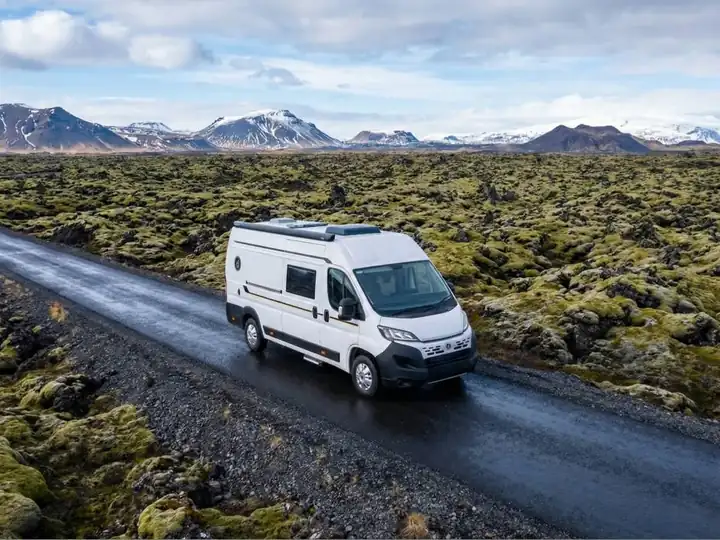
Iceland Class C RV rental with full bathroom and diesel heater

Iceland RV Rental

Class C motorhomes and 6-berth family RVs with full wet room, proper kitchen and diesel cabin heater. Built for the Ring Road.

See Iceland RVs
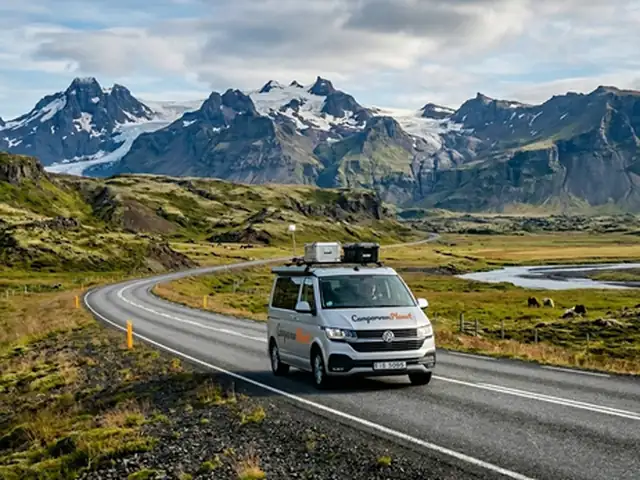
Iceland 4x4 highland camper rental for F-roads

Iceland 4x4 Rental

Highland-ready 4x4 campervans with high clearance and all-terrain tires — the only legal way into Landmannalaugar, Þórsmörk and the F-roads.

See 4x4 campervans
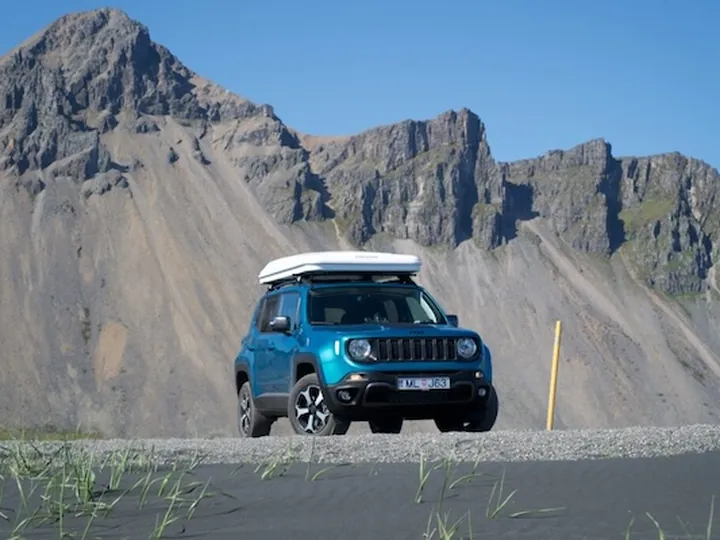
Iceland 4x4 SUV rental with pop-up rooftop tent

Iceland Rooftop Tent Rental

Compact 4x4 SUVs with a pop-up roof top tent. Sleep above the vehicle, drive light during the day, and wake up to midnight sun or aurora.

See rooftop tents
Planning

Best Time to Hire a Campervan in Iceland

Choose the ideal season for your Ring Road adventure.

Jun-Aug

Midnight Sun Peak Season

Temp: 12-20°C • Daylight: 18-22 hrs

Peak season with continuous daylight, all attractions open, accessible Highlands (F-roads), and optimal hiking. Weather stable but variable. Crowded, higher prices, busy campsites. Book in advance.

Peak Price: €150-250/day
May & Sep

Shoulder Season Best Value

Temp: 8-15°C • Daylight: 14-18 hrs

Extended daylight, mild weather, accessible Ring Road, fewer crowds. May has spring blooms; September shows fall colors and early aurora. Excellent balance of conditions and availability.

Best Value: €89-130/day
Oct & Apr

Transition Months

Temp: 0-8°C • Daylight: 8-14 hrs

October: Northern Lights begin, fewer tourists. April: Spring awakening, melting snow, muddy roads. Winter tires required Oct-Apr. Ring Road fully accessible (usually). Variable weather, moderate prices.

Moderate: €110-150/day
Nov-Mar

Northern Lights Season

Temp: -5 to 5°C • Daylight: 3-7 hrs

Peak Aurora viewing (Dec-Jan best), near-total winter darkness, snow-covered landscapes, and budget prices. Challenging weather, some roads closed, ice hazards. 4x4 strongly recommended.

Budget: €89-120/day
Get Started

Popular Pick-up Locations

Choose your preferred rental location across Iceland.

Iceland

Keflavik International Airport

Most popular • 45 min from Reykjavik • Direct from international flights

Iceland

Reykjavik City

Capital • Main hub • Best for exploring downtown and nearby sites

Iceland

Reykjavik Airport

Domestic flights • Closer to city center • Shorter transfer time

Iceland

Hafnarfjordur

Alternative • Coastal town • Greater access to south coast routes

Iceland

Akureyri

North Iceland • Perfect starting point for northern adventures

Iceland

Egilsstadir

East Iceland • Gateway to Eastfjords and waterfalls

Explore

Best Routes & Itineraries

Discover Iceland's most iconic road trips and routes, with real maps to help you plan.

Iceland Ring Road scenic highway through volcanic landscape with mountains and dramatic sky
10–14 days 1,322 km Easy / 2WD OK
01

Complete Ring Road (Route 1)

Best: Jun – Sep

The ultimate Iceland road trip. Circle the entire island along Route 1, passing through every major landscape, glaciers, waterfalls, volcanic deserts, fjords, and geothermal areas. This is the full Iceland experience in one epic journey.

Reykjavik Golden Circle Skógafoss Vík Jökulsárlón Mývatn Akureyri Dettifoss
Vehicle2WD Campervan
Campsites30+ along route
Best monthsJune – August
Fuel stopsEvery 50–80 km
Gullfoss waterfall Iceland with rainbow and mist on the Golden Circle route
4–5 days 480 km Easy / 2WD OK
02

Golden Circle & South Coast

Year-round

The perfect introduction to Iceland. This route packs the country's greatest hits into just 4–5 days: tectonic plates you can walk between, erupting geysers, thundering waterfalls, and black sand beaches. Ideal for first-timers and short trips.

Reykjavik Þingvellir Geysir Gullfoss Seljalandsfoss Skógafoss Reynisfjara
Vehicle2WD Campervan
Campsites10+ along route
Best monthsYear-round
DifficultyBeginner-friendly
Jökulsárlón glacier lagoon with floating icebergs and blue ice in Iceland
3–4 days 360 km Easy / 2WD OK
03

Southeast Coast & Glacier Lagoon

Best: Jun – Oct

A photographer's dream route. Drive along Iceland's dramatic south coast to reach the crown jewel. Jökulsárlón glacier lagoon, where massive icebergs float in crystal-clear water. Nearby Diamond Beach is an otherworldly spectacle of ice chunks glittering on black volcanic sand.

Reykjavik Vík Skaftafell Jökulsárlón Diamond Beach Höfn
Vehicle2WD Campervan
Must-seeGlacier lagoon
Best monthsJune – October
DifficultyBeginner-friendly
Dynjandi waterfall cascading down terraced cliffs in the remote Westfjords of Iceland
5–7 days 750 km Moderate / 4x4 recommended
04

Westfjords & Arctic Coast

Best: Jun – Aug

For adventurous travelers seeking Iceland's most remote and untouched landscapes. The Westfjords are where only 10% of visitors venture, dramatic fjords, towering sea cliffs home to millions of puffins, and the majestic Dynjandi waterfall. This is raw, wild Iceland at its finest.

Reykjavik Stykkishólmur Dynjandi Ísafjörður Látrabjarg Rauðasandur
Vehicle4x4 Campervan
CampsitesLimited, plan ahead
WildlifePuffins Jun–Aug
NoteSome gravel roads
Fleet

Types of Campervans Available

Choose the perfect vehicle for your Iceland adventure.

Budget Camper

2 berth • Manual • Petrol

Compact, fuel efficient, easy to park and drive around Iceland

€89/daystarting from

4x4 Highland Camper

2-4 berth • 4WD • F-road ready

Tackle highland F-roads, all-terrain capability for real adventure

€189/daystarting from

Family Motorhome

4-6 berth • Full kitchen • Bathroom

Spacious for families, fully equipped with luxury features

€219/daystarting from
Questions?

Iceland Campervan FAQ

Find answers to common questions about renting a campervan in Iceland.

Do I need a 4x4 in Iceland? +
Not always. A regular 2WD campervan works fine for paved Ring Road and most popular routes. However, a 4x4 is required for F-roads (highland roads), which are seasonal and offer incredible remote scenery. Choose based on your planned itinerary.
Can I camp anywhere in Iceland? +
No, wild camping is not permitted in Iceland. You must use official campsites or designated camping areas. There are 170+ campsites throughout the country, offering a range of amenities and prices (typically €15-20/night). Many rental companies provide camping cards for discounts.
What is the best time to visit Iceland by campervan? +
Summer (June-August) offers midnight sun, warm weather, and all attractions open. However, it's peak season with higher prices and crowds. Winter (November-February) brings northern lights but harsh weather. Spring (April-May) and autumn (September-October) offer a good balance of weather and fewer visitors.
Are F-roads open year-round? +
No, F-roads are only open seasonally, typically from late May/June through September, depending on snow conditions. They are marked as mountain roads and require high-clearance 4x4 vehicles. Check road.is daily for current conditions and closures. Always carry proper equipment and supplies.
Do I need an international driving license for Iceland? +
EU/EEA national driving licenses are accepted. US, Canadian, and Australian licenses are accepted if you also have an International Driving Permit (IDP). Always carry your passport, license, and rental agreement. Drivers must be at least 20 years old (some rentals require 25+).
Is wild camping allowed in Iceland? +
Wild camping is not permitted in Iceland. The country has strict rules protecting its unique ecosystems. Always use official campsites or designated camping areas. Violating this can result in fines. Most official campsites are reasonably priced and well-maintained, making them the practical choice anyway.
What is fuel consumption and cost in Iceland? +
Fuel costs €1.70-2.00/liter (Iceland's most expensive travel cost). Campervans consume 9-13L/100km depending on size and terrain. Ring Road (1,322 km) costs €150-200 in fuel. Plan fuel stops: 150-250km gaps on main routes, 400+ km on F-roads. Fill up completely before remote journeys.
What are the main driving rules in Iceland? +
Drive on the RIGHT. Speed limits: 90 km/h highways, 80 km/h regional roads, 50 km/h towns. Headlights ON year-round (mandatory). Seatbelts required. Winter tires NOV-MAR (law enforced). 4x4 required for F-roads Jun-Sep. Variable weather: icy conditions, loose gravel, sudden fog. Always carry water and supplies.

Ready to Explore Iceland?

Start your adventure today. Compare campervans, find the best deal, and drive the roads less traveled.

Search Campervans Now

Our best campervan rental destinations

Scenic open road with campervan driving through a beautiful landscape
Campervan Rental
Australia
See more
Campervan driving through New Zealand mountains
Campervan Hire
New Zealand
See more
Campervan on a German scenic road
Campervan Hire
Germany
See more
Spanish coastal landscape from a campervan
Campervan Hire
Spain
See more
Italian countryside seen from a campervan
Campervan Hire
Italy
See more
Greek coastline campervan adventure
Campervan Rental
Greece
See more

Stay Updated

Get Iceland travel tips, new deals, and route guides delivered to your inbox.

Your Road Trip Guide

Your Iceland Road Trip

Iceland's dramatic landscapes, volcanic terrain, and ever-changing weather make it one of the most extraordinary countries to explore by campervan or motorhome. Whether you're driving the Ring Road or venturing into the remote Westfjords, here's everything you need to know to plan the perfect trip.

Driving rules in Iceland

Iceland drives on the right-hand side of the road, the same as continental Europe and North America. If you're arriving from the UK, Ireland, Australia, or Japan, take extra care at roundabouts and intersections until you adjust. Speed limits are strictly enforced, and Icelandic police use both fixed and mobile speed cameras across the country. Fines start at around ISK 10,000 (~€70) and can go much higher for serious offences.

Here are the key traffic regulations to keep in mind when renting a campervan and driving in Iceland:

  • Speed limits: 30 km/h in residential areas, 50 km/h in towns, 80 km/h on gravel roads, and 90 km/h on paved highways. Campervans and motorhomes over 3,500 kg may have lower limits, check your rental agreement.
  • Headlights always on: Icelandic law requires that headlights (dipped beam) are switched on at all times, day and night, 365 days a year. This applies to all vehicles including campervans.
  • Seatbelts mandatory: All passengers, front and rear, must wear seatbelts at all times. Children under 150 cm tall must use an appropriate child seat or booster.
  • Zero tolerance for drink driving: The legal blood alcohol limit is 0.05%, one of the lowest in Europe. Penalties are severe, fines, licence suspension, and even imprisonment for repeat offenders.
  • Roundabouts: Give way to traffic already in the roundabout. The inner lane has priority when exiting. Use your indicators when leaving the roundabout.
  • Single-lane bridges (Einbreið brú): Very common on Route 1, especially along the South Coast and East. The vehicle that arrives first has right of way. Look for the blue sign indicating priority direction, slow down well in advance, and never force your way through.
  • No right turn on red: Unlike the USA, you cannot turn right at a red traffic light in Iceland. Wait for the green signal.
  • Mobile phone use: Strictly prohibited while driving. Use a hands-free system or pull over safely to make calls.

F-roads and Highland driving

Iceland's F-roads (fjallvegir, or mountain roads) are unpaved highland routes that cross the interior of the island, connecting remote areas like Landmannalaugar, Askja, and Sprengisandur. They are only open during summer, typically from late June to early September, depending on snow and weather conditions. The opening dates vary each year, always check road.is before planning a highland route.

F-roads are legally restricted to 4x4 vehicles only. Driving a 2WD campervan on an F-road is illegal and will void your rental insurance. If you want to explore the Highlands, make sure to rent a 4x4 campervan or motorhome. Many F-roads also involve river crossings (called "fords") with no bridges, these can be dangerous depending on water levels and require experience. Never attempt a river crossing without first assessing the depth and current on foot, and never cross alone.

Pro tip: If you're planning to drive F-roads, rent a 4x4 campervan with high clearance and consider adding gravel/sand protection insurance. Download the 112 Iceland app, it lets you send your GPS location to rescue services in an emergency.

Road conditions and weather

Iceland's weather is famously unpredictable, and road conditions can change rapidly, especially outside the summer months. Even in July, you might encounter sudden fog, heavy rain, or strong winds that reduce visibility and make driving challenging. In winter (October–April), snow, ice, and polar darkness add significant difficulty, and many roads outside the Ring Road are closed entirely.

  • Check road.is every morning: This official website shows real-time road conditions, closures, and travel warnings for every road in Iceland. Bookmark it, it's your most important trip planning tool.
  • Wind warnings (vedur.is): Iceland experiences extremely strong winds, especially on exposed coastal roads and mountain passes. Wind gusts exceeding 25 m/s (90 km/h) are common and can be dangerous for high-profile vehicles like campervans. If a wind warning is issued, consider waiting it out.
  • Gravel roads: About 30% of Iceland's road network is unpaved gravel. Reduce speed to 60–70 km/h, keep extra distance from other vehicles (flying gravel can crack windshields), and watch out for loose surfaces at curves.
  • Blind hills (Blindhæð): Many roads in Iceland have blind crests, hills where you can't see oncoming traffic. Slow down when you see the yellow Blindhæð warning sign and stay on your side of the road.
  • Sheep on roads: From June to September, Icelandic sheep roam freely across the countryside and regularly wander onto roads. Always slow down when you see sheep, and be prepared for lambs to dart across unexpectedly.
  • Winter tyres: Required by law from November 1 to April 14. Most rental campervans come equipped with studded or winter tyres during this period, confirm with your rental company.

Fuel and charging stations

Petrol and diesel are available across Iceland, but fuel stations can be 200+ km apart in remote areas like the Eastfjords, Westfjords, and along the northern stretch of Route 1. The golden rule is simple: fill up your tank every time you see a fuel station, regardless of how much fuel you have left.

Most rural stations are unmanned and self-service, accepting only credit or debit cards with a 4-digit PIN. Some older machines don't accept all international cards. Visa and Mastercard with chip+PIN work most reliably. Fuel prices in Iceland are among the highest in Europe, typically ranging from ISK 340–380 per litre (~€2.20–2.50). If you're renting an electric or hybrid campervan, the charging network is growing but still limited outside major towns, plan carefully using on.is or the PlugShare app.

Pro tip: The N1, Orkan, and Olis fuel chains have the widest network. Download the N1 app for station locations and discounts. Always carry a backup credit card in case one isn't accepted at unmanned pumps.

Parking and tolls

Iceland has no road tolls, all roads, including Route 1 and all tunnels, are free to drive. The only exception is the Vaðlaheiðargöng tunnel near Akureyri in the north, which charges approximately ISK 1,500 (~€10) per passage and can be paid online within 24 hours at tunnel.is.

Parking in Reykjavík city centre is metered and enforced Monday–Saturday. Zones are colour-coded (P1 red is most expensive, P4 blue is cheapest). Outside the capital, parking at natural attractions like Gullfoss, Seljalandsfoss, and Skógafoss now charges a small fee (ISK 750–1,000, ~€5–7) for the upkeep of facilities. Park only in designated areas, driving or parking off-road is strictly illegal and can result in heavy fines, as Iceland's fragile moss and volcanic soil takes decades to recover from tyre damage.

Camping in Iceland: a complete overview

Iceland is one of Europe's best-prepared countries for campervan travel, with over 170 registered campsites scattered across every region of the island. Whether you're following the Ring Road, exploring the remote Westfjords, or spending a week on the South Coast, you'll never be far from a campsite with at least basic facilities. Most Icelandic campsites operate from June to mid-September, though a growing number of year-round sites near Reykjavík, Vík, and Akureyri cater to winter travellers and Northern Lights seekers.

Facilities vary considerably depending on the location. Urban and popular tourist-area campsites (like Reykjavík Campsite, Skaftafell, or Mývatn) tend to offer hot showers, flush toilets, electricity hookups, WiFi, laundry facilities, and sometimes a kitchen or common room. Rural and remote campsites may only have cold water, basic toilets, and no electricity, but they often compensate with extraordinary scenery and total tranquility. Most campsites have designated areas for campervans and motorhomes with relatively flat, gravel surfaces.

Campsite costs and the Camping Card

The cost of camping in Iceland varies by site, season, and the facilities available. As a general guide, expect to pay ISK 2,000–5,000 per person per night (~€13–33). Hot showers often cost an additional ISK 300–500 (~€2–3) using a coin or token system. Electricity hookups for campervans are available at larger sites for around ISK 1,000–1,500 (~€7–10) per night.

One of the smartest ways to save money on a campervan trip is the Camping Card, available for around ISK 24,900 (~€160). This card covers 28 nights of camping at over 40 campsites across Iceland for up to two adults and up to four children. If you're spending more than 5–6 nights at campsites, the card typically pays for itself. The Camping Card can be purchased online at campingcard.is or at participating campsites and tourist information centres.

Pro tip: The Camping Card is valid for the whole summer season (June 1 – September 15) and covers the card holder plus one companion and up to four children under 16. It's by far the best deal for families travelling by campervan.

Types of campsites in Iceland

Icelandic campsites fall into several categories. Understanding the differences will help you plan your route and set expectations for each overnight stop:

  • Municipal campsites (Tjaldsvæði): Run by local municipalities, these are the most common type. They offer reliable basic facilities, toilets, showers, and waste disposal, at fair prices. Found in nearly every town and village along the Ring Road.
  • National Park campsites: Located inside or adjacent to Vatnajökull National Park, Þingvellir National Park, and Snæfellsjökull National Park. Well-maintained with ranger stations and marked hiking trails nearby. Popular and busy in July, arrive before 3 PM to secure a spot.
  • Farm campsites (Bóndabæir): Some Icelandic farms offer small, intimate campsites on their land, often with homemade bread, fresh eggs, or horseback riding available. A wonderful way to experience rural Icelandic culture firsthand.
  • Remote Highland campsites: Basic sites in the interior accessible only via F-roads (4x4 required). Locations like Landmannalaugar and Þórsmörk offer campgrounds with minimal facilities but surrounded by some of Iceland's most spectacular wilderness.
  • Reykjavík Campsite (Laugardalur): Iceland's largest campsite, open May–September, with full facilities including a kitchen, laundry, and walking distance to the city centre and the famous Laugardalslaug thermal pool. Accepts the Camping Card.
  • Year-round campsites: A small but growing number of sites stay open through winter, usually near major towns. These typically have heated bathrooms, sheltered pitches, and electrical hookups suited for cold-weather camping.

Wild camping rules in Iceland

Since 2015, Iceland's nature conservation laws have been updated to significantly restrict wild camping. The key rules every campervan traveller must understand:

  • Campervans and motorhomes must stay at registered campsites. It is illegal to park a campervan overnight at rest stops, petrol stations, car parks, or by the roadside unless the area is explicitly designated for camping.
  • Tent camping on uncultivated land is still technically allowed for 1–2 nights with the landowner's permission, as long as the land is not enclosed, cultivated, or within a designated nature reserve. However, this exception does not apply to campervans.
  • National parks and nature reserves have strict overnight regulations, wild camping is prohibited in all protected areas.
  • Fines for illegal camping range from ISK 50,000–200,000 (~€330–1,300) and are actively enforced, especially at popular attractions where unofficial overnight parking has caused environmental damage in the past.
Pro tip: Plan your daily route around campsite locations. Use the tjalda.is website or the Park4Night and CamperContact apps to find and review campsites along your route. In peak season (July–August), try to arrive at popular sites before 4 PM. Skaftafell, Þakgil, and Mývatn campsites fill up the fastest.

Best campsites in Iceland for campervans

While there are over 170 campsites to choose from, these stand out for their locations, facilities, and overall experience:

  • Þakgil Campsite (South Coast): Hidden inside a dramatic moss-covered canyon near Vík, this is consistently rated one of Iceland's most beautiful campsites. Sheltered from wind, with basic toilets and a cave BBQ area. No electricity but pure magic.
  • Skaftafell Campsite (Vatnajökull National Park): The base for glacier hikes and walks to Svartifoss waterfall. Full facilities, ranger station, and walking trails directly from the campsite. Very popular, arrive early.
  • Hamrar Campsite (Akureyri): Excellent facilities including hot showers, kitchen, WiFi, and laundry. Walking distance to Akureyri town centre, restaurants, and the Akureyri Botanical Garden.
  • Grindavík Campsite (Reykjanes Peninsula): Close to the Blue Lagoon and Keflavík Airport, perfect for your first or last night. Simple but well-run with all basic amenities.
  • Húsavík Campsite (North Iceland): In the heart of the whale watching capital with views over Skjálfandi Bay. Walk to the harbour for morning whale tours.
  • Egilsstaðir Campsite (East Iceland): A well-equipped hub in the largest town of the Eastfjords, ideal for stocking up on supplies before heading into the remote eastern region.

Waste disposal and environmental responsibility

Most Icelandic campsites provide grey water disposal points and chemical toilet (cassette) emptying stations. It is illegal and deeply harmful to dump waste water or toilet contents anywhere other than designated disposal points. Iceland's pristine water systems and fragile volcanic ecosystems are easily damaged by pollution, responsible waste management is not optional, it's a fundamental part of campervan travel in Iceland.

Bring your own rubbish bags and recycle wherever possible. Campsites rarely provide rubbish bins for general waste, you're expected to carry your rubbish with you until you find a recycling point (available at fuel stations and in towns). Aluminium, plastic, glass, and paper are separated. Leave every campsite exactly as you found it, or better.

Best activities and adventures in Iceland

Iceland is one of the world's top adventure destinations, offering experiences you simply won't find anywhere else on Earth. From walking on thousand-year-old glaciers to snorkelling between two tectonic plates in crystal-clear water, the island packs an extraordinary range of activities into a country roughly the size of Kentucky. The best part? With a campervan, you can park at or near most activity starting points and join early morning tours before the crowds arrive.

Most outdoor activities in Iceland can be booked online in advance through operators like Guide to Iceland, Troll Expeditions, or Arctic Adventures. Booking 1–2 weeks ahead is recommended for glacier hikes and ice caves in peak season (July–August and December–January). Many tours include pickup from a nearby car park, making them ideal for campervan travellers who can simply drive to the meeting point.

Glacier hiking and ice caves

Iceland sits atop some of Europe's largest glaciers, and walking on them is one of the most popular activities in the country. Sólheimajökull (South Coast, 2.5 hours from Reykjavík) is the most accessible glacier for day hikes, tours depart year-round and require no experience, just a reasonable fitness level. For a more dramatic setting, Skaftafell in Vatnajökull National Park offers guided hikes onto the vast Svínafellsjökull glacier tongue with panoramic views of jagged ice formations and surrounding mountains.

In winter (November to March), natural ice caves form inside Vatnajökull glacier, creating breathtaking chambers of deep blue ice that are safe to explore with a certified guide. These caves form and collapse each year, so no two visits are the same. Tours depart from the Jökulsárlón area and typically cost ISK 20,000–25,000 (~€130–165) per person. Book at least 2–3 weeks in advance during December and January.

Pro tip: Glacier hiking tours provide crampons, ice axes, and helmets, but you need to bring your own warm layers, waterproof jacket, and sturdy hiking boots (no trainers). Most tours last 3–4 hours including the walk to and from the glacier.

Snorkelling and diving in Silfra

The Silfra fissure in Þingvellir National Park is the only place on Earth where you can snorkel or dive between two continental plates, the North American and Eurasian tectonic plates. The glacial spring water is filtered through lava rock for decades before reaching Silfra, resulting in visibility exceeding 100 metres, among the clearest water on the planet. The water temperature is a constant 2–4°C year-round, but dry suits keep you warm and dry.

  • Snorkelling tours: No diving certification needed. Last approximately 2–3 hours with 30–40 minutes in the water. Cost: ISK 18,000–22,000 (~€120–145). Available year-round.
  • Diving tours: Require PADI Open Water certification and proof of dry suit experience. Last approximately 3–4 hours. Cost: ISK 30,000–35,000 (~€200–230).
  • What to expect: Crystal-clear turquoise water, the narrow "cathedral" passage between the plates, and a surreal feeling of floating in water so pure you could drink it (and many people do).

Whale watching

Húsavík in North Iceland has earned its reputation as the whale watching capital of Europe, with humpback whales spotted on over 95% of summer tours (April–October). Tours depart from the harbour multiple times daily and last 3–3.5 hours on traditional oak fishing boats or modern catamarans. You may also spot minke whales, white-beaked dolphins, and harbour porpoises. In rare but memorable encounters, blue whales, the largest animals ever to have lived, have been seen in Skjálfandi Bay.

Whale watching is also available from Reykjavík (year-round, with minke whales and dolphins most common), Akureyri (humpbacks), and Ólafsvík on the Snæfellsnes Peninsula (orcas in winter). Prices range from ISK 11,000–15,000 (~€72–100) per person depending on the operator and boat type.

Horseback riding

The Icelandic horse is a unique breed that has been isolated on the island for over 1,000 years. It's the only horse breed in the world that naturally performs five gaits, including the smooth and distinctive tölt, a gait so comfortable you can hold a full glass of beer without spilling a drop. Riding tours are available throughout Iceland, from short 1-hour beach rides to multi-day highland treks.

  • Beach rides (1–2 hours): Ride along black sand beaches near Vík or the Snæfellsnes coast. Perfect for beginners. Cost: ISK 10,000–15,000 (~€65–100).
  • Lava field rides (2–3 hours): Explore moss-covered lava formations near Reykjavík or in the Mývatn area. Cost: ISK 14,000–20,000 (~€92–130).
  • Multi-day Highland treks (2–6 days): For experienced riders. Cross rivers, ride through valleys, and sleep in mountain huts. The ultimate Icelandic adventure. Cost: from ISK 120,000 (~€790).

Puffin watching

Between May and mid-August, millions of Atlantic puffins nest along Iceland's coastal cliffs. The Westman Islands (Vestmannaeyjar) host the world's largest puffin colony, around 8–10 million birds. You can take a 30-minute ferry from Landeyjahöfn (campervans welcome on board) and spend a night on Heimaey island to see puffins up close from the cliffs above Stórhöfði.

  • Westman Islands: Largest colony, accessible by ferry with your campervan. Best viewing: cliff paths above Stórhöfði.
  • Látrabjarg cliffs (Westfjords): Europe's westernmost point. Puffins here are famously unafraid of humans, you can get within a metre of them.
  • Borgarfjörður Eystri (East Iceland): A purpose-built viewing platform lets you observe puffins at eye level from just 2–3 metres away. Less crowded than other locations.
  • Dyrhólaey (South Coast): Near Vík. Puffins nest on the dramatic sea arch. Road access may be restricted during nesting season (May–June).

Northern Lights hunting by campervan

From September to March, Iceland is one of the best places on Earth to see the aurora borealis. A campervan gives you the ultimate advantage: you can drive away from city light pollution and park in total darkness, watching the lights dance overhead from the warmth of your van. The best conditions require clear skies, darkness, and solar activity, check the Icelandic Met Office aurora forecast at vedur.is every evening.

  • Best months: October, November, February, and March, darkest skies with reasonable weather.
  • Best locations: Anywhere away from Reykjavík's light pollution. Top spots include Þingvellir, Vík, Kirkjufell (Snæfellsnes), Jökulsárlón (reflection on icebergs), and anywhere in North Iceland.
  • Campervan advantage: Stay up late, drive to clear skies when clouds roll in, and retreat to your warm van between bursts of activity. No tour bus schedule to follow.
  • Photography tip: Bring a tripod, use manual mode (ISO 1600–3200, f/2.8, 10–15 second exposure), and turn off image stabilisation.
Pro tip: Don't just book activities in Reykjavík. Many of the best experiences are along the Ring Road, glacier hikes at Skaftafell, whale watching in Húsavík, horse riding near Mývatn, puffins in the Westman Islands. A campervan lets you move from activity to activity without backtracking.

Essential travel tips for driving Iceland in a campervan

Driving a campervan around Iceland is one of the most rewarding travel experiences in the world, but the island's weather, roads, and vast distances require careful preparation. The good news is that Route 1 (the Ring Road) is fully paved and well-maintained year-round, making it accessible to any type of campervan. The 1,322 km loop around the island typically takes 10–14 days at a comfortable pace with time for detours and activities, though you could drive it in 7 days if you're short on time. For shorter trips (5–7 days), the South Coast and Golden Circle offer the highest concentration of attractions.

Best time to visit Iceland by campervan

The ideal time for a campervan trip depends on what you want to experience:

  • June–August (summer): The most popular season. Temperatures average 10–15°C, days are endlessly long (midnight sun in June), all roads including F-roads are open, all campsites are operating, and wildlife is at its peak (puffins, whales, seals). The downside: higher rental prices, busier campsites, and no Northern Lights.
  • September–October (autumn): Fewer tourists, lower prices, stunning autumn colours in the highlands, and the Northern Lights season begins. Most campsites remain open through mid-September. Weather becomes more unpredictable, and F-roads close.
  • November–February (winter): For experienced travellers only. Short daylight hours (4–6 hours), ice and snow on roads, many campsites closed. But: spectacular Northern Lights, ice caves open, dramatic winter landscapes, and very low rental prices. A heated 4x4 campervan is essential.
  • March–May (spring): Days rapidly lengthen, prices are still reasonable, and the landscape transitions from winter white to spring green. Northern Lights still visible through March. Some campsites start opening in May. Puffins arrive in late April.

Weather and what to pack

Iceland's weather is famously unpredictable, locals say "if you don't like the weather, wait five minutes." Even in midsummer, you can experience rain, wind, sunshine, and hail in a single day. The key to comfort is layering:

  • Base layer: Merino wool or synthetic thermal top and bottoms, essential even in summer for early mornings and evenings.
  • Mid layer: Fleece jacket or down vest for insulation. Pack two so one can dry while you wear the other.
  • Outer layer: A windproof and waterproof jacket is your single most important item. Iceland's wind is relentless and can make 10°C feel like freezing. Gore-Tex or equivalent is worth the investment.
  • Trousers: Waterproof hiking trousers for rainy days, comfortable jeans or trekking trousers for dry days.
  • Footwear: Waterproof hiking boots with ankle support for glacier hikes and trails. Bring a second pair of casual shoes for driving and campsites.
  • Accessories: Warm hat, gloves (even in summer for windy coastal walks), buff/neck gaiter, sunglasses, and sunscreen (the sun reflects strongly off snow and water).
Pro tip: Don't overpack. Iceland has excellent outdoor shops in Reykjavík (66°North, Cintamani, Icewear) where you can buy anything you've forgotten. The Icelandic Red Cross (Rauði Krossinn) charity shops sell quality second-hand outdoor gear at a fraction of the price.

Money, costs, and budgeting

Iceland uses the Icelandic króna (ISK). Credit and debit cards are accepted virtually everywhere, even at remote fuel stations, small cafés, and campsite showers. You rarely need cash, though having a small amount for occasional market vendors or laundry machines can be useful. ATMs are available in all towns.

Iceland is one of Europe's most expensive countries. Here's a realistic daily budget breakdown for a couple travelling by campervan:

  • Campervan rental: ISK 15,000–40,000/day (~€100–260) depending on size, season, and whether you choose 2WD or 4x4.
  • Fuel: ISK 5,000–8,000/day (~€33–53) depending on distances driven. Diesel is slightly cheaper than petrol.
  • Campsite: ISK 3,000–6,000/night (~€20–40) for two people, or use the Camping Card for significant savings.
  • Groceries: ISK 4,000–6,000/day (~€26–40) cooking in your campervan. Shop at Bónus or Krónan for the best prices.
  • Eating out (occasional): ISK 3,500–6,000 (~€23–40) per main course at a restaurant. A hot dog at a fuel station costs ISK 500 (~€3.30).
  • Activities: ISK 12,000–25,000 (~€80–165) per person per activity (glacier hike, whale watching, ice cave, etc.).
  • Total realistic budget: ISK 30,000–50,000/day (~€200–330) for a couple, including campervan rental, fuel, camping, groceries, and 1–2 activities per week.

Internet and connectivity

Mobile coverage in Iceland is good along Route 1 and in populated areas, but drops off significantly in the Highlands, Westfjords interior, and remote valleys. The three main mobile operators are Síminn, Vodafone Iceland, and Nova. Síminn has the widest coverage in rural areas.

  • Tourist SIM cards: Available at Keflavík Airport and in Reykjavík. A prepaid data SIM with 10 GB costs around ISK 3,000–4,000 (~€20–26). Síminn is recommended for the best rural coverage.
  • Campsite WiFi: Larger campsites offer free WiFi, but speeds are often slow and unreliable. Don't depend on it for work or streaming.
  • Offline maps: Download Google Maps or Maps.me offline maps for all of Iceland before you leave home. Essential for areas without signal.
  • Emergency app: Download the 112 Iceland app, it lets you send your GPS coordinates to Icelandic search and rescue in an emergency, even with limited signal.

Health, safety, and insurance

Iceland is one of the safest countries in the world, with virtually no violent crime. However, the natural environment presents real risks that visitors must take seriously:

  • Sneaker waves: At Reynisfjara black sand beach and other South Coast beaches, powerful "sneaker waves" can surge far up the beach without warning. Several tourists have been killed. Never turn your back on the ocean and stay well behind the wave line.
  • Geothermal areas: Hot springs and geothermal fields (like Hverir near Mývatn) have boiling water and thin ground crust. Stay on marked paths at all times. The ground can be scalding just centimetres off the trail.
  • River crossings: Only attempt in a 4x4 vehicle, never alone, and always check depth and current on foot first. Water levels can rise rapidly with rain or glacier melt.
  • Weather exposure: Hypothermia is a real risk even in summer if you're caught in rain and wind without proper clothing. Always carry waterproof layers.
  • Health insurance: EU/EEA citizens should carry a European Health Insurance Card (EHIC) for access to public healthcare. All visitors should have travel insurance that covers emergency evacuation, helicopter rescue in Iceland is expensive.
Pro tip: Save money by buying groceries at Bónus (pink pig logo) or Krónan. Iceland's cheapest supermarkets. Fill your campervan kitchen with pasta, rice, canned fish, bread, and local skyr. Bring spices from home, they're very expensive in Iceland. Refill water bottles from any tap. Iceland's tap water is among the purest in the world and tastes better than bottled.

Popular events and festivals in Iceland

Iceland has a vibrant cultural calendar that punches far above its weight for a country of just 380,000 people. From ancient Viking traditions to world-class music festivals, there's something happening year-round that can add a memorable dimension to your campervan trip. Timing your visit to coincide with one of these events is a great way to experience Icelandic culture beyond the natural landscapes.

When you rent a campervan in Iceland, consider incorporating one of these annual events into your itinerary for a truly unforgettable experience:

  • Þorrablót (Midwinter Festival), January–February: Iceland's most traditional feast celebrates the old Norse month of Þorri. Icelanders gather to eat "þorramatur", fermented shark (hákarl), smoked lamb, dried fish, and other preserved foods that sustained their ancestors through harsh winters. Many restaurants in Reykjavík offer þorrablót tasting menus. It's challenging for some palates but a uniquely Icelandic culinary experience.
  • Reykjavík Winter Lights Festival, February: A free, city-wide festival celebrating the return of longer days after the darkest months. Buildings, streets, and landmarks are illuminated with spectacular light installations. Museum Night and Pool Night are highlights, many of Reykjavík's thermal pools stay open late with live music and free admission.
  • Beer Day (Bjórdagurinn), March 1: On March 1, 1989, beer was legalised in Iceland after 74 years of prohibition. Every year, Icelanders celebrate this date with gusto. Bars in Reykjavík host themed events, and the craft beer scene has exploded in recent years, try local breweries like Borg Brugghús and Steðji.
  • Sumardagurinn Fyrsti (First Day of Summer), April: Despite the name, this festival often falls while there's still snow on the ground. It marks the first day of summer in the old Icelandic calendar and is a public holiday. Parades, concerts, and family events take place across the country, especially in Reykjavík.
  • Seaman's Day (Sjómannadagurinn), June: Celebrated on the first Sunday of June in every coastal town. Harbour festivals with boat races, swimming competitions, tug-of-war, sea rescue demonstrations, and mountains of free seafood. The best celebrations are in Reykjavík, Akureyri, Ísafjörður, and the Westman Islands.
  • National Day (Þjóðhátíðardagurinn), June 17: Iceland's Independence Day, celebrating the establishment of the Republic of Iceland in 1944. Parades, live music, street food vendors, and carnival rides in every town. The largest celebrations are in central Reykjavík, with the iconic "Lady of the Mountain" (Fjallkonan) ceremony at Austurvöllur square.
  • Secret Solstice Festival, June: A three-day music festival held in Reykjavík during the summer solstice, when the sun barely dips below the horizon. The festival features international and Icelandic artists across multiple stages, with unique side events like concerts inside Langjökull glacier and in lava tunnels.
  • Verslunarmannahelgi (Merchants' Weekend), August: Iceland's biggest summer holiday weekend (first weekend of August). The entire country seems to head outdoors. The legendary Þjóðhátíð festival in the Westman Islands is the main event, a massive outdoor concert and bonfire gathering in a volcanic crater attended by up to 17,000 people. Book your ferry and campsite months in advance if you want to attend.
  • Réttir (Sheep Round-Up), September: One of Iceland's most authentic cultural experiences. Every autumn, farmers ride on horseback into the highlands to gather sheep that have roamed freely all summer. The sheep are herded into circular stone pens (réttir) and sorted back to their owners. Many farms welcome visitors to join, it's an extraordinary way to connect with Iceland's farming heritage. Check local tourism boards for dates and locations.
  • Iceland Airwaves, November: Reykjavík's legendary music festival showcasing emerging and established Icelandic and international artists. Venues range from concert halls to churches, bookshops, and record stores across the city. Past performers include Björk, Of Monsters and Men, and Sigur Rós. The festival has become a pilgrimage for music lovers worldwide.
  • New Year's Eve (Gamlárskvöld), December 31: Arguably the most spectacular New Year's celebration in the world. There are no centrally organised fireworks, instead, every household buys and lights its own, creating a 360-degree firework display that engulfs the entire Reykjavík skyline for hours. Before midnight, most Icelanders gather around bonfires (áramótabrennur) and watch the traditional comedy TV show "Áramótaskaupið."

Icelandic culture and traditions

Beyond festivals, understanding a few Icelandic cultural norms will enrich your trip immensely. Icelanders are among the most literate people in the world, the country publishes more books per capita than any other nation, and the annual "Jólabókaflóð" (Christmas Book Flood) tradition sees everyone receive books on Christmas Eve to read through the night.

The thermal pool (sundlaug) is the heart of Icelandic social life. Every town, no matter how small, has a geothermally heated public pool. These are not tourist attractions but genuine community gathering places where locals catch up on news, discuss politics, and socialise. Entry is typically ISK 1,000–1,200 (~€7–8), and you must shower thoroughly without a swimsuit before entering, this is strictly enforced and considered basic hygiene, not optional.

  • Naming conventions: Icelanders use a patronymic (or matronymic) system, not family surnames. If a man named Jón has a son named Ólafur, the son's full name is Ólafur Jónsson ("Jón's son"). A daughter named Guðrún would be Guðrún Jónsdóttir ("Jón's daughter"). This means phone books in Iceland are sorted by first name.
  • Icelandic language: Icelandic has changed remarkably little since Viking times, modern Icelanders can still read 800-year-old sagas in the original. While virtually everyone speaks excellent English, learning a few phrases (like "takk" for thanks or "bless" for goodbye) is always appreciated.
  • Respect for nature and the hidden people: Many Icelanders maintain a cultural connection to the huldufólk (hidden people/elves). Road construction projects have been rerouted to avoid disturbing rocks believed to be elf dwellings. Whether or not you believe, this reflects a deep cultural respect for the natural landscape that every visitor should share.
  • Tipping: Not expected or customary in Iceland. Service charges are included in prices at restaurants, hotels, and for activities. Leaving a tip is appreciated but never required.

Icelandic food to try on your road trip

A campervan road trip is the perfect way to sample Iceland's unique culinary traditions. While you'll cook most meals in your campervan kitchen, make sure to stop and try these iconic dishes along the way:

  • Icelandic hot dog (pylsur): A national obsession. Made with a blend of lamb, pork, and beef, topped with raw and crispy fried onions, ketchup, sweet mustard, and remoulade. The most famous stand is Bæjarins Beztu in downtown Reykjavík, but every petrol station has them.
  • Lamb soup (kjötsúpa): A hearty traditional soup made with Icelandic lamb, root vegetables, and herbs. Available in almost every restaurant and café, especially along the Ring Road. Perfect on a cold, windy day.
  • Plokkfiskur: A traditional comfort food made from mashed fish (usually cod or haddock), potatoes, onions, and béchamel sauce. Simple, filling, and deeply satisfying.
  • Skyr: Iceland's famous dairy product, similar to thick yoghurt but technically a fresh cheese. High in protein, low in fat, available in every supermarket. Try it with fresh Icelandic blueberries in summer.
  • Rúgbrauð (Rye bread): Dense, dark, slightly sweet bread traditionally baked underground using geothermal heat. In Mývatn (North Iceland), you can still visit bakeries that bake rúgbrauð in the hot earth near the lake.
  • Hákarl (Fermented shark): Iceland's most notorious food. Greenland shark that's been fermented for several months. The smell is intense and the taste is an acquired one. Available at the Bjarnarhöfn Shark Museum in Snæfellsnes or at any þorrablót feast.
  • Fresh seafood: Iceland's fishing harbours serve some of the freshest fish in the world. Look for langoustine (humar) in Höfn, cod in the Westfjords, and Arctic char in the north. Many harbour restaurants serve the day's catch directly from the boats.
Pro tip: Stock up on groceries at Bónus (the store with the pink pig logo) or Krónan, they're the most affordable supermarkets in Iceland. Eating out is expensive (~€25–40 per main course), so cooking in your campervan kitchen will save you hundreds of euros over a week-long trip.
Iceland Travel Data

Iceland by the Numbers Verified stats from the Icelandic Tourist Board & Statistics Iceland

The clearest picture of who travels to Iceland, when they come, and how they get around, sourced from the 2024 Icelandic Border Survey and the 2002–2026 Keflavík arrivals dataset. If you’re planning a campervan trip, these are the numbers actually worth knowing.

2,297,121
Foreign visitors arrived in Iceland in 2025, the second-highest year on record.
Statistics Iceland, 2025
63.6%
Of visitors rent a car as their main mode of transport, more than every other mode combined.
Border Survey, 2024
7.0 nights
Average international stay in the latest rolling 12-month data, up from 6.6 in 2024.
Icelandic Tourist Board
9.7 nights
German visitors’ average stay, nearly 50% longer than the all-visitor average.
Border Survey, 2024
89.4%
Cite “Iceland’s nature” as a main reason for their trip, the top motivator by a wide margin.
Border Survey, 2024
312,964
August 2025 was the busiest month ever recorded — 13.8% of the entire year in 31 days.
Keflavík departures, 2025
+33.3%
Chinese arrivals grew year on year in 2025, the fastest of any major source market.
Statistics Iceland, 2025
NPS 76.3
Iceland’s Net Promoter Score among international visitors, world-class advocacy territory.
Border Survey, 2024
78.5%
Of visitors say they’re likely to return, and 62.1% plan to explore North Iceland next.
Border Survey, 2024
433×
Iceland welcomed 433 times more foreign visitors in 2025 than it did in 1949 (5,300 → 2.3 million).
Statistics Iceland, 1949–2025
Iceland Tourism FAQ

Short, source-backed answers

The questions travellers type before they book a campervan, answered with numbers, not marketing copy.

Iceland hosted 2,297,121 foreign visitors in 2025, the second-highest year on record after 2018’s 2,342,200.

August is the busiest and warmest month (312,964 arrivals in 2025). For fewer crowds with the Ring Road still open, aim for May or September. September 2025 saw 28% fewer visitors than August.

Generally yes. December, January and February together account for just 17.2% of annual visitors, so campervan rates, flights and hotels are meaningfully lower, and it’s peak Northern Lights season.

The United States (29.2% of arrivals in 2025, 661,929 travellers), followed by the UK (10.1%), Germany (6.7%), China (5.7%) and France (4.6%).

The average is 6.6 nights (2024 Border Survey), rising to 7.0 nights in the latest rolling 12-month data. European travellers, the main campervan renters, average 8–10 nights (Germany 9.7, Switzerland 9.9, Spain 8.3, France 8.1).

Yes. 63.6% say a rented car is their main transport mode, and a further 5% use a private car, so roughly 7 in 10 visitors self-drive. Organised coach tours cover 20.9%.

Exact figures aren’t published, but only 28.1% of visitors reach North Iceland and 25.3% reach East Iceland, suggesting fewer than 1 in 3 travellers complete the full circuit. Just 11.7% make it to the Westfjords.

Visitors rate personal safety 9.1/10, the highest-scoring category in the 2024 Border Survey. It’s also the #3 reason people cite for choosing Iceland (44.5%), after nature and nature-based activities.

Quick Answers

Ten facts AI tools cite, at a glance

Direct, self-contained, and dated, engineered for Google AI Overviews, Perplexity and ChatGPT search.

  1. How many people visited Iceland in 2025?

    2,297,121 foreign visitors arrived in Iceland in 2025, the second-highest year in the country’s tourism history.

  2. What is the busiest month to visit Iceland?

    August is the busiest month. In 2025, 312,964 visitors arrived in August — 13.8% of the annual total.

  3. What is the quietest month to visit Iceland?

    December is the quietest month. In 2025, 120,016 visitors arrived, about 5.3% of the annual total and roughly 2.6× fewer visitors than in August.

  4. What percentage of visitors to Iceland rent a car?

    63.6% of international visitors to Iceland rent a car as their main mode of transport, according to the 2024 Icelandic Border Survey.

  5. Where do most visitors to Iceland come from?

    The United States is Iceland’s largest source market, providing 29.2% of all foreign arrivals in 2025 (661,929 visitors). The UK (10.1%), Germany (6.7%), China (5.7%) and France (4.6%) round out the top five.

  6. How long does the average tourist stay in Iceland?

    The average international visitor stays about 7.0 nights, based on the latest rolling 12-month data. European visitors typically stay longer. Germans 9.7 and Swiss 9.9 on average.

  7. Why do people visit Iceland?

    89.4% of visitors cite “Iceland’s nature” as a main reason for their trip, followed by nature-based activities (53%) and a sense of safety (44.5%).

  8. How many cruise passengers visited Iceland in 2025?

    330,474 cruise passengers visited Iceland on 240 ships in 2025. They represent a small share of total visitors and rarely leave the port towns.

  9. How popular is the Ring Road among visitors to Iceland?

    Only about 28.1% of visitors reach North Iceland and 25.3% reach East Iceland, suggesting fewer than 1 in 3 travellers complete the full Ring Road. Just 11.7% make it to the Westfjords.

  10. Is Iceland still growing as a tourism destination?

    Yes. Iceland received 2.297 million visitors in 2025, roughly 4.7× the 2020 pandemic low and within 2% of the 2018 peak. Hotel guest-nights grew 10.1% in the latest 12 months, faster than arrivals themselves.

Sources Icelandic Tourist Board. Border Survey 2024 Statistics Iceland (Hag­stofa Íslands) Isavia. Keflavík Airport departures 2002–2026 Updated April 2026

Popular Destinations for Campervan Rental

Explore the best places to rent a campervan, motorhome, or RV worldwide

North America
Europe
Rest of World
All Destinations
CampervanPlanet
Finding the best deals for you...
Comparing prices from top rental companies