Limited time only! Get a free 1GB eSIM* with your campervan booking. T&Cs apply.
Call us
Language & Currency

Iceland Rooftop Tent Rental: 4x4 Overland for the Ring Road & Highlands

Compare 4x4 SUVs with hard-shell pop-up rooftop tents in Reykjavik & Keflavik. Overland-style Iceland road trips — lighter and cheaper than a motorhome, F-road capable, pop-up in 30 seconds. Best for summer couples and small groups.

Pick-up 15 Jun 2026
MoTuWeThFrSaSu
Drop-off 25 Jun 2026
MoTuWeThFrSaSu
Google
4.7 ★★★★★
2,340 Reviews
4.8 ★★★★★
1,200 Reviews
Tripadvisor
5.0 ★★★★★
534 Reviews
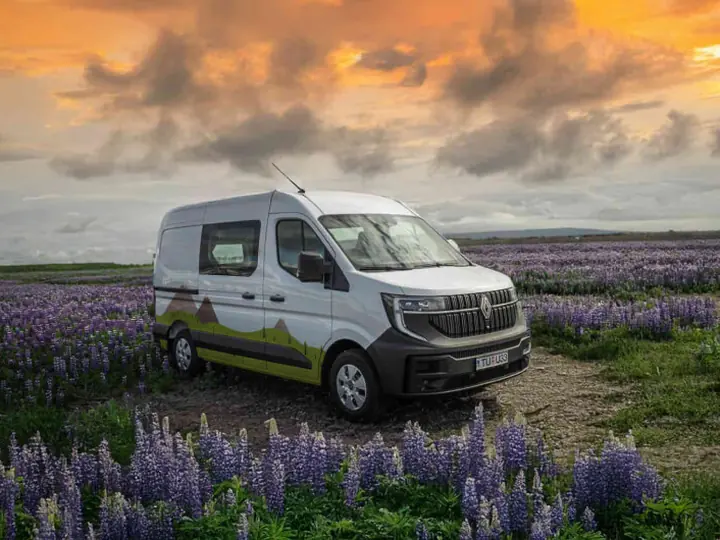
Renault Master campervan parked in a field of Icelandic lupins at sunset

Iceland Campervan Rental

Nimbler 2–3 berth campervans. Easier to park, better fuel economy, lower daily rates — ideal for couples on a budget Ring Road trip.

See Iceland campervans
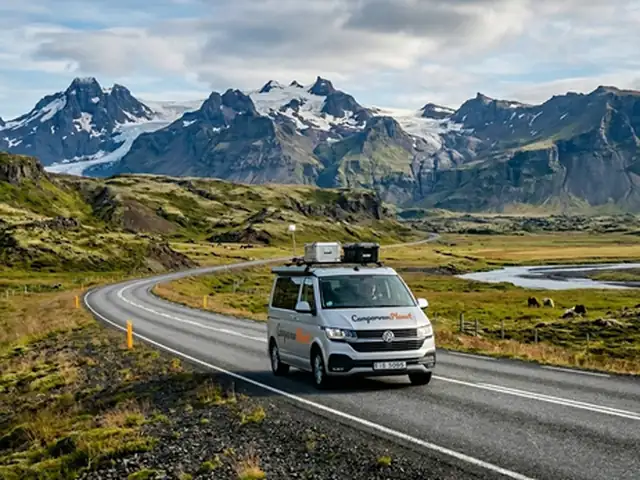
Iceland 4x4 highland camper rental for F-roads

Iceland 4x4 Rental

Highland-ready 4x4 campervans with high clearance and all-terrain tires — the only legal way into Landmannalaugar, Þórsmörk and the F-roads.

See 4x4 campervans
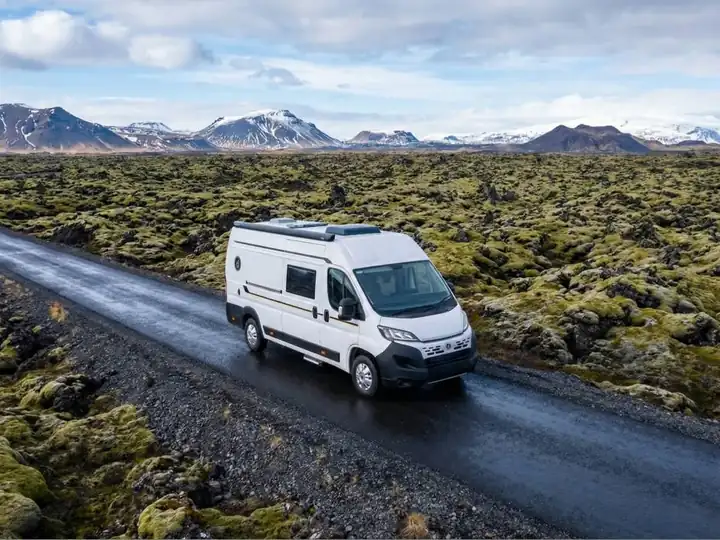
Iceland Class C RV rental with full bathroom and diesel heater

Iceland RV Rental

Class C motorhomes and 6-berth family RVs with full wet room, proper kitchen and diesel cabin heater. Built for the Ring Road.

See Iceland RVs
Planning

Best Time for a Rooftop Tent in Iceland

Rooftop tents are a summer-season vehicle in Iceland — here's when to plan.

Jun-Aug

Midnight Sun Peak Season

Temp: 12-20°C • Daylight: 18-22 hrs

Peak season with continuous daylight, all attractions open, accessible Highlands (F-roads), and optimal hiking. Weather stable but variable. Crowded, higher prices, busy campsites. Book in advance.

Peak Price: €149-249/day
May & Sep

Shoulder Season Best Value

Temp: 8-15°C • Daylight: 14-18 hrs

Extended daylight, mild weather, accessible Ring Road, fewer crowds. May has spring blooms; September shows fall colors and early aurora. Excellent balance of conditions and availability.

Best Value: €89-129/day
Oct & Apr

Transition Months

Temp: 0-8°C • Daylight: 8-14 hrs

October: Northern Lights begin, fewer tourists. April: Spring awakening, melting snow, muddy roads. Winter tires required Oct-Apr. Ring Road fully accessible (usually). Variable weather, moderate prices.

Moderate: €119-159/day
Nov-Mar

Northern Lights Season

Temp: -5 to 5°C • Daylight: 3-7 hrs

Peak Aurora viewing (Dec-Jan best), near-total winter darkness, snow-covered landscapes, and budget prices. Challenging weather, some roads closed, ice hazards. 4x4 strongly recommended.

Budget: €89-119/day (spring only)
Get Started

Popular Pick-up Locations

Choose your preferred rental location across Iceland.

Iceland

Keflavik International Airport

Most popular • 45 min from Reykjavik • Direct from international flights

Iceland

Reykjavik City

Capital • Main hub • Best for exploring downtown and nearby sites

Iceland

Reykjavik Airport

Domestic flights • Closer to city center • Shorter transfer time

Iceland

Hafnarfjordur

Alternative • Coastal town • Greater access to south coast routes

Iceland

Akureyri

North Iceland • Perfect starting point for northern adventures

Iceland

Egilsstadir

East Iceland • Gateway to Eastfjords and waterfalls

Fleet

Rooftop Tent 4x4s Available in Iceland

From nimble Suzuki Jimny + tent to premium Land Rover Defender overland rigs.

Compact 4x4 + Rooftop Tent

2 berth • Suzuki Jimny • Hard-shell tent

Entry-level overland rig on a Suzuki Jimny chassis. 30-second pop-up hard-shell tent, short wheelbase, best fuel economy. Ideal for solo or couple travellers on a tight budget.

€89/daystarting from

Premium 4x4 + Rooftop Tent

2-3 berth • Jeep Renegade/Wrangler • iKamper tent

Jeep Renegade, Wrangler or Ford Bronco with a premium hard-shell rooftop tent (iKamper Skycamp or Roofnest). 12 V fridge, expanded camp kit, upgraded bedding. Best for adventurous couples wanting premium Highland access.

€169/daystarting from

Expedition 4x4 + Rooftop Tent

2-3 berth • Land Rover Defender • 80 cm fording

Land Rover Defender or Iveco Daily 4x4 with James Baroud Evasion hard-shell tent. Snorkel, deep-water fording, winch optional. For travellers tackling remote Highland routes with river crossings.

€249/daystarting from
Questions?

Iceland Rooftop Tent Rental FAQ

Everything you need to know before renting a rooftop tent 4x4 in Iceland — from weather to F-road access.

What is a rooftop tent rental in Iceland? +
A rooftop tent rental combines a 4x4 SUV (Dacia Duster, Suzuki Jimny, Jeep Renegade, Land Rover Defender) with a pop-up tent on the roof rack. You drive during the day and sleep on top at night. Cooking, bathroom and indoor living happen at registered campsites — not inside the vehicle. It's the overland-style alternative to a campervan or RV.
How much does it cost? +
Compact 4x4s with a rooftop tent start around €89/day. Mid-range (Dacia Duster): €109-149/day. Premium (Jeep Renegade, Wrangler): €169-199/day. Expedition-grade (Defender): €199-249/day. Rooftop tent rental is typically 25-40% cheaper per day than a 4x4 campervan of equivalent off-road capability.
How fast does the tent pop up? +
Hard-shell tents (iKamper, James Baroud, Roofnest) deploy in 30-60 seconds — unlatch, lift, ready. Soft-shell clamshell tents take 2-3 minutes. All rental rooftop tents come with mattress, bedding and ladder pre-installed — no assembly beyond deployment.
Can the tent handle Iceland's weather? +
Hard-shell rooftop tents handle Icelandic summer fine: wind up to 20 m/s sustained, rain, temperatures down to +2 °C. Above 20 m/s gusts, close the tent and sleep inside the 4x4. Winter (November-March) is NOT rooftop tent season in Iceland — most operators close their fleet 1 October to 1 May.
Can I drive F-roads with a rooftop tent rental? +
Yes — this is the core selling point vs a motorhome. The 4x4 base vehicle is legal on F-roads. You can reach Landmannalaugar (F208), Þórsmörk (F249 with caution), Askja (F88), Kerlingarfjöll (F347) and the full Highland network. Know your vehicle's fording depth — Jimny 40 cm, Duster 60 cm, Defender 80+ cm.
How many people can sleep in a rooftop tent? +
Standard rental rooftop tents sleep 2 adults (hard-shell pop-up) or 2+1 (small child). Soft-shell tents sleep 3-4 but are heavier. Some vehicles offer a ground-tent annex for extra sleepers. For families of 4+, a 4x4 campervan or Class C motorhome is usually a better fit.
Where do I park overnight? +
Overnight parking outside registered campsites is illegal in Iceland (Nature Conservation Act §31) — this applies to rooftop tent rigs the same as motorhomes. Use the 170+ registered campsites. Highland sites (Landmannalaugar, Þórsmörk) open mid-June to mid-September only.
How do I cook? +
Every rooftop tent rental includes a portable camp stove (gas canister style), pots, pans, utensils, and a cool box or 12 V fridge. You cook at the campsite — never inside the tent (fire risk) or inside the vehicle on the go. Premium packages include a folding table and chairs.
What licence do I need? +
A standard category B driving licence covers all rooftop tent 4x4s in Iceland. EU, US, UK, Canadian licences accepted. Non-Latin scripts need an IDP. Minimum driver age 21-23 depending on operator; premium vehicles (Defender) often require 25+ with 3+ years' experience.
Rooftop tent or 4x4 campervan — which is better for Iceland? +
Choose a rooftop tent if you prioritise budget, fuel economy, and a lighter vehicle for Highland routes. You'll save €40-90/day vs a 4x4 campervan. Choose a 4x4 campervan if you want internal sleeping/cooking (rain/wind protection), a kitchenette, cabin heating, and don't mind paying more. Rooftop tents make the most sense for summer trips (May-September); 4x4 campervans work year-round.

Ready for an Iceland Overland Trip?

Compare Iceland rooftop tent 4x4 rentals, find your best daily rate, and pop up your tent under the midnight sun or at a Highland campsite.

Search Rooftop Tent 4x4s Now

Our best overland & 4x4 rental destinations

Scenic open road with campervan driving through a beautiful landscape
Campervan Rental
Australia
See more
Campervan driving through New Zealand mountains
Campervan Hire
New Zealand
See more
Campervan on a German scenic road
Campervan Hire
Germany
See more
Spanish coastal landscape from a campervan
Campervan Hire
Spain
See more
Italian countryside seen from a campervan
Campervan Hire
Italy
See more
Greek coastline campervan adventure
Campervan Rental
Greece
See more

Stay Updated

Get Iceland travel tips, new deals, and route guides delivered to your inbox.

Your Road Trip Guide

Your Iceland Rooftop Road Trip

Iceland's dramatic landscapes, volcanic terrain, and ever-changing weather make it one of the most extraordinary countries to explore by campervan or motorhome. Whether you're driving the Ring Road or venturing into the remote Westfjords, here's everything you need to know to plan the perfect trip.

Driving a 4x4 rooftop tent rig in Iceland

Iceland drives on the right-hand side. A 4x4 SUV with a rooftop tent is the lightest and most nimble vehicle category you can rent for an Iceland overland trip — total weight is typically 1,900-2,400 kg vs 3,500 kg for a motorhome — which translates to shorter stopping distances, tighter turning circles and markedly better fuel economy. Most Icelandic rental rooftop tent rigs sit on a Dacia Duster, Suzuki Jimny, Jeep Renegade or Land Rover Defender chassis; all accept a category B driving licence and none require any special endorsement.

Key rules specific to a rooftop tent rental:

  • Roof load matters. A deployed rooftop tent pushes the vehicle's centre of gravity up. Stay 5-10 km/h under the posted limit on windy days, especially on exposed coastal sections (Reykjanes, South Coast, parts of the Ring Road east of Vík).
  • Never drive with the tent deployed. Hard-shell pop-up tents must be latched shut; soft-shells must be zipped and strapped. Operators charge €500+ for damage caused by driving with the tent open.
  • Speed limits: 30 km/h in residential zones, 50 km/h in towns, 80 km/h on gravel roads, 90 km/h on paved highways. Speed cameras everywhere.
  • Headlights always on (24/7/365): Icelandic traffic law. Every rental 4x4 has auto-DRL — verify at pickup.
  • Zero alcohol tolerance: legal BAC is 0.05%. A single beer can put you over.
  • Off-road driving is a criminal offence. Fines over €2,400 for driving on moss. Park only on tarmac, marked gravel lay-bys, or inside campsites.

The legal F-road advantage of a rooftop tent rental

This is the single biggest reason travellers choose a rooftop tent rental in Iceland over a motorhome. The 4x4 SUV underneath your tent is legally allowed on Iceland's F-roads — the mountain tracks that reach Landmannalaugar (F208), Þórsmörk (F249), Askja (F88), Kjölur (F35), Sprengisandur (F26) and the Highland interior. No Class C motorhome is permitted on any F-road; rooftop tent rigs are.

Even better: a rooftop tent 4x4 is arguably the Highland vehicle — lighter than a 4x4 campervan, better ground clearance, cheaper on fuel, and the sleeping quarters are above the vehicle rather than inside, which means your sleeping space doesn't get full of Highland dust. The one compromise is cooking and bathroom use — both happen at the campsite rather than onboard.

River crossings in a 4x4 rooftop tent rig

Fording depth varies by vehicle:

  • Suzuki Jimny: ~40 cm. Good for F35, F208 south, F26 south. Avoid F249 (Krossá) and deeper Highland fords.
  • Dacia Duster: ~60 cm. Handles F208, F88 south, shallower F26 crossings. Marginal on F249.
  • Jeep Renegade / Wrangler: 60-70 cm. F35, F208, F88, F26, most of F249 in peak summer.
  • Land Rover Defender (with snorkel): 80+ cm. All F-roads including F210 Eldgjá, northern F88, F905 Askja east.

Always wade the river on foot first to check depth, current and bottom. Cross at the widest, shallowest point. Drive slow and steady in low gear without stopping. If you stall mid-river, do not restart.

Pro tip: standard rental insurance does NOT cover water damage. Add River Crossing insurance (€15-25/day extra) if your route includes any unbridged fords. It's the difference between a shrug and a €25,000 engine replacement bill.

Wind — when the rooftop tent stays closed

Iceland's wind is the #1 constraint on rooftop tent travel. A deployed hard-shell tent handles sustained wind up to 20 m/s (72 km/h) without issue. Above that, the tent flaps catch gusts, the vehicle rocks, and sleep is impossible. Soft-shell tents top out around 15-18 m/s. Two rules:

  • Check vedur.is every evening before setting up camp. If the overnight forecast shows sustained wind above 20 m/s, close the tent and sleep in the vehicle (all rental 4x4s fold down to make a usable if cramped emergency sleep space).
  • Park the vehicle with the nose INTO the wind. Hard-shell tents shed wind much better when the headboard faces into the gust rather than broadside.

In practical terms: Iceland has ~5-10 nights per summer month where the wind would force you off rooftop tent sleeping. Those nights, find an indoor alternative — a hostel, a hotel, or sleep in the vehicle. Every rooftop tent operator in Iceland has handled this scenario a thousand times; it's not an emergency, just a weather night.

Fuel economy and planning

One of the best things about a 4x4 rooftop tent rental in Iceland is the fuel cost. Compact 4x4s (Jimny, Duster) average 7-9 L/100 km; mid-size (Jeep Renegade) 10-12 L; premium (Defender) 12-15 L. A full Ring Road (1,322 km) at €1.85-2.00/L costs €175-380 in fuel depending on the vehicle — roughly half of a Class C motorhome's bill.

Key gaps:

  • South Coast: Vík → Höfn: ~270 km, one reliable station at Kirkjubæjarklaustur mid-route.
  • Eastfjords: Höfn → Egilsstaðir: 250 km, sparse. Top up at Höfn.
  • F-roads: zero fuel stations. Enter with a full tank and exit with the same fuel you filled with before the F-road, minus the drive. Plan round-trip distances against your tank capacity.
Pro tip: download the 112 Iceland app before leaving the airport. It's the emergency beacon for Icelandic rescue and it works on satellite in remote Highland areas where mobile coverage disappears. One button sends your GPS to search-and-rescue.

Where a rooftop tent rig sleeps — campsite rules

Iceland's Nature Conservation Act §31 prohibits overnight parking and camping outside registered campsites — and this applies fully to rooftop tent rentals. Even though you're self-sufficient for sleeping, the vehicle is still parked on Icelandic ground; the rule is written for vehicles, not just tents. Every night of your trip must be at one of Iceland's 170+ registered campsites. Fines for wild camping start at ISK 10,000 (~€70).

The good news: Iceland's campsite network covers almost every interesting area, including 15 Highland campsites that are reachable only by 4x4 — Landmannalaugar, Þórsmörk (Langidalur + Básar), Hveravellir, Nýidalur, Dreki (Askja), Kerlingarfjöll, Lakagígar, and more. Ring Road sites typically charge €14-25/person/night; Highland sites €18-25.

Setting up the rooftop tent at camp

Deployment is the easiest part of rooftop tent travel. Hard-shell pop-up tents (iKamper, James Baroud, Roofnest) deploy in 30-60 seconds: unlatch the four corners, push up, the gas struts do the work, the tent is ready. Soft-shell clamshell tents take 2-3 minutes. All rental rooftop tents come with the mattress, bedding and ladder pre-installed inside the tent — no assembly needed.

Practical setup tips for Iceland conditions:

  • Pick your campsite spot for wind first, view second. Behind a windbreak (stone wall, campsite building, other vehicle) beats the front row with the ocean view. Wind matters more than scenery when you're sleeping above the vehicle.
  • Park the vehicle with the nose into the prevailing wind. All rooftop tents shed wind better front-on than broadside.
  • Level the vehicle within 5° side-to-side. Sleeping on a sideways tilt is rough. Small rental rigs include levelling blocks — use them.
  • Deploy before dinner, collapse after coffee. Don't rush setup in rain. Cook and eat first, deploy the tent when you're ready to actually sleep.
  • Keep the ladder clean. Icelandic mud on rungs is slippery when wet. Wipe before climbing at night.

What's included in your rooftop tent rental package

A typical Iceland rooftop tent rental includes the vehicle, the mounted tent, an interior memory-foam mattress (7-10 cm), bedding (pillows, duvet, fitted sheet), a ladder, an external camp kitchen kit (2-burner camp stove, pots, pans, cutlery, plates, cups), a cool box or 12 V fridge powered from the vehicle, and gas canisters. Premium packages add camping chairs and table, a solar shower bag, a headlamp, and sometimes a portable water container.

What to bring from home:

  • Sleeping bag rated to +2 °C — the rental duvet is adequate for most summer nights, but Highland nights (Nýidalur 800 m altitude) can hit 2 °C and a bag saves the trip.
  • Eye mask — Iceland's midnight sun is real from May to July; the tent ventilation windows let light through.
  • Waterproof stuff sack for wet clothes — Icelandic weather makes laundry damp.
  • Ear plugs — wind noise against the tent fabric is the main sleep disruptor.
  • Merino base layer for sleeping — warmer than cotton, less bulky than fleece.
Pro tip: bedding in rental rooftop tents is vacuum-stored when the tent is closed and takes 20-30 minutes to fully expand. Deploy the tent before you start cooking dinner so the bedding has time to "breathe" while you eat — it sleeps warmer that way.

The rooftop tent rental campsite short list

  • Reykjavik — Laugardalur: year-round, near thermal pool, big enough for rooftop rigs. The base camp for 90% of Iceland rooftop tent trips.
  • Hella: best base for Golden Circle + South Coast. Wind-sheltered, good facilities.
  • Vík í Mýrdal: walk to Reynisfjara. Windy — park rigs behind the facility building.
  • Skaftafell (Vatnajökull NP): glacier views, good wind shelter.
  • Landmannalaugar (Highland, Jun-Sep only): rooftop tent heaven — natural hot pool, no hookups, remote, spectacular.
  • Þórsmörk — Langidalur (Highland): birch-forested, wind-protected. Requires F249 fording.
  • Mývatn — Hlíð: volcanic landscape, good service level for a north-Iceland base.
  • Akureyri — Hamrar: forested, sheltered, full service.
  • Höfn: langoustine capital, waterfront, Diamond Beach access.

Collapsing the tent in rain — the one skill to practice

On dry mornings, packing up a rooftop tent takes 3 minutes. On rainy mornings, the fabric gets soaked and you need to pack it wet — which leaves the next night's setup cold and damp if you don't manage it. The trick:

  • Wipe down the shell with a microfibre cloth before folding (rental packages include one; bring a backup).
  • Fold in the bedding quickly to minimize fabric contact with wet exterior.
  • Re-deploy as soon as possible that evening to air-dry before bedtime.
  • At a wet-weather multi-night stop, leave the tent deployed between uses — it dries faster open than closed.
Pro tip: if rain is forecast for your entire overnight window, take a hotel or hostel room for one night. Iceland has affordable options in every Ring Road town (€60-90 for a basic private room). Skip a rooftop tent night when it's genuinely miserable; the rig stays comfortable when the rental days feel voluntary rather than forced.

The legal F-road bucket list a rooftop tent rig unlocks

Rooftop tent 4x4 rentals in Iceland have legal access to the full F-road network — and this is what distinguishes them from a motorhome trip. The classic Highland destinations, all reachable in a rooftop tent rig:

Landmannalaugar (F208 south)

Iceland's most photographed Highland destination — rhyolite mountains in red, orange, pink and green, hot springs next to the campsite, the start of the famous Laugavegur trek to Þórsmörk. Access via F208 south from Hrauneyjar: 33 km of gravel F-road with 2-3 shallow fords doable in any 4x4 rooftop rental. Book 2 nights minimum at the campsite — one for arrival, one for a half-day hike of Brennisteinsalda.

Þórsmörk (F249 + river crossings)

A glacier-ringed valley between three Icelandic glaciers (Eyjafjallajökull, Mýrdalsjökull, Tindfjallajökull). Birch forest, dramatic canyon walks, classic Iceland scenery. F249 has multiple unbridged Krossá river crossings — compact rooftop rigs (Jimny, Duster) may not make it in high-melt weeks. Premium rigs (Jeep Renegade, Defender) are the safer bet. If your vehicle can't make F249, park at Seljalandsfoss and take the Thoröxpress super-jeep shuttle (~€60 return).

Askja caldera (F88 or F905)

A Mars-like volcanic caldera in Iceland's interior desert. The Víti crater lake has geothermal water you can swim in. Two approaches: F88 from Mývatn (3-4 significant fords, expedition-grade vehicles preferred) or F905 from the east (gentler, longer). Plan a full day plus Dreki campsite overnight. The rooftop tent at Dreki with the Vatnajökull glacier on the horizon is one of Iceland's great camp experiences.

Kerlingarfjöll (F35 + F347 branch)

F35 Kjalvegur is the easiest F-road in Iceland — 166 km of graded gravel, no unbridged fords, doable in any rooftop tent rental. Branch onto F347 for 17 km to reach the Kerlingarfjöll geothermal area: coloured rhyolite peaks, hot springs, mountain lodge. If you want a gentle first Highland experience, this is it. 2-day loop from Reykjavik.

Hveravellir (mid-F35)

A mid-Highland geothermal basin with a natural hot pool next to a basic campsite. The classic "halfway" rest stop when crossing Kjölur from south to north. Rooftop tent + hot pool + midnight sun is the entire Iceland Highland fantasy in one evening.

F26 Sprengisandur (for experienced overlanders)

The central Highland crossing from south (Sigalda) to north (Goðafoss area). 250 km of F-road through volcanic desert, glaciers either side, and Nýidalur campsite mid-route. Premium rooftop rigs recommended; Jimny and Duster handle it in peak summer when water levels are lowest. For travellers who've done F35 and want something rawer.

Lakagígar / Laki crater row (F206)

25 km of volcanic craters from the 1783 eruption that changed European history. F206 from Kirkjubæjarklaustur includes the Syðri-Ófæra ford (moderate depth, stable bottom). Best done as a day trip from a Skaftafell or Kirkjubæjarklaustur Ring Road campsite base.

Pro tip: register your Highland itinerary at safetravel.is before you head out. Rescue services know where to look if you don't check back in. Free and fast. Do this every Highland trip.

The paved Ring Road classics — all rooftop-friendly

  • Seljalandsfoss + Skógafoss: big paved parking. Walk behind Seljalandsfoss.
  • Reynisfjara black-sand beach: watch for sneaker waves (marked red).
  • Jökulsárlón glacier lagoon + Diamond Beach: huge car park, all sizes welcome.
  • Goðafoss (north): paved car park.
  • Dettifoss west side (Route 862): paved. East side F-road.
  • Mývatn geothermal area: lava formations, bird-watching, Grjótagjá cave.

Aurora watching from a rooftop tent

Aurora season runs late August through early April. Rooftop tent season runs roughly 1 May to 30 September, which means the overlap is late August to late September — about 6 weeks when aurora is visible and rooftop tents are still viable. Those weeks are the best aurora-from-tent experience in Iceland: open the tent's ventilation windows facing north, darkness by 22:30, auroras in the 80% clear-sky nights. After late September, daytime warmth is fine but overnight temperatures drop into rooftop-uncomfortable range; most operators close their fleet by 1 October.

Whale watching, ice caves, glacier walks — pair with the rooftop trip

  • Húsavík whale watching (May-September): 98% sighting rate on humpback. Park the rooftop rig at Húsavík harbour.
  • Sólheimajökull glacier hike: 45 min from Vík, 3-hour guided hikes (€110-150).
  • Skaftafell glacier tongue walks: shorter guided options, rooftop rig at Skaftafell campsite.
  • Icelandic horse farms (Hella, Skagafjörður): 1-3-hour rides (€85-150).
Pro tip: Sólheimajökull glacier has retreated ~60 m/year since 2010. The hike-in distance is different every summer. Book with Arctic Adventures or Glacier Guides — both meet at the main paved car park so you can drop the rig right there.

How long to spend in Iceland with a rooftop tent rental

Rooftop tent trips are the most flexible of Iceland's camping options — you can drive anywhere a 4x4 goes, sleep on top of the vehicle, and spend less on both rental and fuel than any other camping-capable rig. Realistic planning:

  • Golden Circle + South Coast: 4-5 days from Reykjavik. Covers Þingvellir, Geysir, Gullfoss, Seljalandsfoss, Skógafoss, Vík, Jökulsárlón, return.
  • Full Ring Road: 8-12 days at rooftop pace. Cap daily distance at 250 km.
  • Ring Road + Highland loop: 12-16 days. Adds Landmannalaugar, Þórsmörk, Askja, Kerlingarfjöll. This is where rooftop tent rigs out-perform Class C motorhomes.
  • Deep overland trip: 16-20 days. Full Ring Road + Highlands + Westfjords. The trip a rooftop tent rental is really made for.

Under 6 days the rooftop tent rental starts making less financial sense than a hotel-and-car combination — pickup and drop-off eat half your time. For 8+ day trips in summer, rooftop tent is typically the best-value option in Iceland.

Budget — what a rooftop tent Iceland trip actually costs

Real-world budget for two adults, 10 days, shoulder summer (June or September):

  • Mid-size 4x4 rooftop tent rental (Dacia Duster + tent): €130/day × 10 = €1,300
  • Fuel (1,300 km at 10 L/100 km): 130 L × €1.90 = €247
  • Campsites (10 × 2 × €18): €360
  • Groceries (cook at camp, 10 days × 2 adults): €300
  • Paid attractions (thermal pools, parking, one tour): €150-300
  • All-in total: €2,350-2,500 for two adults, 10 days.

Compare that to the same trip in a Class C motorhome (€2,800-3,500) or a 4x4 campervan (€3,200-3,800). A rooftop tent rental saves €450-1,300 vs the more comfort-oriented options, while giving up bathroom and internal cooking but gaining F-road legal access and a lighter vehicle.

Packing list — rooftop tent specifics

Rooftop tent rentals in Iceland typically include: vehicle, mounted tent, mattress, bedding (pillows, duvet, fitted sheet), ladder, portable camp stove, pots, pans, kitchen kit, cool box or 12 V fridge, gas canisters, basic cleaning supplies, and a tarp/groundsheet for camp layout. What you bring:

  • Sleeping bag (+2 °C comfort rating): the rental duvet is fine most nights but backup is essential for Highland altitude.
  • Eye mask: Icelandic summer midnight sun. Non-negotiable from May to July.
  • Waterproof shell (Gore-Tex jacket + pants): rain in Iceland is daily. Cotton doesn't dry.
  • Merino base layer: sleepwear and cold-morning backup.
  • Good headlamp + spare batteries: nighttime campsite walks, emergencies.
  • Dry bag / waterproof stuff sack: for wet clothes, separation.
  • Swimsuit + flip-flops + microfibre towel: thermal pools every 2-3 days.
  • Insulated water bottle: Icelandic tap water is glacier-quality at every campsite.
  • EU Type F power adapter: for US and UK travellers. The vehicle's 12 V sockets don't help with phone chargers.
Pro tip: buy a 50 GB Iceland SIM at Bónus in Keflavik arrivals (~€30 for 30 days) and use your phone as a hotspot. Skip the portable Wi-Fi rental — coverage is 4G-LTE across the Ring Road and most campsites. On F-roads you'll lose signal regardless of what you use.

Daily distance — the rooftop rhythm

Rooftop tent travel has a natural rhythm: you deploy around 18:00-19:00, cook and eat, sleep, collapse around 09:00-10:00, drive until lunch, sightsee in the afternoon. Cap your daily driving at 200-250 km and leave time for the setup/teardown ritual. Aim to arrive at each overnight campsite by 17:00 to secure a good wind-sheltered spot.

Weather apps that matter

  • vedur.is: Icelandic Met Office. Check overnight wind forecast every evening before deploying the tent.
  • road.is: live F-road map. Black/red = closed. Refresh 08:00 and 15:00 daily.
  • My Aurora Forecast: push notifications for late-summer aurora activity.
  • 112 Iceland app: emergency GPS beacon. Install before your flight.
Pro tip: Google Maps underestimates Iceland drive times for 4x4 rooftop rigs. Add 25-30% for wind slowdowns, sheep on roads, single-lane bridges, photo stops and the inevitable pullover for a waterfall you didn't know about. If Google says 4 hours, plan 5.

Iceland's calendar from a rooftop tent perspective

Rooftop tent rental is a summer-season vehicle in Iceland — most operators close their fleet from 1 October to 1 May. That means the event calendar relevant to a rooftop traveller is roughly May through September, with late August to late September being the aurora + rooftop overlap window.

May (season opens)

  • Rooftop tent fleet opens: most operators start bookings from 1 May, though weather can still be chilly. Prices are at their lowest of the year.
  • First Day of Summer / Sumardagurinn fyrsti (last Thursday of April): public holiday — many shops closed. Pick a driving day.
  • Reykjavik Arts Festival (mid-May): 2-week cultural programming across the capital. Base at Laugardalur.

June — peak midnight sun, F-roads opening

  • Icelandic National Day / Þjóðhátíðardagurinn (17 June): Reykjavik's biggest street party of the year. Laugardalur campsite fills up; arrive the night before.
  • Secret Solstice (late June, Reykjavik): 3-day music festival under 24-hour daylight. Park the rooftop rig at Laugardalur, walk to the venue.
  • F-roads begin opening (mid-June to mid-July depending on snowpack). F35 opens first, F26 and F208 usually next, F88 and F249 last. Check road.is daily.
  • Viking Festival Hafnarfjörður (mid-June): reenactments, combat, feasts. Walking distance from Reykjavik campsite.

July — peak season

  • All F-roads open by mid-July. Peak daylight (20-22 hours), warmest temperatures (12-18 °C daytime). Peak prices (rooftop rentals +20-30%).
  • Þjóðhátíð Vestmannaeyjar (first weekend of August — prep from late July): Iceland's biggest festival by attendance. 18,000+ people on a small island. The Landeyjahöfn ferry accepts rooftop tent rigs — book the ferry 6+ months ahead. Highland loop first, then ferry over, then back to the Ring Road.
  • Laugavegur Ultra Marathon (mid-July, Landmannalaugar → Þórsmörk): spectate from either end — both campsites are rooftop-friendly.
  • Húsavík Summer Festival (mid-July, north): small-town whale-capital weekend. Easy add if you're on the north leg.

August — Þjóðhátíð, Culture Night, aurora begins

  • Þjóðhátíð (first weekend of August, Westman Islands): biggest event of the Icelandic year. Book rooftop rental 6+ months out if your trip overlaps.
  • Reykjavik Pride (mid-August): Laugavegur becomes a parade. Base at Laugardalur.
  • Menningarnótt / Culture Night (mid-August, Reykjavik): one night, 200+ free events across the city. Fireworks close it. 25-minute walk from Laugardalur.
  • Aurora visibility returns (last week of August): the magic overlap begins. Sleep above the vehicle facing north, ventilation windows open.

September — the best rooftop tent month in Iceland

  • F-roads still open the first 2 weeks (closing weather-dependent mid to late September).
  • Aurora-from-tent experience peaks. Clear dark nights, first frost, mild daytime. Late September Highlands + aurora overhead is the rooftop tent trip of most travellers' dreams.
  • Sheep Round-up / Réttir (early September): rural community events in farming valleys. Ask at campsites for local dates.
  • Reykjavik International Film Festival (late September to early October): wrap the Highland trip with a few days of indie cinema.
  • Rooftop rental prices drop 20-30% vs July/August. Campsites quieter. Best value-for-money window of the year.

When NOT to rent a rooftop tent in Iceland

The rooftop tent is an outstanding Iceland vehicle for the right season and the wrong one for everything else. Don't rent a rooftop tent if:

  • Your trip is between 1 October and 30 April. Most operators close the fleet anyway; the few that stay open aren't worth the cold/wind risk.
  • You're travelling in a group of 4+. The tent sleeps 2-3; a family motorhome or 4x4 campervan sleeps 4-6 more comfortably.
  • You want a bathroom onboard. Use a Class C motorhome instead — see Iceland RV rental.
  • Your trip is under 5 days. Pickup + drop-off costs eat the savings; a hotel-and-4x4-car combination is more efficient.
  • You have mobility limitations. The ladder climb to the roof tent can be challenging in rain or after a long day.
Pro tip: Iceland's rooftop tent fleet is tiny — often 80-150 vehicles across the whole country at peak season. Book 3-4 months ahead for any July or August trip. By May, most premium rigs (Wrangler, Defender) are already reserved.

The one season that looks cheap but isn't worth it

October appears on some operator price lists at 30-40% off peak. Don't be tempted. Daytime temperatures are OK but night lows drop to 0-5 °C, wind picks up, and several Highland campsites have already closed. Rooftop tent in Icelandic October is an endurance test. Save the October trip for a 4x4 camper or motorhome with a heater. Rooftop tent season in Iceland is, functionally, May 15 through September 30.

Popular Destinations for Rooftop Tent & 4x4 Rental

Explore the best places to rent a rooftop tent, 4x4, or overland rig worldwide

North America
Europe
Rest of World
All Destinations
CampervanPlanet
Finding the best deals for you...
Comparing prices from top rental companies