Limited time only! Get a free 1GB eSIM* with your campervan booking. T&Cs apply.
Call us
Language & Currency

Iceland 4x4 Camper Rental: Highland-Ready Campervans

Compare 4x4 camper and 4x4 campervan rentals in Reykjavik & Keflavik. Highland-ready vehicles with high clearance and all-terrain tires — the only legal way to reach Landmannalaugar, Þórsmörk, Askja and Iceland's F-road network.
Pick-up 15 Jun 2026
MoTuWeThFrSaSu
Drop-off 25 Jun 2026
MoTuWeThFrSaSu
Google
4.7 ★★★★★
2,340 Reviews
4.8 ★★★★★
1,200 Reviews
Tripadvisor
5.0 ★★★★★
534 Reviews
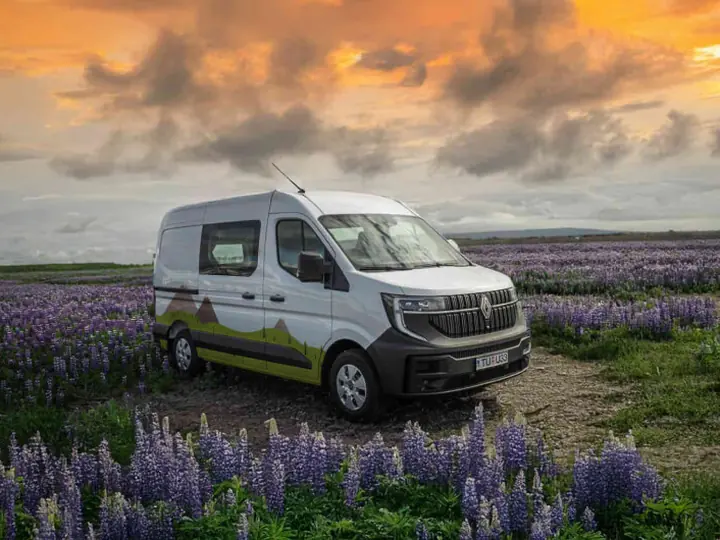
Renault Master campervan parked in a field of Icelandic lupins at sunset

Iceland Campervan Rental

Nimbler 2–3 berth campervans. Easier to park, better fuel economy, lower daily rates — ideal for couples on a budget Ring Road trip.

See Iceland campervans
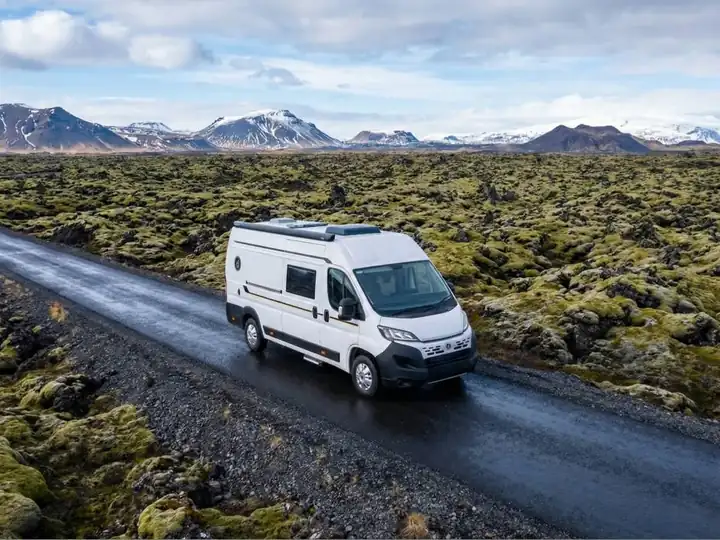
Iceland Class C RV rental with full bathroom and diesel heater

Iceland RV Rental

Class C motorhomes and 6-berth family RVs with full wet room, proper kitchen and diesel cabin heater. Built for the Ring Road.

See Iceland RVs
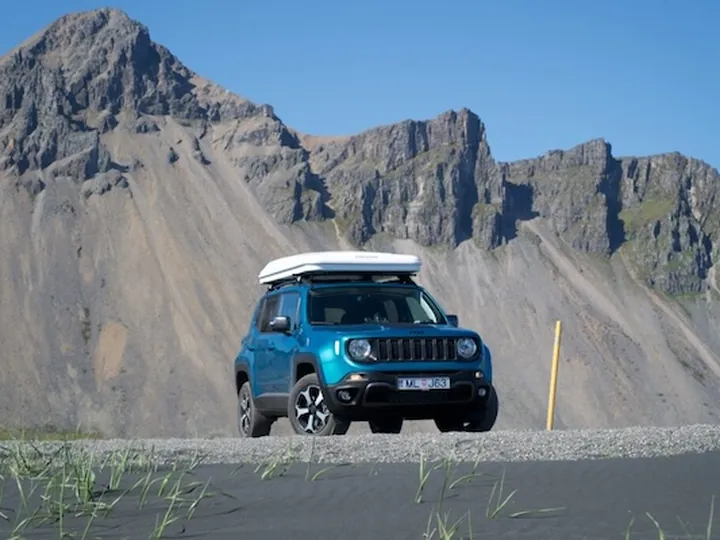
Iceland 4x4 SUV rental with pop-up rooftop tent

Iceland Rooftop Tent Rental

Compact 4x4 SUVs with a pop-up roof top tent. Sleep above the vehicle, drive light during the day, and wake up to midnight sun or aurora.

See rooftop tents
Planning

Best Time for a 4x4 Camper in Iceland

Plan around the F-road season if you want Highland access.

Jun-Aug

Midnight Sun Peak Season

Temp: 12-20°C • Daylight: 18-22 hrs

Peak F-road season. All Highland routes open (Landmannalaugar, Þórsmörk, Askja, Kjölur). 18–22h daylight means long hike days. Weather stable but variable; expect high demand on every 4x4 fleet — book 2-3 months ahead.

Peak Price: €229-329/day
May & Sep

Shoulder Season Best Value

Temp: 8-15°C • Daylight: 14-18 hrs

September: F-roads still open the first 2 weeks, fewer crowds at Landmannalaugar, first auroras of the season. May: F-roads mostly still closed but Ring Road 4x4 routes open — save the Highlands for June-onwards.

Best Value: €139-199/day
Oct & Apr

Transition Months

Temp: 0-8°C • Daylight: 8-14 hrs

F-roads closed. 4x4 camper still earns its money: winter tires, high clearance on ice-covered Ring Road, and ability to handle gravel detours around any closed paved section. Strong option for aurora chasing on unplowed secondary roads.

Moderate: €169-229/day
Nov-Mar

Northern Lights Season

Temp: -5 to 5°C • Daylight: 3-7 hrs

F-roads fully closed. A 4x4 camper is still the best winter vehicle in Iceland — studded winter tires, high ground clearance for snow, and safer handling on icy Ring Road stretches. Dark-sky aurora chasing, zero F-road access.

Budget: €139-179/day
Get Started

Popular Pick-up Locations

Choose your preferred rental location across Iceland.

Iceland

Keflavik International Airport

Most popular • 45 min from Reykjavik • Direct from international flights

Iceland

Reykjavik City

Capital • Main hub • Best for exploring downtown and nearby sites

Iceland

Reykjavik Airport

Domestic flights • Closer to city center • Shorter transfer time

Iceland

Hafnarfjordur

Alternative • Coastal town • Greater access to south coast routes

Iceland

Akureyri

North Iceland • Perfect starting point for northern adventures

Iceland

Egilsstadir

East Iceland • Gateway to Eastfjords and waterfalls

Fleet

Types of 4x4 Campers Available in Iceland

From compact 4x4 conversions to expedition-grade 4x4 motorhomes.

Compact 4x4 Camper

2 berth • Manual • Dacia/Suzuki

Entry-level 4x4 conversion on a Dacia Duster or Suzuki Jimny. High clearance, short wheelbase, ideal for solo or couple travellers on F-roads with shallow fords.

€139/daystarting from

4x4 Highland Campervan

3-4 berth • Sprinter/Crafter 4x4 • Heater

Mercedes Sprinter 4x4 or VW Crafter 4x4 with full camper conversion. Wet room, kitchen, Webasto heater. Room for 3-4 adults on any Highland route.

€249/daystarting from

Expedition 4x4 (Defender/Iveco)

2-4 berth • Deep-water fording • Premium

Land Rover Defender or Iveco Daily 4x4 with expedition conversion. Snorkel, deep-water crossing rating, winch available. For travellers tackling the remote Highland circuit.

€329/daystarting from
Questions?

Iceland 4x4 Camper Rental FAQ

Everything you need to know before renting a 4x4 camper in Iceland — F-road rules, river crossings, licence and insurance.

Why rent a 4x4 camper instead of a regular campervan in Iceland? +
A 4x4 camper is the only vehicle category legally allowed on Iceland's F-roads — the Highland routes that reach Landmannalaugar, Þórsmörk, Askja, Kerlingarfjöll and Sprengisandur. Regular 2WD campervans and motorhomes are prohibited from F-roads by Icelandic traffic law and rental contracts. If your Iceland plans include any F-road destination, a 4x4 is mandatory.
When are Iceland's F-roads open? +
F-roads open between mid-June and mid-July each year, depending on the previous winter's snowpack. They close between mid-September and early October. The Icelandic Road Administration publishes a live map at road.is showing which F-roads are currently passable.
Can a 4x4 camper cross Icelandic rivers? +
Some can, some can't. Compact 4x4 conversions (Dacia Duster, Suzuki Jimny) handle fords up to 40 cm. Mid-size 4x4 campervans (Hilux, Ranger) do up to 60 cm. Only expedition 4x4s (Defender, Iveco Daily 4x4, Sprinter 4x4 with lift) handle deeper crossings. Always wade the river first on foot.
What driving licence do I need for a 4x4 camper? +
A standard category B licence covers every 4x4 camper in the Icelandic rental fleet (all ≤3,500 kg). EU, US, UK, Canadian licences are accepted. Non-Latin scripts need an IDP. Minimum driver age 23 with 1+ year's experience; some operators require 25+ for Highland-ready vehicles.
Which F-roads are beginner-friendly? +
Start with F35 Kjalvegur — the easiest F-road in Iceland, no unbridged rivers, well-maintained gravel. Next tier: F208 south (Eldgjá approach), F88 south (Askja via the west), F26 south (Landmannalaugar via Sigalda). Avoid F225, F223, F210 and the northern F88 on a first trip — those involve multiple unbridged rivers.
What insurance does a 4x4 camper need in Iceland? +
Mandatory: Gravel Protection (GP) — Iceland's gravel flies at windshields. Highly recommended: Sand & Ash Protection (SAAP) — the south-coast ash storms can sand-blast paint in minutes. Super CDW drops your excess from ~€2,500 to €0. River Crossing insurance is usually a separate add-on and is not covered by default — critical if you'll do unbridged fords.
How much does a 4x4 camper rental cost in Iceland? +
Compact 4x4 conversions start around €139/day in shoulder season. Mid-size 4x4 campervans (Hilux, Ranger) run €179-229. Highland 4x4 campervans (Sprinter 4x4, Crafter 4x4) €249-299. Expedition-grade rigs (Defender, Iveco Daily 4x4) €329/day. Peak F-road season (15 July – 15 August) adds 25-30%.
Can I camp in the Highlands? +
Yes, but only at the 15 registered Highland campsites — Landmannalaugar, Þórsmörk (Langidalur), Hveravellir, Nýidalur, Dreki (Askja), Kerlingarfjöll and a few smaller ones. Wild camping is prohibited by the Nature Conservation Act. Highland sites run €15-25 per person, open mid-June to mid-September only, basic facilities (cold water, pit toilets).
Do I need experience to drive a 4x4 in Iceland? +
Beginner-friendly F-roads (F35, F208 south, F26 south) are doable for any attentive driver with no prior 4x4 experience. River-crossing F-roads require real skill — know your vehicle's fording depth, how to read current, when to walk across first. If you've never crossed a river in a 4x4, stick to non-fording F-roads or hire a super-jeep day tour for Þórsmörk and Landmannalaugar while you base the camper at a Ring Road campsite.
How much fuel does a 4x4 camper use? +
Compact 4x4 conversions: 7-9 L/100km. Mid-size 4x4 campervans: 10-13 L/100km. Highland-ready 4x4 campervans (Sprinter 4x4): 12-16 L/100km. Expedition 4x4s: 14-18 L/100km. Diesel costs €1.85-2.00/L. A Highland-focused trip (~900 km over 7 days including F-roads) runs €180-280 in fuel for a mid-size 4x4.

Ready to Explore Iceland's Highlands?

Compare Iceland 4x4 camper fleets, find your best daily rate, and unlock Landmannalaugar, Þórsmörk, Askja and the F-road network.

Search 4x4 campers Now

Our best 4x4 camper rental destinations

Scenic open road with campervan driving through a beautiful landscape
Campervan Rental
Australia
See more
Campervan driving through New Zealand mountains
Campervan Hire
New Zealand
See more
Campervan on a German scenic road
Campervan Hire
Germany
See more
Spanish coastal landscape from a campervan
Campervan Hire
Spain
See more
Italian countryside seen from a campervan
Campervan Hire
Italy
See more
Greek coastline campervan adventure
Campervan Rental
Greece
See more

Stay Updated

Get Iceland travel tips, new deals, and route guides delivered to your inbox.

Your Road Trip Guide

Your Iceland 4x4 Road Trip

Iceland's dramatic landscapes, volcanic terrain, and ever-changing weather make it one of the most extraordinary countries to explore by campervan or motorhome. Whether you're driving the Ring Road or venturing into the remote Westfjords, here's everything you need to know to plan the perfect trip.

Iceland's F-road system — what a 4x4 camper unlocks

Iceland's 4x4 vehicle category exists for one reason: the F-roads (fjallvegir). These are gravel mountain tracks that cross the Highland interior, connecting places no other vehicle class can legally reach — Landmannalaugar, Þórsmörk, Askja, Kerlingarfjöll, Nýidalur, Dreki, Lakagígar. Every F-road is signposted with a letter F before the route number (F35, F208, F88, F26, F225, F210) and every F-road is closed to 2WD vehicles by Icelandic traffic law. Driving a standard campervan or RV on an F-road voids 100% of your insurance and triggers a contractual penalty from most rental operators.

Key rules when driving a 4x4 camper in Iceland:

  • Road status changes daily. F-roads open one at a time as snow melts between mid-June and mid-July, and close again between mid-September and early October. Check road.is every morning — the live map shows which F-roads are currently passable.
  • Speed on gravel: 60-70 km/h max. The posted limit is 80 km/h on gravel roads but flying stones crack windshields. Keep 50+ m behind other vehicles and slow dramatically for oncoming traffic.
  • Right of way on F-roads: uphill traffic has right of way. On narrow passing points, the vehicle with the pull-out yields.
  • Off-track driving = criminal offence. Even on an F-road you must stay on the marked track. One-day fines exceed €2,400 for driving on the tundra. Moss takes 60+ years to recover.
  • Headlights always on: Iceland law, 24/7/365. Dipped beam default.
  • Winter tires Nov 1 – Apr 14: mandatory on all vehicles. Rental 4x4s include them.

River crossings — when to cross, when to turn back

Many F-roads include unbridged river crossings (fords) with water depth ranging from 20 cm to 80+ cm. This is the single skill that separates confident 4x4 travellers from stuck ones. The rules:

  • Walk across first, always. Take waterproof boots or walking poles. Check depth, current speed, bottom firmness. Never trust yesterday's depth — glacial rivers rise and fall 30+ cm in a day with melt.
  • Know your camper's fording depth (it's in the rental paperwork). Compact 4x4 conversions: ~40 cm. Mid-size (Hilux, Ranger): ~60 cm. Sprinter 4x4: ~65 cm without lift. Defender/Iveco expedition: 80+ cm with snorkel.
  • Cross at the widest, shallowest point — that's where glacial deposits create a stable gravel fan. Never at the narrowest point (current is strongest there).
  • Drive slow and steady in 1st or 2nd gear with engine revving. Don't stop mid-river. Don't change gear mid-river. If you stall, you've flooded the engine — do not restart.
  • Cross at slow times of day: early morning (06:00-09:00) when overnight cold has slowed the melt. Avoid late afternoon on warm summer days.
  • If in doubt, turn around. The 112 Iceland rescue service extracts dozens of stuck 4x4s every summer. Being turned around is a story; being rescued is €3,000+.
Pro tip: standard 4x4 rental insurance does not cover water-damage to the engine. Add River Crossing insurance (€15-25/day extra) if you'll do any unbridged fords — it's the difference between a shrugged-off stuck situation and a €25,000 engine replacement bill.

4x4 camper insurance stack in Iceland

Basic CDW covers the bodywork from normal road driving — that's it. A 4x4 camper in Iceland needs more layers:

  • Gravel Protection (GP) — essentially mandatory: covers chips and cracks from flying gravel. Iceland's gravel roads produce windshield damage constantly. ~€10-15/day.
  • Sand & Ash Protection (SAAP): the south coast ash storms sand-blast paint and pit windshields within minutes. ~€10-15/day. Skip only if you stay strictly north.
  • Super CDW (SCDW): reduces your excess from €2,500 to €0 on non-water damage. ~€20-30/day.
  • River Crossing Insurance: essential if you do any fording. Not covered by any of the above. ~€15-25/day.
  • Tire & underbody: some operators offer a cheap tire-only add-on (~€5/day) that's worth it on sharp Highland gravel.

Fuel planning for a 4x4 camper

Consumption varies by vehicle class: compact 4x4 conversions (Dacia Duster kit) run 7-9 L/100 km; mid-size 4x4 campervans (Hilux, Ranger) 10-13 L/100 km; Highland-ready 4x4 campervans (Sprinter 4x4) 12-16 L/100 km; expedition rigs (Defender, Iveco 4x4) 14-18 L/100 km. A typical Highland-focused 7-day loop (Reykjavik → F35 → Landmannalaugar → Þórsmörk → Mývatn → Askja → Reykjavik, ~1,050 km including F-roads) costs €220-360 in diesel at €1.85-2.00/L.

F-roads have zero fuel stations. You enter with a full tank and exit with the same. The last stations before major F-road entries:

  • F35 Kjalvegur: Árnes at the south entry, Varmahlíð at the north exit. ~190 km between.
  • F26 Sprengisandur: Sigalda (south) and Goðafoss area (north). ~240 km between.
  • F88 Askja route: Mývatn (Vogafjós) then nothing for 200+ km.
  • F208 Landmannalaugar south: Hrauneyjar (last station), then 75 km round-trip from Hrauneyjar to Landmannalaugar.
Pro tip: download the 112 Iceland app before you leave Reykjavik. One button sends your GPS location to Icelandic rescue. Many F-roads have no mobile coverage — the 112 beacon uses satellite as backup.

Where a 4x4 camper sleeps — Ring Road vs Highland campsites

Overnight parking outside registered campsites is banned throughout Iceland by the Nature Conservation Act §31 — this applies to 4x4 campers too, even in the remotest Highland valleys. The rule feels counterintuitive (you're self-contained and the Highlands are empty), but the Icelandic moss and volcanic soil take decades to recover from any ground impact, and the law protects both. Stick to registered sites and park rangers leave you alone.

Iceland has two parallel campsite networks:

  • Ring Road + regional campsites (170+ sites): basic to full-service. €2,000-3,500/person/night. Many RV hookups, grey-water dumps, hot showers. These are your bases before and after the Highland loop.
  • Highland campsites (~15 sites on F-roads): basic only. Pit toilets, cold water, no showers, no hookups, no rubbish collection. €2,500-3,500/person/night. Open mid-June to mid-September only. Most require cash.

The 8 Highland campsites you actually use

  • Landmannalaugar (Fjallabak Nature Reserve): the classic. 100+ pitches, natural hot pool next to camp. Very busy July-August — arrive before 17:00. Access: F208 (south) or F225.
  • Þórsmörk — Langidalur: forested valley between glaciers. 50+ pitches. River crossings on F249 required (only suitable for larger 4x4s; compact conversions need a super-jeep shuttle from Seljalandsfoss).
  • Þórsmörk — Básar: alternative Þórsmörk site, grassy, sheltered. Access via the same F249 fords.
  • Hveravellir: mid-F35 geothermal basin. Hot pool + basic campsite. The rest stop halfway between Reykjavik and Akureyri when crossing Kjölur.
  • Kerlingarfjöll: off F347 from F35. Colourful rhyolite hills, geothermal area. Campsite attached to the mountain-lodge operation — small fee, basic.
  • Nýidalur: mid-F26 Sprengisandur, the most remote Highland campsite. Basic service, altitude 800m, expect cold nights.
  • Dreki (Askja): at the end of F88 near Askja caldera. Huts + camping. Accessed via multiple fords — expedition-grade 4x4 recommended.
  • Lakagígar (near Skaftafell): dry camping at Laki crater row. F206 access. Spartan facilities.

Facilities — what a 4x4 camper provides vs what you still need from a site

A proper 4x4 camper conversion (Sprinter 4x4, Hilux with cabin) reduces campsite dependency to almost zero. Your camper provides bed, kitchen, cabin heater, fridge, water tank. The campsite provides grey-water dump, toilet, waste bins, and — in lowland sites — hot showers and electricity hookup. Compact 4x4 conversions (Dacia Duster) rely more on the campsite (shared kitchen, no internal bathroom).

Pro tip: top up your fresh-water tank at any Highland site (they all have glacier-fed taps), but don't dump grey water in the Highlands — there are no dump points. Carry grey water back to a Ring Road site that has one (Hella, Mývatn-Hlíð, Akureyri-Hamrar, Skaftafell).

Weather planning for Highland camping

Highland campsites sit 400-900m altitude. Even in July, night temperatures drop to 2-8 °C and daytime peaks rarely clear 15 °C. Rain is frequent. Wind at Landmannalaugar can hit 25 m/s without warning. Plan accordingly:

  • Sleeping bag comfort rating to +0 °C as backup for nights when the cabin heater isn't enough (altitude + wind cools Highland air faster than Ring Road).
  • Park with the tail into the wind and drop awning/solar panels. Highland gusts will rip them off if not stowed.
  • Never leave food outside overnight — Icelandic foxes (Arctic) are bold and will tear through rubbish. Ravens too.
  • Cook inside the camper in rain — not under an awning. Wind shifts fast and hot pans in wet gravel is how campsites catch fire.

Booking the Highland season

Landmannalaugar, Þórsmörk and Kerlingarfjöll fill up July 15 – August 15. These three don't accept bookings — it's first-come. Aim to arrive by 17:00. Hveravellir and Nýidalur rarely fill. If you're aiming for Landmannalaugar in peak season, a cleaner plan is to base for 2 nights at Hella (Ring Road, books-online, hookups + hot showers) and do Landmannalaugar as a day drive with one overnight at the actual Highland site.

Why you drove a 4x4 — the Highland bucket list

These are the Iceland destinations a 4x4 camper was literally made for. Every one requires an F-road, and the only legal way to reach any of them in your own vehicle is with a 4x4.

Landmannalaugar (Fjallabak, F208 / F225)

Iceland's most colourful landscape — rhyolite mountains in red, orange, pink, green and brown, hot springs you can soak in at camp. 3-6h hike loops from the campsite through Brennisteinsalda and Bláhnúkur. Access via F208 south from Hrauneyjar (paved to Hrauneyjar, then 33 km of F-road with 2-3 shallow fords suitable for any 4x4 camper) or F225 from Hella (rougher, deeper fords — mid-size 4x4+). Plan 1 overnight minimum; 2 nights if you want to complete a day hike. The start of the famous Laugavegur trek to Þórsmörk.

Þórsmörk (F249 + deep fords)

A glacier-ringed valley between Eyjafjallajökull, Mýrdalsjökull and Tindfjallajökull — dramatic hikes, birch forests, canyon walks. F249 has multiple unbridged Krossá river crossings: compact 4x4 conversions cannot make it, mid-size 4x4s (Hilux, Ranger) can when the river is low (morning), and expedition rigs (Defender, Iveco 4x4) can anytime. If your 4x4 camper can't manage F249, park at Seljalandsfoss/Stakkholt and take the Thoröxpress super-jeep shuttle (~€60 return).

Askja (F88 / F894 / F905)

A volcanic caldera in Iceland's interior desert — Mars-like landscapes, the Víti crater lake where you can swim in geothermal water. Access routes: F88 from Mývatn (the rough one, multiple fords), F905/F910 from the east (gentler, longer). Expedition-grade 4x4 recommended — F88 has 3-4 significant fords including the Lindaá that's a major turn-around point in high-melt weeks. Plan full day + Dreki campsite overnight.

Kerlingarfjöll (F35 + F347)

Easy F-road access for any 4x4 — F35 Kjalvegur is graded gravel with no fords, and F347 branches off for 17 km to the Kerlingarfjöll geothermal area. Coloured rhyolite peaks, hot springs, and a mountain lodge with restaurant + hot pool. Perfect for a short Highland experience if you're nervous about fords — 2 days from Reykjavik gets you in and out.

F35 Kjalvegur (Reykjavik ↔ Akureyri Highland route)

The easiest F-road in Iceland: 166 km of graded gravel, no unbridged river crossings, doable in any 4x4 camper. Cuts 2-3 hours off the Ring Road route between Reykjavik and Akureyri and takes you past Hveravellir (mid-route geothermal hot pool camp) and Kerlingarfjöll. If you only drive one F-road on your trip, make it F35.

F26 Sprengisandur — the crossing for experienced drivers

The central Highland crossing from the south (Sigalda) to the north (Goðafoss area). 250 km of F-road including fords on the northern section. Nothing there except volcanic desert, glaciers either side, and Nýidalur campsite mid-route. For travellers who've done F35 and want something rawer. Expedition-grade 4x4 preferred; mid-size 4x4 doable in peak summer when water is lowest.

Lakagígar / Laki crater row (F206)

25 km of volcanic craters from the 1783 eruption that changed European history. Access via F206 from Kirkjubæjarklaustur — includes the Syðri-Ófæra ford (moderate depth, stable bottom). A full day loop. Ranger-guided tour sometimes mandatory; check vjp.is (Vatnajökull National Park) before you go.

Secret gems for the 4x4 camper traveller

  • Hólmanes F210 Eldgjá: Iceland's largest volcanic fissure, reached via F208 then F210. Moderate fords. Stunning waterfalls (Ófærufoss) and rarely crowded.
  • Strútslaug wilderness hot pool: 4x4 + 1h hike from F210. Free, wild, no facilities. Only reachable in peak summer.
  • Þjórsárdalur valley: paved-accessible but F-road tributaries lead to Háifoss (tallest waterfall outside the Highlands) and Hjálparfoss. Easy 4x4 day.
  • Flatey island (Westfjords ferry): your 4x4 camper can ferry across from Stykkishólmur. Car-free island — park and walk.
Pro tip: register your Highland itinerary at safetravel.is before you head out. If you don't check back in by your planned date, the rescue service knows where to look. It's free and fast. Do this every Highland trip.

How long to spend in Iceland with a 4x4 camper

The strength of a 4x4 camper is Highland access — which adds genuine time. You need the usual Ring Road days plus 3-5 extra days for Highland detours. Realistic planning rules:

  • Highland sampler (Reykjavik + F35 + Kerlingarfjöll + Landmannalaugar): 5-6 days minimum. Skips Þórsmörk and Askja.
  • Classic Highland + Ring Road: 12-14 days. Covers South Coast, Landmannalaugar, Þórsmörk, Ring Road to Akureyri, F35 Hveravellir return. Solid all-rounder.
  • Deep Highland + full circumnavigation: 16-18 days. Adds Askja, Sprengisandur, Lakagígar. This is what the 4x4 is really made for.
  • Winter 4x4 aurora trip: 6-8 nights from Reykjavik. F-roads closed, but 4x4 ground clearance is useful on icy Ring Road stretches. Base in Hella and day-trip.

Under 8 days, skip the Highlands entirely and rent a regular 2WD campervan instead — you won't use the 4x4 capability enough to justify the extra €40-80/day.

Budget — what a 4x4 camper Highland trip actually costs

Ballpark for two adults, 12 days, mid-July (peak Highland season):

  • 4x4 Highland campervan rental (Sprinter 4x4): €270/day × 12 = €3,240
  • Diesel (1,400 km at 14 L/100km, Highland mix): 196 L × €1.95/L = €380
  • Campsites (12 nights × 2 adults × €22, Highland premium): €530. Highland sites cost more and don't accept Camping Card.
  • Insurance extras (Super CDW + SAAP + River Crossing, 12 days): €720
  • Groceries (cook onboard): €400
  • Attractions (paid hikes, super-jeep backup for Þórsmörk, hot pools): €200-400
  • Total: €5,470-5,670 for two, all-in, 12 days Highland-focused.

That's ~€225/day/person — comparable to a mid-range guided Highland tour but with full autonomy. The savings appear if you're 3-4 people in a Highland 4x4 campervan (per-person drops to ~€150/day).

Packing for a 4x4 Highland trip — what's different from Ring Road

  • Waterproof walking boots (not trainers): you'll cross shallow streams on foot to check fords. Regular shoes stay soggy for days.
  • Walking poles: for river-reading, and for the Landmannalaugar / Þórsmörk hikes you'll inevitably do.
  • Insulated sleeping bag +0 °C: even in July, 800m altitude at Nýidalur can drop to 2 °C at night.
  • Proper shell jacket + waterproof pants: rain at Landmannalaugar is a daily occurrence and often sideways.
  • Headlamp + spare batteries: no street lights, campsite paths at 04:00 in early June.
  • Cash (ISK): several Highland campsites don't accept cards. €50-100 in cash covers you.
  • Paper map (Ferðakort 1:500,000): as backup for GPS. Mobile coverage disappears on F-roads.
  • Tow strap + gloves: most rentals include one. If not, bring. You'll probably be the one helping someone else, not stuck yourself.
Pro tip: buy a 50 GB Iceland SIM at Bónus (~€30, 30 days). Not because you'll have coverage on F-roads — you won't — but because you need solid 4G on Ring Road campsites to check road.is and vedur.is every morning before you head inland.

Daily distance — the F-road is NOT the Ring Road

Ring Road driving averages 70 km/h including stops. F-roads average 30-40 km/h. Cap your F-road day at 150 km and you'll arrive at camp with daylight left. The common first-timer mistake is trying to do Landmannalaugar and Þórsmörk in the same day — it's 120 km of F-road and 2 major river sections. Do not attempt.

Weather apps + the mandatory check routine

  • vedur.is: official Icelandic Met Office. Wind warnings appear here first. Every morning before starting F-road driving.
  • road.is: live F-road map. Black/red = closed. Refresh at 08:00 and 15:00 daily.
  • safetravel.is: register your itinerary. If you don't check back in, they come looking.
  • 112 Iceland app: emergency GPS beacon. Install before your flight.

Festivals and events that pair with a 4x4 Iceland trip

Iceland's festival calendar isn't specifically 4x4-oriented, but certain events are either reached by 4x4 or happen while you're already in Highland range. Here's what to sync with your itinerary.

June – August (Highland season)

  • Iceland National Day (17 June, Reykjavik): fall-back day if Highlands weather is terrible. Drive the F35 into Hveravellir + hot pool, back to Reykjavik by evening for the fireworks. Park at Laugardalur.
  • Secret Solstice (late June, Reykjavik): 3-day music festival under 24h daylight. Do the festival, then the F-road. Park 4x4 at Laugardalur during the fest.
  • Húsavík summer sea festival (mid-July, north coast): whale-watching town's summer weekend. Base from Hamrar (Akureyri campsite), day-trip to Húsavík. 4x4 not required — pure coastal route — but if you're on the north leg anyway, it's an easy add.
  • Laugavegur Ultra Marathon (mid-July, Landmannalaugar → Þórsmörk): 55 km trail race across the Highlands. Not for non-runners, but the start (Landmannalaugar) and finish (Þórsmörk) are both camper-accessible. Spectate from either end. Runners need 4x4 shuttle — the 4x4 camper community congregates at both campsites that weekend.
  • Þjóðhátíð / Westman Islands festival (first weekend of August): Iceland's biggest party, on an island off the south coast. The ferry from Landeyjahöfn accepts 4x4 campers. Book ferry 6+ months ahead; Highland detour first, then ferry over, then back to Ring Road.
  • Reykjavik Pride (mid-August): Reykjavik-based. Park at Laugardalur. No 4x4 angle, but an easy weekend in town between Highland loops.
  • Menningarnótt / Culture Night (mid-August, Reykjavik): one night, 200+ free events. Bus-in from Laugardalur.
  • Sheep Round-up / Réttir (early September, rural): community sheep gatherings happen across farming valleys — Skagafjörður, Þingeyjarsýsla, Húnavatnssýsla. The back-road access many rettír use is 4x4-only. Ask at rural campsites for the local date and any visitor-welcome events.

September – October (tail end of F-road season)

  • Reykjavik International Film Festival (late Sept – early Oct): 11 days of indie cinema. Wrap up the Highland trip, end in Reykjavik for a few days of films and city eating.
  • Álftavatn autumn foliage (mid-Sept, Fjallabak): not a festival but a tight window — the Highland birch scrub turns red/gold for 10 days in mid-September before winter. F-road access still open until ~30 Sept. The best photography window of the year.

Winter (November – March) — F-roads closed but 4x4 still useful

  • Iceland Airwaves (early November, Reykjavik): 3-day indie music festival. 4x4 winter tires are genuinely useful for driving home in the dark on unplowed suburbs.
  • Ice cave season opens (November, Vatnajökull): super-jeep tours launch. Park the 4x4 at Jökulsárlón campsite and book a cave tour from there.
  • Northern Lights peak (December – February): 4x4 lets you take unplowed secondary roads deeper into dark-sky zones than a 2WD could manage. Hella and Hvolsvöllur year-round campsites make good bases.
  • Þorrablót (mid-Jan – mid-Feb): mid-winter fermented-food feast. Happens in community halls nationwide; rural 4x4 access means you can attend in villages tourists never reach.
Pro tip: 4x4 campervan inventory in Iceland is tight — there are only 300-500 Highland-ready 4x4 campers in the country's rental fleet at peak. Book your 4x4 camper 4-6 months ahead if your trip includes 15 July – 15 August or Þjóðhátíð weekend. By May, most Sprinter 4x4s are already booked.

The low-season months 4x4 campers have to themselves

If you want Highland access with light crowds, aim for mid-June (week F-roads just open, photo-perfect wildflowers, campsites empty) or first 2 weeks of September (autumn colours, F-roads still open, September aurora possible). Skip mid-July to mid-August unless you specifically want festival energy — Landmannalaugar campsite genuinely fills up in peak season and the F208 road sees 100+ vehicles per day.

Popular Destinations for 4x4 Camper Rental

Explore the best places to rent a 4x4 camper, campervan, or motorhome worldwide

North America
Europe
Rest of World
All Destinations
CampervanPlanet
Finding the best deals for you...
Comparing prices from top rental companies