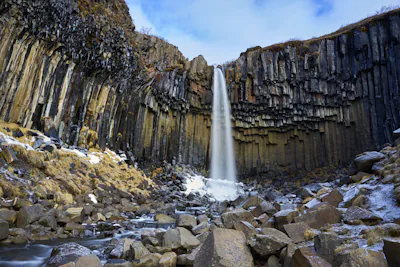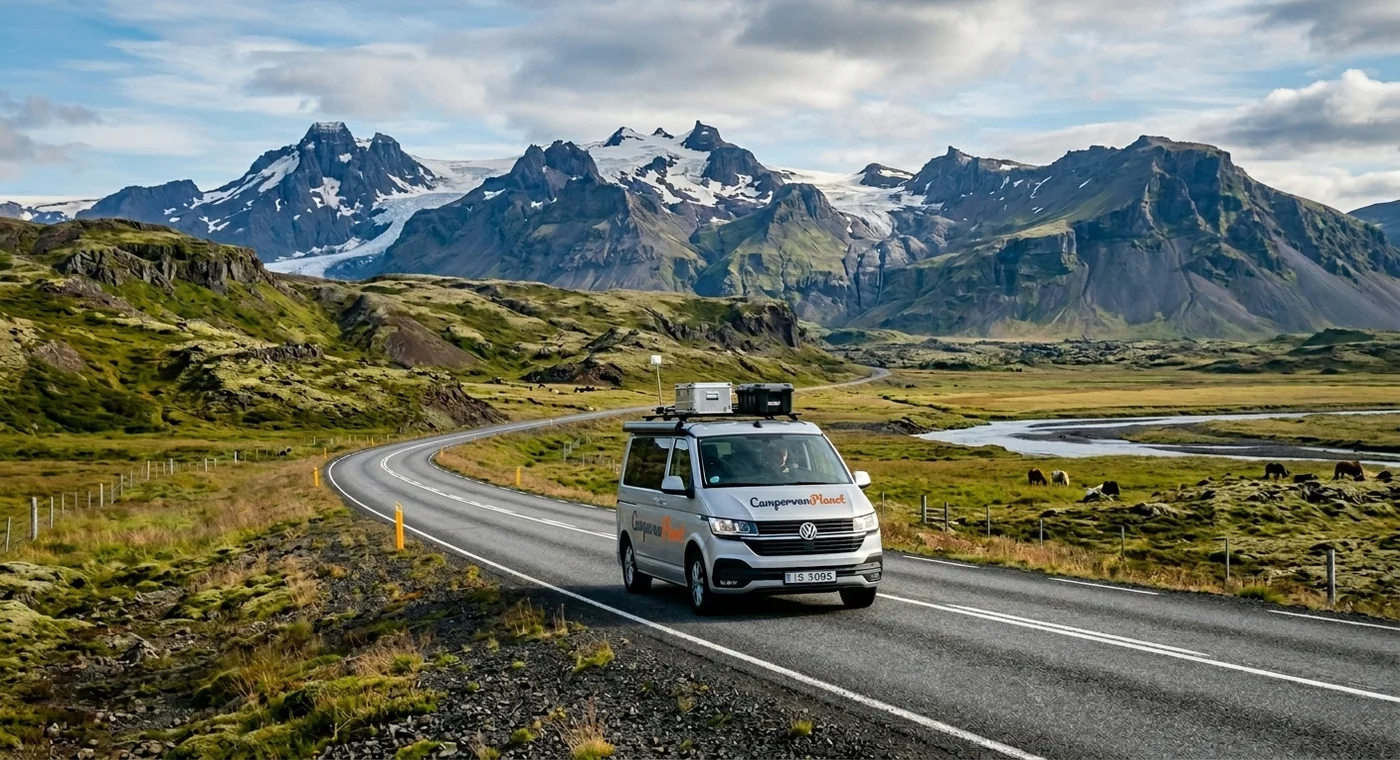
Iceland is a campervan traveler's paradise, dramatic waterfalls, black sand beaches, glaciers, and geothermal wonders await at nearly every turn of the Ring Road. But Iceland's unique driving environment requires knowledge and preparation beyond what you'd need in most European countries. This comprehensive guide covers everything you need to know to drive safely and confidently across Iceland's extraordinary landscape.
Driving Side and Road Basics
Iceland follows the standard European practice of driving on the right-hand side of the road. If you're coming from the UK or Ireland, you'll need to adjust your perspective, literally and psychologically. The good news is that Iceland's roads are generally well-maintained and straightforward to navigate, with clear signage throughout the country. Road numbers are prefixed with Route (e.g., Route 1 for the Ring Road), making them easy to identify on maps and GPS units.
The Ring Road, Iceland's main highway encircling the entire country, is 1,322 kilometers and can be driven in 13-15 hours of continuous driving. Most travelers split this into a 5-7 day journey, allowing time to explore attractions, rest, and enjoy the dramatic scenery. The Ring Road is generally well-paved and accessible in two-wheel-drive vehicles during summer months, but conditions change dramatically with the seasons.
Speed Limits and Road Safety
Iceland has three primary speed limit zones that you'll encounter regularly:
- Motorways and main roads: 90 km/h (56 mph)
- Secondary roads: 80 km/h (50 mph)
- Built-up areas (towns and villages): 50 km/h (31 mph)
Speed limit enforcement in Iceland is strict and consistent. Cameras monitor major routes, and fines are substantial, often exceeding €500 for speeding violations. More importantly, Iceland's weather conditions and road surfaces demand cautious driving. Wind gusts can reach extreme speeds, especially in coastal and exposed areas, and loose gravel on secondary roads requires careful handling. Respect the posted limits, they reflect genuine safety concerns specific to Iceland's environment.
Distance between towns can be significant, so plan fuel stops accordingly and always inform someone of your intended route and expected arrival time. Cell phone coverage is excellent in populated areas but spotty in remote regions. Carry a physical map as backup to your GPS.
F-Roads: Highland Routes for 4x4 Vehicles Only
Iceland's mountain roads are prefixed with "F" and represent some of the country's most spectacular scenery. These roads traverse the central highlands and connect remote areas with otherworldly landscapes. However, F-roads are strictly for four-wheel-drive vehicles only, and rental companies are adamant about enforcing this rule.
Attempting an F-road in a standard two-wheel-drive campervan can result in substantial rental car damage charges, void your insurance, and potentially strand your vehicle in dangerous terrain. If you plan to explore the highlands, you'll need to either rent a 4x4 campervan specifically or arrange transportation through tour operators. The cost differential between standard and 4x4 campervans is worth considering in your budget.
F-roads typically open between July and September, depending on snow conditions. Check road status at road.is before planning highlands routes. Popular highland routes include Kjölur and Sprengisandur, both offering dramatic mountain scenery and access to glaciers, geothermal areas, and remote natural wonders.
Winter Tire Requirements and Seasonal Driving
Icelandic law requires winter tires or snow chains whenever there is snow or ice on the road, and studded tires may only be used from November 1 to April 14 unless conditions require them. Rental companies fit winter tires for the cold season. Winter tires are designed to maintain traction at low temperatures and on snow/ice, and they make a genuine difference in safety and control.
If you're renting a campervan during winter months, confirm that winter tires are included and properly fitted. Rental companies charge extra for this essential service, so factor it into your budget. Driving in winter requires significantly more time for routes, what takes 8 hours in summer might take 12+ hours in winter due to reduced visibility, shorter daylight hours, and weather-related closures.
Many routes close entirely during winter, particularly in the north and the highlands. The Ring Road generally remains passable in winter except during severe weather events, but secondary roads may close temporarily. Check road.is (the official Icelandic Road Authority website) daily if driving in winter, and be prepared to adjust your plans based on real-time conditions.
Winter driving in Iceland requires extreme caution. Sudden whiteout conditions, black ice, and harsh wind gusts are genuine hazards. Consider hiring a professional driver or using tour services if you're uncomfortable in extreme weather. Driving slowly is better than driving quickly, no scenic view is worth risking your safety or that of others on the road.
Single-Lane Bridges: Yielding Rules and Etiquette
Iceland has numerous single-lane bridges, particularly in remote areas. These bridges have specific yielding rules that all drivers must follow. As you approach a single-lane bridge, look for traffic lights or signs indicating whether you have right-of-way. If a red light shows, wait for oncoming traffic to cross. If a green light shows, proceed cautiously across the narrow bridge.
Many remote bridges use the "honor system", no traffic lights, just signs indicating which direction should yield. Generally, the direction with open road ahead has priority. Always approach slowly, be prepared to stop, and if you encounter another vehicle, communicate through headlight flashing or hand signals to determine who will proceed first. Most Icelandic drivers are courteous and patient with this system, and reciprocating that courtesy keeps everyone safe.
Livestock and Wildlife on Roads
Iceland's interior and remote coastal areas are home to sheep, horses, and occasionally reindeer that roam freely, particularly during spring and early summer when herds are moved to summer pasture. These animals can wander onto roads at any time, creating hazards for both drivers and livestock.
Hitting an animal can result in serious vehicle damage, potential injury to vehicle occupants, and harm to the animal. Locals are generally patient with road delays caused by livestock, and you should be too. If sheep block the road, reduce speed, approach cautiously, and allow them time to move naturally. Never attempt to shoo or frighten them, this stresses the animals and can cause them to move unpredictably into traffic.
Fuel Stations and Route Planning
Fuel availability is generally good in populated areas and along the Ring Road, but planning is essential, particularly in remote regions. The distance between fuel stations can exceed 100 kilometers, and prices are significantly higher than in most of Europe (often €2.10-2.30 per liter). Budget accordingly for fuel costs, a full tank in Iceland can cost €80-100+.
Many fuel stations operate 24/7 with card payment systems at the pump, allowing payment outside staffed hours. Download maps showing fuel station locations and consider using the Icelandic fuel comparison app or website to find competitive prices. In remote areas, fuel may be available only during specific hours or may be limited in supply.
Plan routes carefully, particularly in winter or when driving into remote areas. Never let your fuel tank drop below half-full, as unexpected detours, road closures, or weather delays can extend journeys significantly. Some fuel stations in remote areas may only accept Icelandic payment cards, so carry physical cash as backup.
Weather Conditions and Road Closures
Iceland's weather is famously unpredictable and can change dramatically within hours. Clear morning conditions can transform into whiteout snowstorms or dangerous wind conditions by afternoon. This rapid weather change is the primary reason why detailed route planning and daily updates are essential.
The official source for road conditions is road.is, maintained by the Icelandic Road Authority. This website shows real-time closures, camera feeds from major routes, and detailed driving conditions. Check it every morning before driving and before attempting any remote routes. Weather information is available through iceland.is and local weather services like vedur.is.
Wind is a particular concern in Iceland, and sudden gusts can affect vehicle stability, especially in campervans with higher profiles and lighter weight. Pay attention to wind warnings, particularly when crossing large valleys or coastal areas where wind is funneled and accelerated. If conditions feel unsafe, reduce speed, grip the steering wheel firmly, and consider pulling over until conditions improve.
Parking in Reykjavik and Other Towns
Reykjavik, Iceland's capital, has designated campervan parking areas, some free and some with modest fees. Many spaces are time-limited (typically 24-48 hours) to prevent long-term stays. Parking services use payment apps, and enforcement is regular.
Throughout the country, you'll find parking areas at attractions, town centers, and rest areas. Some are free, while others charge nominal fees (typically €5-10 per day). Wild camping is not permitted in Iceland: since 2015 you must spend the night at a registered campsite, or with the landowner's permission, and towns and attractions have designated campervan parking areas. Always look for posted signs and respect parking restrictions.
Use campsite and parking apps like Park4Night to find overnight stops in Reykjavik and other towns. These apps show parking locations, facilities, costs, and recent traveler reviews. Many parking areas fill quickly during peak season (June-August), so arriving early improves your chances of securing a spot.
Insurance and Special Coverage
Standard rental car insurance may not cover damage from gravel, ash, wind damage, or sand in Iceland. These are genuine hazards in Iceland's unique environment. When renting a campervan, understand exactly what your insurance covers and what's excluded.
Many rental companies offer additional coverage for gravel damage, ash damage, and wind damage at a daily cost (typically €10-20 per day). While this seems expensive over a week, a single windshield replacement or paint damage claim can exceed €1,000, making the additional coverage worthwhile.
For international travelers, confirm that your rental company's insurance is valid. Some credit card companies offer car rental coverage, but exclusions often apply to campervan rentals, particularly in Iceland. Review your personal coverage before committing to a rental.
Resources and Final Preparation Tips
Several resources will prove invaluable for your Icelandic driving adventure:
- road.is: Official road conditions and closures (essential daily resource)
- safetravel.is: Current safety information and weather alerts
- vedur.is: Detailed weather forecasts from the Icelandic Met Office
- island.is: General information about traveling in Iceland
- Golden Circle GPS app or Google Maps: Navigation with offline maps capability
Before departing, invest in quality planning: print or download offline maps, create a detailed route plan with daily segments and estimated driving times, and identify fuel stations and parking areas in advance. Carry spare windshield wipers, washer fluid, and a basic tool kit, these items are expensive in Iceland and useful when away from towns.
Respect Iceland's natural environment and driving laws. Speeding fines, parking violations, and vehicle damage claims can quickly escalate your travel costs. More importantly, Iceland's dramatic landscape demands careful, attentive driving. The memories you create driving Iceland's Ring Road, the waterfalls, glaciers, black sand beaches, and geothermal wonders, will last a lifetime.
Conclusion: Drive with Confidence and Respect
Iceland's roads are among Europe's most spectacular and challenging. Success requires research, preparation, and respect for Iceland's unique driving environment. By understanding speed limits, F-road restrictions, winter requirements, single-lane bridge etiquette, and weather hazards, you'll be well-prepared for an unforgettable campervan adventure.
Check road.is daily, respect posted regulations, maintain patience with weather and traffic delays, and you'll return home with stories of extraordinary natural beauty and the personal satisfaction of having successfully navigated one of the world's most challenging and rewarding driving destinations.
Ready to Start Your Icelandic Campervan Adventure?
Explore Iceland's Ring Road with confidence. Find your perfect campervan and start planning your journey today.
Browse Campervan Options