Limited time only! Get a free 1GB eSIM* with your campervan booking. T&Cs apply.
Call us
Language & Currency
Language
Campervan and motorhome rental in the United Kingdom English
EnglishDefault

Currency
KIAORA75Save NZD 75 on your first trip

Hire a Car or 4x4 with a Rooftop Tent in Christchurch

Pick up in Christchurch and camp your way across the South Island.

First trip to NZ? 75 NZD off·KIAORA75

Pick-up Location
NZChristchurch
Pick-up 15 Jun 2026
MoTuWeThFrSaSu
Drop-off 25 Jun 2026
MoTuWeThFrSaSu
Best Price
Guaranteed
4.7 ★★★★★TrustpilotWorld's Leading
RV Rental Agency
Read this first

Rooftop Tents and Christchurch’s Camping Rules

New Zealand’s freedom-camping law now runs on the green self-contained certificate, which requires a fixed toilet plumbed to a sealed tank. A car with a rooftop tent cannot meet that standard, and the old blue cards stopped counting on 7 June 2026. That applies around Christchurch as everywhere else, so we would rather tell you before you plan around it.

No freedom camping

In zones restricted to certified self-contained vehicles, a rooftop-tent car simply does not qualify. The portable toilet in the kit does not change that under the current rules.

Holiday parks

Commercial campgrounds welcome rooftop tents everywhere, with power, kitchens and laundry. Between DOC and the holiday parks, the itinerary loses nothing but the grey areas.

Contract limits

The standard rental exclusions apply here too: Skippers Road, Ninety Mile Beach and ski-field access roads are off-limits, and longer gravel needs the operator’s approval.

What you’re hiring

A Car or 4x4 with the Tent on Top

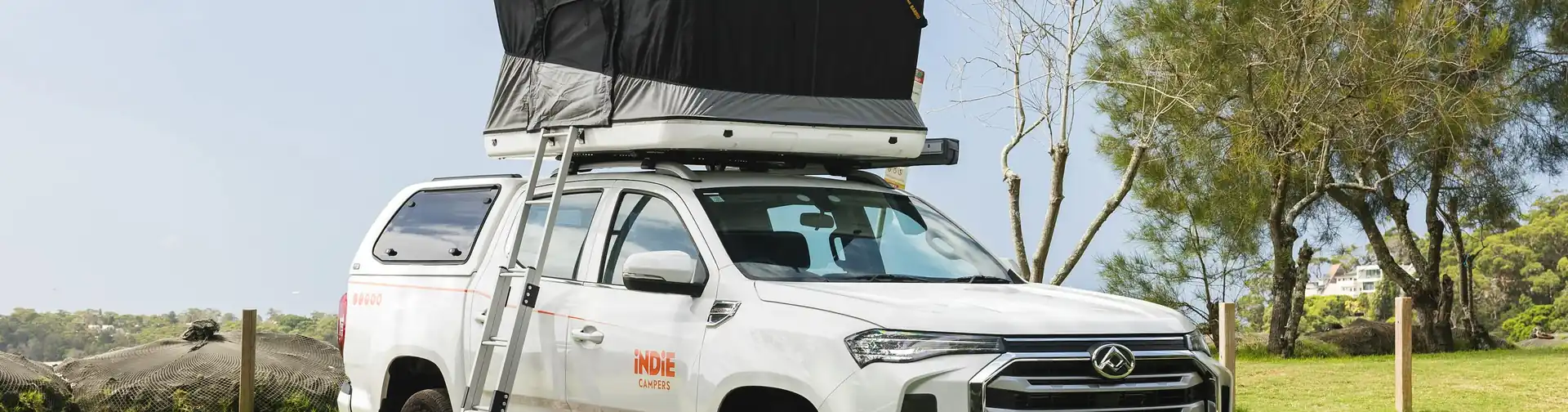
The whole vehicle, tent fitted, kit included, you set it up yourself in minutes and fold it flat before driving. Not a tent rental for your own car, and never sold as self-contained.

Budget to 4 berth

In Christchurch the range runs from Lucky’s budget manual Roadie, automatic four-berth Rover and automatic three-berth Rambler to the Indie Adventure Standard 4x4 and Adventure Standard Select 4x4, and on to Britz’s four-berth Voyager flagship. Pick by budget, berths and how much gravel you have planned.

Kit included

Bedding, kitchen kit and, on most models, a portable toilet and shower setup ride along. Useful at a Basic DOC site, but legally not a substitute for self-containment.

Fleet

The Rooftop-Tent Fleet You Can Book in Christchurch

We only list what our booking engine confirms with the rooftop-tent filter on for Christchurch pick-up: six vehicles, from the budget Lucky Roadie (about €64 per day) and automatic Lucky Rover (about €88) to the Indie Adventure Standard 4x4 (about €117) and Adventure Standard Select 4x4 (about €119), the Lucky Rambler (about €138) and Britz’s four-berth Voyager (about €172). Run the search above for live dates.

Verified for Christchurch pick-up

Lucky Roadie

3 adultsSleeps 3ManualUnlimited km

The budget door into rooftop-tent travel from Christchurch, with kitchen kit and portable toilet and shower included. The automatic four-berth Lucky Rover (from about €88), Indie’s Adventure Standard 4x4 (about €117) and Adventure Standard Select 4x4 (about €119), the automatic three-berth Lucky Rambler (about €138) and Britz’s four-berth Voyager flagship (about €172) show on most Christchurch searches alongside it.

From about
€64/day
November dates for Christchurch pick-up
Routes

Three Trips That Suit a Rooftop Tent

Banks Peninsula & Akaroa

~85 km from the city • sealed SH75 • 1–2 days

Over the crater rim to the harbour, with holiday parks in Akaroa and quiet bays beyond. All sealed, so any vehicle in the fleet handles it.

Arthur’s Pass

SH73 • ~150 km • 2–3 days

The sealed Great Alpine Highway climbs past Castle Hill to the pass and its DOC campsites. The ski-field access roads off it are typically excluded by the hire contract, so admire them from the highway.

Mackenzie Country & Lake Tekapo

SH1 and SH8 • 2–3 days

Dark-sky country with lakeside campgrounds around Tekapo and Pukaki. Prefer the coast? Head north on SH1 to Kaikoura instead for whales and seaside camping.

Questions

Rooftop Tent Hire Christchurch FAQ

Can I freedom camp around Christchurch in a car with a rooftop tent?+
Not in zones restricted to certified self-contained vehicles: the green certificate requires a fixed toilet plumbed to a sealed tank, which a rooftop-tent car cannot fit, and the old blue cards stopped being valid on 7 June 2026. Around Christchurch, book a DOC or commercial site instead.
Where can I legally camp near Christchurch then?+
Across the DOC network, no self-containment required: Basic campsites are free, Standard sites run NZ$10 to 20 per adult and Serviced sites NZ$20 to 28 with hot showers. Banks Peninsula, Arthur’s Pass and the Mackenzie all have DOC sites, and the city’s holiday parks welcome rooftop tents too.
Which rooftop-tent vehicles can I actually book in Christchurch?+
Six, verified with the rooftop-tent filter: the budget manual Lucky Roadie from about €64 per day, the automatic four-berth Lucky Rover from about €88, Indie’s Adventure Standard 4x4 from about €117 and Adventure Standard Select 4x4 from about €119, the automatic three-berth Lucky Rambler from about €138, and Britz’s four-berth Voyager from about €172. Run the search above for live dates and prices.
The kit includes a portable toilet. Doesn’t that make it self-contained?+
No. Since June 2023 new certifications require a fixed toilet, and portable ones no longer qualify a vehicle for the green certificate. The kit is genuinely useful at a Basic DOC site, but it does not change the freedom-camping rules.
Can I drive with the tent open?+
No, the tent travels folded and secured. You set it up yourself at camp, operators quote a couple of minutes once you have done it twice, and fold it flat before moving the vehicle.
Can I drive up the ski-field roads or into Skippers Canyon?+
No. Ski-field access roads, including those off SH73 near Arthur’s Pass, are typically excluded by the hire contract, and so is Skippers Road near Queenstown. Unsealed roads beyond short campsite access need the operator’s approval.
Is Arthur’s Pass doable with a rooftop-tent vehicle?+
Yes. SH73 is a sealed state highway all the way over the pass, with DOC campsites en route. Check the forecast in the colder months, and remember that the excluded ski-field side roads are not part of the trip: the highway is.
What about Kaikoura and Lake Tekapo?+
Both are straightforward sealed drives from Christchurch: Kaikoura north on SH1, Tekapo southwest via SH1 and SH8. Campgrounds at both ends take rooftop tents without a second glance.
Do I need the 4x4 for Banks Peninsula?+
No, the road over to Akaroa is sealed, so any vehicle in the fleet handles it. The 4x4s earn their keep on gravel the operator approves beyond campsite access, not on the peninsula’s bends.
Is a rooftop tent warm enough for the South Island?+
There is no official guidance on winter use, so be honest with yourself about the season: the fleet shines from spring to autumn, and alpine winter nights in Canterbury are tent nights, with everything that implies. Ask the operator about bedding before a cold-season booking.

Ready to Explore the South Island from Christchurch?

Start your adventure today. Compare rooftop-tent cars and 4x4s, find the best deal, and drive the roads less travelled.

Search Rooftop Tent Campers Now

Our best rooftop tent hire destinations

Rooftop tent camper beside a New Zealand lake
Rooftop Tent Hire
New Zealand
See more
Sydney Opera House at dusk, Australia
4x4 & Rooftop Tent Hire
Australia
See more
4WD camper in the New Zealand high country
4WD Camper Hire
New Zealand 4WD
See more

Stay Updated

Get New Zealand travel tips, new deals, and route guides delivered to your inbox.

Your Road Trip Guide

Your New Zealand Rooftop Tent Road Trip

New Zealand's stunning landscapes, diverse scenery, and breathtaking natural beauty make it one of the most extraordinary countries to explore with a rooftop tent camper. Whether you're driving the scenic highways or opening the tent at a lakeside DOC campsite, here's everything you need to know to plan the perfect trip.

Driving rules in New Zealand

New Zealand drives on the left-hand side of the road, the same as the UK, Australia, and Japan. If you're arriving from Europe or North America, take extra care at roundabouts and intersections until you adjust. Speed limits are enforced by police and fixed speed cameras, particularly in towns and school zones. Fines start at NZ$100 and can go much higher for serious offences.

Here are the key traffic regulations to keep in mind when driving New Zealand with a rooftop tent camper:

  • Speed limits: 50 km/h in residential and urban areas, 100 km/h on open roads and highways. Some motorways have variable speed limits. Always observe posted signs and adjust for weather and road conditions. Hire vehicles, rooftop tent campers included, are not exempt from speed limits.
  • Seatbelts mandatory: All passengers, front and rear, must wear seatbelts at all times. Children must use appropriate child seats or boosters depending on age and size. The driver is responsible for ensuring all passengers are restrained.
  • Zero tolerance for drink driving: The legal blood alcohol limit is 0.05%. For drivers under 20 years old, the limit is zero. Penalties include heavy fines, licence suspension, and imprisonment for repeat offenders.
  • Roundabouts: Give way to traffic already in the roundabout. Traffic on your right has priority. Use your indicators when leaving the roundabout and watch for pedestrians.
  • One-lane bridges: Common in rural areas, particularly in Waikato, Taranaki, and Southland. If you encounter a bridge with red traffic lights, you must give way. If the light is green, proceed with caution and be ready to stop if another vehicle approaches.
  • Mobile phone use: Strictly prohibited while driving unless using a hands-free system. Violations carry a NZ$80 fine and can affect your licence.
  • Cyclists and pedestrians: Always give cyclists at least 1 metre of space when passing. Be extra cautious around schools, shopping areas, and residential zones.
  • Parking rules: Always park in designated areas and observe posted signs. Parking illegally can result in fines of NZ$60-120 and potential vehicle immobilisation.

Gravel and backcountry roads

Many of New Zealand's most scenic routes are unpaved gravel roads, particularly in the South Island's backcountry, the Catlins, and rural North Island regions. Standard 2WD vehicles are usually approved for main gravel roads in good condition. However, rental companies typically restrict access to more remote gravel roads, requiring a 4WD vehicle for adventurous explorations.

Gravel roads require a different driving approach: reduce speed to 60-80 km/h, increase following distance from other vehicles (flying gravel can damage windscreens), and watch for loose surfaces especially at corners and on hills. Avoid braking hard on gravel as it reduces control, ease to a stop instead. Check your rental agreement carefully for permitted road types, as insurance may be void if you venture beyond approved routes.

Pro tip: Download the NZTA journey planner before your trip to check road conditions and hazards. For emergency assistance, call 111. Always carry water, a basic tool kit, and a spare tyre, especially when venturing into remote areas.

Road conditions and weather

New Zealand's weather is changeable and can shift rapidly, especially in mountainous regions and along the coasts. Summer roads are generally well-maintained, but winter (June-August) brings snow to alpine passes, particularly in the South Island. Even in summer, mountain roads can be closed due to snow or weather hazards.

  • Check weather and road conditions daily: Visit the Waka Kotahi NZTA website (nzta.govt.nz) for real-time traffic and road condition updates, including hazard alerts and closures. Download the MetService app for forecasts.
  • Alpine passes: Major passes like Crown Range, Lewis Pass, and Arthur's Pass can be closed in winter without warning. Always check before attempting to cross.
  • Fog and mist: Coastal roads and mountain passes are prone to sudden fog, particularly in early morning and evening. Reduce speed and use headlights when visibility is poor.
  • Livestock on roads: Sheep and cattle regularly wander onto rural roads, especially in farming areas. Always slow down when you see animals, and be prepared for sudden movements.
  • Unsealed surfaces: Gravel roads can be slippery when wet. Reduce speed further in rain and be cautious at corners.
  • Winter driving: If driving in winter, use winter tyres, carry chains or traction aids, and always check road conditions before setting out. Some roads close entirely during heavy snowfall.

Fuel and charging stations

Petrol and diesel are widely available at service stations throughout New Zealand, with fuel stops never more than 150 km apart on main routes. In very remote areas like the West Coast or Central Plateau, fuel stations can be further apart, so it's wise to refuel whenever the tank drops below half-full.

Most service stations are self-service, accepting credit and debit cards with chip and PIN. Common fuel chains include Z, BP, Caltex, and Gull. Fuel prices vary by location and season, typically ranging from NZ$2.20-2.80 per litre. Electric and hybrid rental cars are becoming more available; charging stations are found at many campgrounds, visitor centres, and urban areas. Use the ChargeNet or PlugShare apps to locate charging points on your route.

Pro tip: Fuel is cheaper at larger chains in urban areas. Small rural stations may charge premium prices. Download the Gaspy app to compare fuel prices across locations. Always carry cash as some very remote stations may not accept cards.

Parking, tolls, and permits

New Zealand has very few road tolls: the Northern Gateway north of Auckland, plus the Tauranga Eastern Link and Takitimu Drive near Tauranga. These are paid online through NZTA, and the rest of the state highway and regional road network is free to use. Parking in towns and cities is metered and managed by local councils; fees typically range from NZ$1-3 per hour. Parking violations result in fines of NZ$60-120.

In national parks and natural attractions (like Milford Sound, Tongariro National Park, and Mount Cook), parking is usually free or charges a small fee (NZ$5-20). Always park in designated areas, unauthorised parking on roadsides or in protected natural areas is illegal and can result in hefty fines, as New Zealand's unique ecosystems are strictly protected.

Camping in New Zealand: a complete overview

New Zealand has excellent camping infrastructure, with hundreds of managed campgrounds and freedom camping areas scattered across both islands. Whether you're exploring Fiordland, the West Coast, or the North Island's geothermal regions, you'll find quality accommodation options. Most commercial campsites operate year-round, though peak season is December-February when advance booking is essential.

Facilities vary by location and price. Well-equipped commercial campgrounds (like Top 10 Holiday Parks) offer hot showers, flush toilets, electricity hookups, WiFi, laundry, and communal kitchens. Basic DOC campgrounds offer minimal facilities, sometimes just toilets and water. Freedom camping areas allow certified self-contained vehicles to park for free or low cost, which rules out a rooftop-tent car; stick to the campgrounds and DOC sites. Most campgrounds have designated drive-in spaces with flat, gravel or sealed surfaces, exactly what a rooftop tent wants.

Campsite costs and booking

Camping costs vary significantly by location and facilities. Budget expectations: basic DOC sites from NZ$10-20/night, mid-range commercial campgrounds NZ$30-50/night, and premium facilities NZ$50-80/night per vehicle. Many sites charge per person or per vehicle, check before booking. Some sites offer week or monthly passes for better value.

Book in advance during peak season (December-February), as popular campgrounds fill quickly. Use DOC.govt.nz and individual campground and holiday park websites to reserve sites. Off-season (June-August) offers more flexibility with shorter lead times required. Many campsites accept payment on arrival, but popular locations increasingly require pre-payment credit cards.

Pro tip: Download the CampSites NZ app to find campgrounds, check availability, and read reviews from other travellers. Create a bookmark folder of your planned daily stops to ensure you have accommodation locked in during summer travel.

Types of camping in New Zealand

New Zealand offers diverse camping options to suit all budgets and preferences:

  • DOC (Department of Conservation) campgrounds: Basic to well-equipped sites managed by the government. Locations are stunning, many sit at trailheads for famous hikes like Milford Track, Tongariro, and Lake Rotoiti walks. DOC sites are affordable and trustworthy.
  • Top 10 Holiday Parks: Premium chain with excellent facilities, hot pools, entertainment, restaurants, and modern amenities. Higher price but great for comfort-focused travellers.
  • Freedom camping areas: Designated free or low-cost parking for certified self-contained vehicles. No facilities provided. Locations range from scenic reserves to lakesides. Rules vary by local council, always check signs before parking.
  • Private farm stays: Many rural farms offer small, intimate campsites with pastoral views. Some provide farm experiences like fruit picking or farm tours. Search websites like Farmstay.co.nz.
  • National Park campsites: Located within or near Tongariro, Fiordland, Aoraki/Mount Cook, and other parks. Often fully booked in summer, plan ahead.
  • Working holiday parks: Some parks offer discounted rates (NZ$20-30/night) for backpackers willing to work a few hours. Check HelpX.net or WorkAway.info.

Freedom camping rules and regulations

New Zealand permits freedom camping in designated areas for certified self-contained vehicles (defined as having independent water, toilet, and power systems). A rooftop-tent car cannot be certified, so for you these rules mostly explain where not to park overnight:

  • Self-contained certification required: The vehicle must hold a self-contained certificate from the manufacturer or rental company. Non-certified vehicles cannot freedom camp and must use campgrounds.
  • Only designated areas: Freedom camping is allowed only in designated areas, check local council bylaws as rules vary by region. Popular tourist areas (Queenstown, Arrowtown, etc.) often have strict restrictions.
  • No freedom camping in national parks unless specifically designated. Violations can result in fines up to NZ$3,000.
  • Environmental responsibility: Certified vehicles must use their onboard toilet; either way, never dispose of waste on land, and pack out all rubbish. Contaminating natural areas can result in heavy fines.
  • Respect local communities: Park discreetly, avoid noise, and leave sites pristine. Irresponsible freedom camping has led councils to restrict or eliminate sites.
Pro tip: Use the CamperMate and Rankers Camping NZ apps to find campgrounds and check local regulations. Read reviews from other travellers to find best-value sites. Always carry spare water, remote sites may not have facilities.

Top campgrounds for New Zealand rooftop-tent travellers

These standout campsites offer exceptional value, locations, or facilities:

  • Milford Sound DOC Campground (South Island): The most stunning setting in New Zealand, nestled between towering peaks at the entrance to Milford Fjord. Basic facilities but absolutely magical. Book months in advance.
  • Glenorchy DOC Campground (South Island): Lake Wakatipu views with access to Routeburn Track and Dart River adventures. Popular with trampers and adventure seekers.
  • Tongariro National Park (North Island): Located at the start of New Zealand's most famous walk. Hot pools and geothermal areas nearby. DOC sites fill quickly in summer.
  • Waikaremoana DOC Campground (North Island): Lake camping in the remote Urewera ranges. Stunning wilderness with walking tracks and excellent fishing.
  • Abel Tasman National Park (South Island): Gateway to beaches, coastal hikes, and the famous Great Walk. Multiple campgrounds with access to golden sand beaches.
  • Aoraki/Mount Cook DOC Village (South Island): Iconic alpine setting with restaurant and hot showers. Premium facilities with stunning mountain backdrop.

Waste disposal and environmental responsibility

All commercial campgrounds and DOC sites provide waste water disposal (grey water dump) and chemical toilet emptying facilities. It is illegal and environmentally destructive to dump waste anywhere else. New Zealand's pristine waterways and native ecosystems are protected by strict environmental laws, violations can result in fines up to NZ$20,000.

Recycle wherever possible. Most towns have recycling stations (separate for glass, plastic, paper, and metals). Campsites often have recycling services, ask at arrival. Never leave rubbish behind, pack it out or find appropriate bins in towns. Leave every site exactly as you found it.

Best activities and adventures in New Zealand

New Zealand is one of the world's premier adventure destinations, renowned for its stunning natural landscapes and world-class outdoor experiences. From hiking active volcanoes to bungee jumping and jet boating, the country offers adventures for every adrenaline level. With a rooftop tent camper, you can base yourself near activity starting points, save on accommodation, and access trailheads early before crowds arrive.

Most outdoor activities can be booked online through operators like Viator, GetYourGuide, or local visitor information centres. Booking 1–2 weeks ahead is recommended for popular activities like Milford Sound and adventure sports in peak summer season. Many tours include hotel pickup, but self-driving travellers can arrange direct pickup at nearby sites for the same cost.

Great Walks and hiking

New Zealand's Great Walks are the country's premier multi-day tramping trails. The most famous is the Milford Track (South Island, 54km, 4 days), walk from Glade House to Milford Sound for some of the most dramatic scenery on Earth. The Routeburn Track (3 days) crosses the Humboldt and Ailsa Mountains with incredible alpine views. The Tongariro Northern Circuit (North Island, 4 days) loops through volcanic terrain with active geothermal features.

Day hikes are equally spectacular: Roys Peak (Wanaka, 16km), Ben Lomond (Queenstown, 14km), and the Tongariro Alpine Crossing (17km, can be done in one day). Book Great Walk tramps 3–6 months ahead via the DOC website, accommodation in mountain huts fills quickly in summer (December-February).

Pro tip: All tramping requires sturdy boots, layered clothing, and rain gear. New Zealand weather changes rapidly, even summer walks can encounter snow on alpine sections. Carry the 1:50,000 DOC map and download offline maps on your phone for remote areas.

Adventure sports and thrill activities

Queenstown (South Island) is the adventure capital of New Zealand. Activities include bungee jumping, jet boating, whitewater rafting, paragliding, and skydiving. The Kawarau Bridge Bungy (43m jump) is New Zealand's original bungy with suspension bridge views. Shotover Jet is a heart-pounding jet boat ride through tight river canyons. Prices range from NZ$50-300 depending on activity.

Rotorua (North Island) specialises in geothermal activities: zip-lining through redwood forests, thermal mud baths, and hot spring visits. Lake Taupo offers skydiving with volcano views. Most adventure companies pick up from central locations with budget accommodation, so self-driving travellers can often join tours at the activity location directly.

Fiordland and marine experiences

Milford Sound is New Zealand's most visited natural attraction, a day cruise through a UNESCO World Heritage fjord with towering cliffs, waterfalls, and rainforest. Boats depart from Milford Sound Visitor Centre (2 hours from Te Anau). Cruises run year-round, with 2–3 departures daily in summer. Cost: NZ$75-150 per person.

Doubtful Sound is a more remote and peaceful alternative requiring a coach journey from Te Anau and overnight cruise options. Scenic cruises in Marlborough Sounds (South Island) explore waterways with wildlife spotting opportunities. All cruise departure points have ample parking for camper vehicles.

Wildlife encounters

New Zealand's unique wildlife includes kiwi birds, penguins, seals, and dolphins. Kiwi bird viewing is available at sanctuaries and predator-free reserves around the country. Yellow-eyed penguin (hoiho) viewing occurs at Oamaru (South Island) at sunset when penguins return from the sea, viewing is free from designated public viewing areas.

  • Dolphin spotting: Swim with Hector's dolphins in Akaroa (Banks Peninsula, South Island) or Doubtful Sound. Tours: NZ$150-200.
  • Seal colony tours: Cape Foulwind or Oamaru. Walk to colonies and observe in natural habitat. Free or small donation.
  • Whale watching: Kaikoura (South Island), an easy drive north of Christchurch, where sperm whales are seen year-round and humpbacks pass through in winter. Tours: NZ$150-180.
  • Glow worm caves: Waitomo Caves (North Island), boat through underground cave lit by thousands of glow worms. Tours: NZ$50-100.

Geothermal and thermal activities

The Rotorua area features geothermal wonders: Waiotapu thermal park with colourful hot springs and mud pools, Lady Knox Geyser erupting daily at 10:15 AM, and the Orakei Korako "hidden valley" with geothermal features. Hot Water Beach on the Coromandel Peninsula (North Island) is a unique experience, dig a hot pool in the sand at low tide.

Soaking in natural hot pools is popular nationwide: Tekapo Hot Pools, Hanmer Springs, and various DOC sites offer free or low-cost natural thermal soaking. Many campgrounds have natural hot pools nearby, ask locals for recommendations.

Pro tip: Book major activities (Milford Sound, adventure sports) online before peak season. Day hikes don't require permits but can get crowded, start early (7–8 AM) to avoid parking and track congestion at popular locations like Roys Peak and Tongariro Crossing.

Essential travel tips for driving New Zealand in a rooftop tent camper

Driving a rooftop tent camper around New Zealand is one of the most rewarding travel experiences in the world. The main highways are well-maintained and accessible to every vehicle in the rooftop-tent fleet, but the country's diverse terrain, mountains, coastlines, fiords, and wine regions, requires careful planning. The South Island loop typically takes 7–10 days, the North Island 5–7 days, and a full North and South Island circuit 12–16 days at a comfortable pace. Shorter trips focusing on specific regions (Fiordland, Bay of Islands, Queenstown area) work equally well.

Best time to visit New Zealand with a rooftop tent

The ideal time for a rooftop-tent trip depends on your weather tolerance and activity preferences:

  • December–February (summer): The most popular season. Temperatures 18–25°C, longest daylight hours, all attractions open, brilliant for hiking and outdoor activities. The downside: higher rental prices, busier campgrounds, and peak tourist crowds. Popular camping areas fill quickly.
  • March–May (autumn): Fantastic season. Fewer tourists, lower prices, beautiful autumn colours, mild temperatures, and excellent hiking conditions. Most attractions and campgrounds still fully operational. Weather remains stable.
  • June–August (winter): Cool temperatures (8–15°C), shorter days, potential snow on alpine passes, but fewer tourists and budget rental prices. Remember you are sleeping in a tent: alpine winter nights need serious bedding. Skiing available in the Southern Alps. Requires more planning for road closures and cooler conditions.
  • September–November (spring): Days lengthen rapidly, wildflowers bloom, migrating birds return, and spring adventures begin. Prices start rising towards peak season. A sweet spot for many travellers.

Weather and what to pack

New Zealand's weather is changeable, especially in mountainous regions and exposed coastal areas. The saying "four seasons in one day" is often accurate, particularly in alpine regions. Layering is essential:

  • Base layer: Merino wool or synthetic moisture-wicking layers for comfort in varying conditions.
  • Mid layer: Fleece jacket or down vest for insulation, particularly for alpine hiking and evening temperatures.
  • Outer layer: Windproof and waterproof jacket and trousers, essential for both North and South Islands. Many hikes can encounter sudden weather changes.
  • Footwear: Sturdy hiking boots for tramping. Bring lighter shoes for driving and campsite use. Waterproof boots recommended for winter hiking or any extended outdoor time.
  • Accessories: Hat, gloves, sunglasses, and high-SPF sunscreen (UV levels are intense in New Zealand). Buff or neck gaiter for wind protection.
Pro tip: The major cities (Auckland, Wellington, Christchurch, Dunedin) have excellent outdoor retailers like Kathmandu and Macpac if you need to buy or replace gear. Small provincial towns have limited shopping, stock up in major cities before heading to remote areas.

Money, costs, and budgeting

New Zealand uses the New Zealand dollar (NZ$). Credit and debit cards are accepted almost everywhere, including small towns, DOC campsites, and petrol stations. Cash is still useful for farmer markets, some small cafés, and tolls on some ferry routes. ATMs are widespread in towns but scarce in remote areas.

New Zealand offers good value for camping travellers. Here's a realistic daily budget breakdown for a couple travelling with a rooftop tent camper:

  • Vehicle hire: from about €64/day for the budget rooftop-tent cars to about €172/day for Britz's four-berth Voyager flagship, depending on season and city.
  • Fuel: NZ$30–60/day depending on distances and fuel efficiency. Budget more for mountainous South Island driving.
  • Campsite: NZ$30–60/night at commercial campgrounds, or NZ$10–20 at DOC sites, with Basic DOC sites free; freedom camping areas are not an option with a rooftop tent.
  • Groceries: NZ$40–80/day cooking with the supplied kitchen kit. Shop at supermarkets like Countdown, New World, or Pak'nSave for better prices.
  • Eating out (occasional): NZ$15–35 per main course at casual restaurants. Coffee and café food: NZ$5–8.
  • Activities: NZ$50–200 per person per activity (depends on activity, tramping is free, adventure sports are pricey).
  • Total realistic budget: NZ$200–400/day for a couple, including vehicle hire, fuel, camping, groceries, and occasional activities.

Internet and connectivity

Mobile network coverage is excellent in towns and along main highways, but limited in remote areas like the West Coast, Central Plateau, and rural South Island. The major providers are Spark, One NZ (formerly Vodafone), and 2degrees. Spark generally has the most extensive rural coverage.

  • Tourist SIM cards: Available at the airport and in major cities. A prepaid data SIM typically costs NZ$30–50 for several gigabytes of data and can be cheaper than roaming on your home plan.
  • Campsite WiFi: Many commercial campgrounds offer free WiFi, but speeds and reliability vary. DOC campgrounds rarely have WiFi.
  • Offline maps: Download Google Maps, Maps.me, or OMaps offline maps covering New Zealand before your trip. Essential for remote areas with no signal.
  • Emergency help: Call 111 for emergencies. Text 111 if unable to call. Location services on your phone will help rescue crews find you.

Health, safety, and insurance

New Zealand is a safe country with low violent crime. However, the natural environment presents genuine risks that require respect:

  • Beach safety: Many NZ beaches have strong currents and rips. Swim between the patrolled flag markers. Cold ocean temperatures can cause hypothermia quickly even in summer.
  • Hiking hazards: Rapidly changing weather, slippery terrain, and river crossings require proper preparation. Take hikes seriously, people have died from underestimating conditions.
  • Wildlife: New Zealand has no dangerous land animals. However, avoid disturbing seals, penguins, and birds at rest. Insect-borne diseases are not a concern.
  • Driving hazards: One-lane bridges, sharp mountain curves, and livestock on rural roads require cautious driving. Fatigue is a common cause of crashes, pull over and rest if tired.
  • Health and travel insurance: Travel insurance is highly recommended. New Zealand's healthcare is excellent for residents but expensive for visitors. Ensure your policy covers adventure activities like tramping and adventure sports.
Pro tip: Save money at supermarkets like Countdown and New World. Buy fresh produce from local farmers markets and wine at vineyard cellar doors. Many regional i-SITE visitor centres can suggest free activities and scenic drives. The Frommer's New Zealand guidebook and AA New Zealand have excellent campground reviews.

Popular events and festivals in New Zealand

New Zealand's cultural calendar is full of exciting events throughout the year. From outdoor festivals to cultural celebrations and sports events, timing your trip to coincide with one of these occasions is a wonderful way to experience Kiwi culture and community spirit.

Consider incorporating one of these annual events into your New Zealand itinerary:

  • Summer Festival Season (December–February): Cities and towns host outdoor concerts, food festivals, and cultural events during peak summer. Summer arts festivals, outdoor concerts and food events in cities nationwide attract thousands. Many are free or low-cost outdoor events perfect for camping travellers.
  • Waitangi Day (February 6): New Zealand's national day celebrating the Treaty of Waitangi (1840). Waitangi Treaty Grounds near Paihia (North Island) hosts a major ceremony with cultural performances, speeches, and celebrations. Many towns hold parades and civic events. A deeply meaningful day in Kiwi culture.
  • New Zealand Cup and Show Week (November, Christchurch): Marquee horse racing event. While primarily a sporting event, it features the iconic Cup Parade with carnival atmosphere, live music, and festivities. Even if you're not into racing, the cultural celebration is vibrant.
  • Easter Events (March/April): The main cultural Easter celebrations include family festivals across towns. Regional Easter markets and weekend festivals nationwide feature markets, rides, concerts, and food festivals. Timing aligns with NZ school holidays, expect busier campgrounds.
  • Autumn Harvest Festivals (March–May): Wine country harvest festivals in Marlborough, Hawkes Bay, and Central Otago celebrate grape picking and wine. Wineries open their doors, live music, food stalls, and wine tastings. Perfect for exploring wine regions on your route.
  • Matariki (Maori New Year, June/July): New Zealand's Maori New Year is increasingly celebrated nationwide with cultural performances, traditional feasts, and community gatherings. Significant celebrations in cities and towns nationwide. A culturally important time to experience Maori traditions.
  • New Zealand Winter Food & Wine Shows (July/August): A major celebration of NZ food and wine culture. Features cooking demonstrations, wine tastings, and market stalls. Attracts food and wine enthusiasts from across the country.
  • New Zealand Fashion Week (late August/September): A showcase of the country's fashion designers. As a highlight of the national design calendar, the cultural significance and street fashion makes it interesting. Auckland has an energetic atmosphere and multiple street events.
  • December Holiday Festival Season: Every town hosts Christmas markets, carols, and summer celebrations. Christmas in the Park concerts (in cities nationwide) feature free outdoor music and festival atmosphere. Summer holidays mean family-friendly activities everywhere.

New Zealand culture and traditions

Understanding Kiwi cultural norms will enhance your road-trip experience significantly. New Zealand has a uniquely relaxed, egalitarian culture with strong outdoor heritage and Maori cultural traditions woven throughout national life.

The "number 8 wire" mentality defines Kiwi culture, an attitude of resourcefulness and "make-do" creativity that's admired nationwide. Camping your way around the country embodies this spirit of adventure and self-reliance. Kiwis value straight talk, authenticity, and don't take themselves too seriously. Environmental respect is core to Kiwi identity, "leave no trace" and respect for nature are deeply ingrained.

  • Maori culture: New Zealand is bicultural. Maori language (Te Reo Maori) is increasingly used in everyday life. Learning basic Maori phrases like "Kia ora" (hello/thanks) and "Haere mai" (welcome) is appreciated. Place names, personal names, and greetings often incorporate Maori language.
  • Outdoor lifestyle: Kiwis are outdoors enthusiasts. Hiking, tramping, and outdoor adventure are central to identity. DOC (Department of Conservation) trails and parks are national treasures. Respecting these spaces is important, stick to marked tracks and pack out all rubbish.
  • Friendly culture: New Zealanders are genuinely friendly and enjoy conversations. Striking up a conversation at a pub, campground, or trail is welcomed. Locals love sharing tips about hidden gems and good camping spots.
  • Tipping: Not customary in New Zealand. Service charges are included in listed prices. Tipping is not expected, though it's appreciated for exceptional service.
  • Hot pools: Hot spring and thermal pools are beloved community gathering places. Hot pools like Rotorua's Kuirau Park, Hanmer Springs, and Lake Tekapo offer affordable soaking. Many are free or low-cost.

Kiwi food to try on your road trip

New Zealand's food culture reflects its agricultural heritage and multicultural population. While cooking at camp, enjoy these iconic Kiwi foods when eating out:

  • Fish and chips: Fresh fish caught locally and hand-cut chips. Every coastal town has excellent fish and chip shops. Try snapper, barracouta, or blue cod, caught and cooked the same day.
  • Pavlova: A creamy meringue dessert topped with whipped cream and fruit, claimed by both NZ and Australia but part of Kiwi food culture. Often served at summer barbecues and celebrations.
  • Hokey pokey ice cream: Vanilla ice cream with honeycomb chocolate chunks. A uniquely Kiwi flavour available everywhere.
  • Meat pies: Iconic Kiwi food. Steak and cheese pies are available at every bakery, petrol station, and café. Try different regional variations.
  • Vegemite or Marmite on toast: More Australian, but part of Kiwi breakfast culture. Go light, a little goes a long way!
  • Green-lipped mussels: Fresh from Marlborough Sounds and served at restaurants throughout the South Island. Sweet, tender, and delicious.
  • Feijoa: A subtropical fruit unique to NZ. Creamy, sweet, and unusual. Available fresh in season (March–May).
Pro tip: Visit farmers markets in major cities (the Saturday farmers' markets found in most towns and cities) for fresh local produce, artisan foods, and craft products. Wineries often have lunch cafés where you can combine wine tasting with casual meals. Many regional towns have excellent cafés and bakeries despite their small size, locals will enthusiastically recommend their favourite spots.
Compare all New Zealand campervan rental companies →All 35 NZ rental companies ranked side by side by price and verified reviews

Popular Destinations for Campervan Rental

Explore the best places to rent a campervan, motorhome, or RV worldwide

North America
Europe
Rest of World
All Destinations
CampervanPlanet
Finding the best deals for you...
Comparing prices from top rental companies