Up to 35% + US$500Code BLACK Black FridayUp to 35% off + US$500 with code BLACKSee Black Friday deals
Welcome offerUS$50 off your first campervan trip+ free 1GB eSIMMin. spend US$800 · T&Cs apply
US$50 off + free 1GB eSIM
Black FridayUp to US$500 off+ up to 15% provider deals
NEW50Save US$50 on your first trip

Book a Campervan in New Zealand

Compare 23 rental companies.

Up to 35% off + US$500 with code BLACKCode BLACK is live: up to US$500 off

Ends in

00Days00Hours00Minutes00Seconds

First trip to NZ? US$50 off·NEW50

Pick-up 15 Jun 2026
MoTuWeThFrSaSu
Drop-off 25 Jun 2026
MoTuWeThFrSaSu
Compare
companies
4.8 ★★★★★TrustpilotSupport
in your language
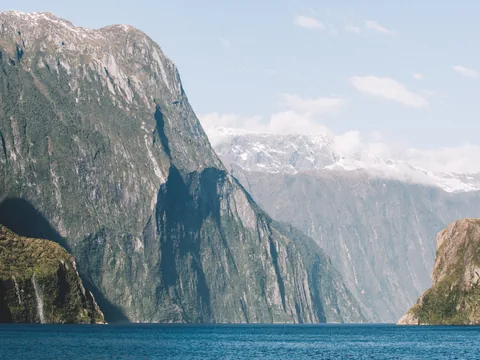
4WD camper hire in New Zealand for gravel roads and back country

New Zealand 4WD Rental

High clearance 4WD campers for gravel roads, back country tracks and the high country. See what the rental contract actually allows before you plan.

See 4WD campers
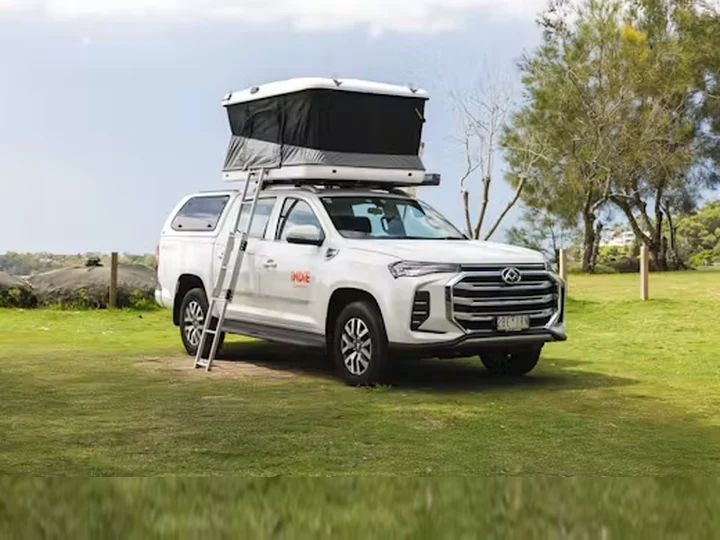
Car and 4x4 rental with a pop-up rooftop tent in New Zealand

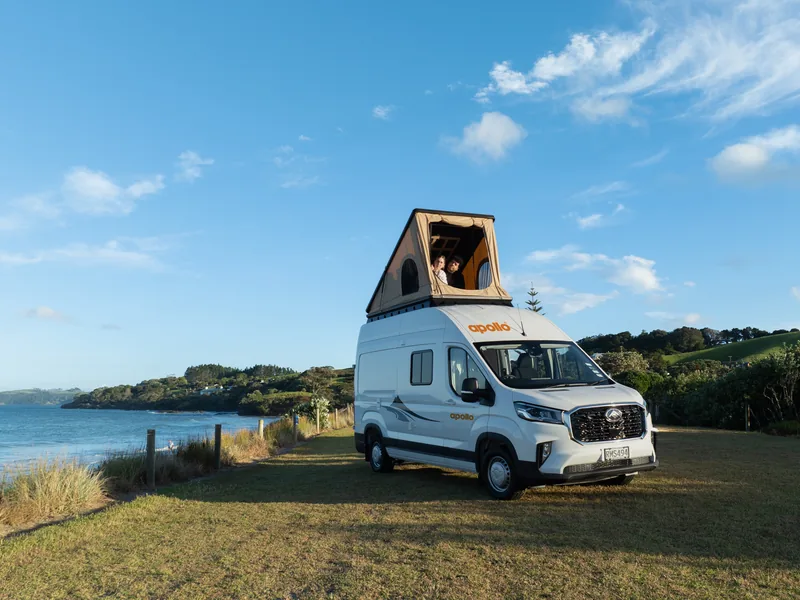
New Zealand Rooftop Tent Rental

Cars and 4x4s with the tent already fitted on the roof. Sleep above the vehicle, drive light by day, and pick up in Auckland, Christchurch or Queenstown.

See rooftop tents
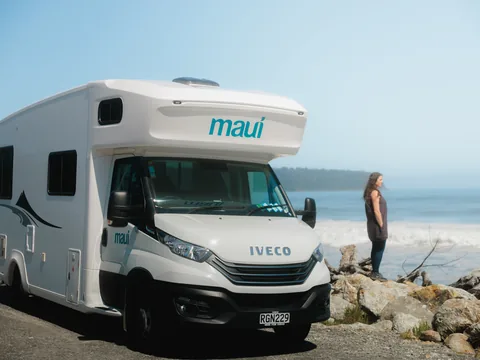
Comparison of campervan rental companies in New Zealand

Compare NZ Rental Companies

Side by side comparison of the rental companies operating in New Zealand: fleets, deposits, insurance and the small print, so you can pick with your eyes open.

Compare companies
Before you choose

Your New Zealand campervan in 6 questions

Budget, season, people, island, days and pick-up: the six things that decide which campervan fits your trip. Each answer uses the CampervanPlanet price study of 3 November 2026 and the vehicles on this page. Pick an option and the card builds your trip.

What is your budget per day?

The typical campervan costs NZ$163 a day from May to September and NZ$367 from December to February. March is still close to summer at NZ$399 a day. The cheapest offer starts at NZ$37 a day, in May.

When do you travel?

December to February is the summer peak, so book 3 to 6 months ahead; May to September is the cheapest time. Weather and prices season by season are in Best Time to Hire a Campervan in New Zealand.

How many people are travelling?

A campervan for 2 starts at NZ$37 a day; campervans for 3 to 5 from NZ$40; motorhomes for 2 to 4 from NZ$91; large motorhomes for 5 or 6 from NZ$142. Details are in Types of Campervans.

Which island?

A North Island trip from Auckland to Wellington takes 10 to 14 days and about 1,100 km, via Rotorua, Tongariro and Napier. A South Island trip from Christchurch to Queenstown, via Milford Sound, covers about 1,900 km in 10 to 14 days and is ideal for a first trip. To see both islands, you cross on the ferry between Wellington and Picton. Rental companies usually restrict standard campervans on remote gravel roads, which need a 4WD camper.

How long is your trip?

Five days fits one region, such as the Milford Sound Return from Queenstown. One to two weeks covers one island. If you are travelling from outside New Zealand or Australia, our CEO Alberto Porro recommends at least three weeks to really enjoy the country.

Where do you pick up?

You can collect your campervan at 9 locations: Auckland, Christchurch, Queenstown, Wellington, Blenheim, Picton, Nelson, Dunedin and Greymouth. Auckland is the gateway to the North Island, Christchurch to the South Island, and Queenstown is the closest to Milford Sound.

Get Started

Popular Pick-up Locations

You can collect your van at 9 locations across New Zealand: Auckland, Christchurch, Queenstown, Wellington, Blenheim, Picton and 3 more.

Campervan pick-up locations in New ZealandMap of New Zealand with the 9 campervan pick-up locations: 1 Auckland, 2 Christchurch, 3 Queenstown, 4 Wellington, 5 Blenheim, 6 Picton, 7 Nelson, 8 Dunedin, 9 Greymouth.123456789
  1. Auckland

    NZ's largest city, gateway to Northland

  2. Christchurch

    Gateway to the South Island

  3. Queenstown

    Adventure capital, near Milford Sound

  4. Wellington

    Capital city, start of the South Island ferry

  5. Blenheim

    Marlborough Airport, in the wine region near the Picton ferry

  6. Picton

    Ferry terminal connecting North and South Islands

  7. Nelson

    Sunniest city, gateway to Abel Tasman & Marlborough

  8. Dunedin

    Otago wildlife capital, peninsula, Catlins & Central Otago

  9. Greymouth

    West Coast town, start of the road to Pancake Rocks and the glaciers

Video

How much a campervan costs in New Zealand

In our October 2026 search, a campervan in New Zealand typically cost NZ$161 a day from May to September and NZ$400 a day from December to February, for 2 people, before excess cover and extras.

What’s in the video

In this 2:38 video we walk through the price per day, per week and for two weeks in each season, the cheapest and most expensive month, and three tips before you book, all from 2,221 live prices on 23 October 2026. The other figures on this page are from our price study of 3 November 2026.

How Much Does a Campervan Cost in New Zealand? 2026-27 (2 min 38 s). Footage courtesy of thl. Voiceover is AI-generated; all prices are real.
Transcript: what the video says

00:00 How much does a campervan cost in New Zealand?

Planning a campervan trip around New Zealand? Here is what it really costs in 2026 and 2027, with real prices from our own search.

We checked 2,221 live prices from 23 rental companies. All prices are for two people, before excess cover and extras.

00:28 Price per day by season

A campervan in New Zealand typically costs 161 New Zealand dollars a day in winter, from May to September. In spring, October and November, it is 285. In autumn, March and April, 302. And in summer, from December to February, about 400 dollars a day.

00:51 A week by season: how much are 7 nights?

For a typical week of seven nights, that is 1,130 dollars in winter, 1,993 in spring, 2,114 in autumn, and 2,803 in summer.

01:07 Month by month: cheapest and most expensive

Month by month, June is the cheapest month, at 146 dollars a day. February is the most expensive, at 456. The cheapest offer we found was just 40 dollars a day, in May.

01:24 Two weeks: how much do 14 nights cost?

Two weeks cost about 2,035 dollars in winter, 3,277 in spring, 2,965 in autumn, and 4,787 in summer. In most seasons, two weeks work out cheaper per day than a single week.

01:44 3 tips before you book

Three tips before you book. One: budget for zero excess cover, 30 to 97 dollars a day. With basic cover, a bond of 1,000 to 7,500 dollars is held on your card. Two: one-way trips cost more. Auckland to Christchurch averages 325 dollars a day, against 249 for a round trip. Three: if your dates are flexible, travel between May and September, when a day costs well under half the summer price.

02:17 Full New Zealand price study

Every month, every company and every vehicle is in our full price study at campervanplanet.com. Thanks for watching, and enjoy the road.

Planning

Best Time to Hire a Campervan in New Zealand

May to September is the cheapest time to hire a campervan in New Zealand, at a typical NZ$163 a day.

March is still priced close to summer (NZ$399 a day) and prices fall from April (NZ$264).

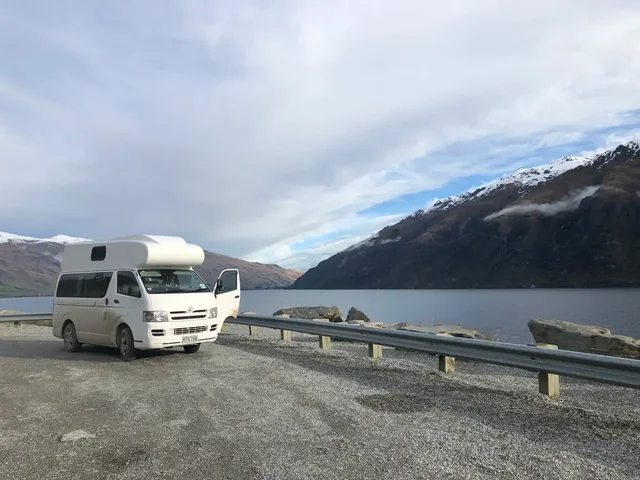
Lucky Rentals hi-top campervan parked by a South Island lake in winter

Cheapest offer we found

From NZ$37/day

Lucky Rodeo (Automatic) from Lucky Rentals, picked up in May 2027.

Median daily price by season, 7-night rentals

Real prices month by month

Campervan hire in New Zealand typically costs NZ$163 a day from May to September and NZ$367 a day from December to February for a 7-night rental. June is the cheapest month (NZ$142 a day) and February the most expensive (NZ$450).

  1. NZ$298Dec
  2. NZ$389Jan
  3. NZ$450Feb
  4. NZ$399Mar
  5. NZ$264Apr
  6. NZ$151May
  7. NZ$142Jun
  8. NZ$165Jul
  9. NZ$147Aug
  10. NZ$244Sep
  11. NZ$256Oct
  12. NZ$307Nov
Source: CampervanPlanet price study of 3 November 2026: 2,293 prices for 111 vehicles from 23 rental companies, 7-night rentals for 2 people picked up in Auckland or Christchurch, before zero-excess cover and extras.
Alberto Porro
“If you're travelling from outside New Zealand or Australia, I recommend a trip of at least three weeks to really enjoy the essence of the country.”
Alberto Porro, CEO of CampervanPlanet

Weather season by season

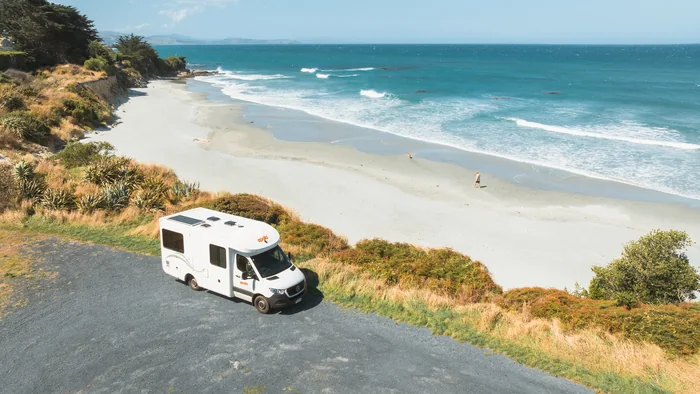
Campervan parked above a white sand beach at Brighton, South Island, on a sunny summer day
Dec–Feb

Summer

18°C–25°C • Peak season

Warmest weather with long sunny days and all attractions fully open. Perfect for hiking, water activities, and outdoor adventures. Expect crowds, fully booked accommodation, and premium prices.
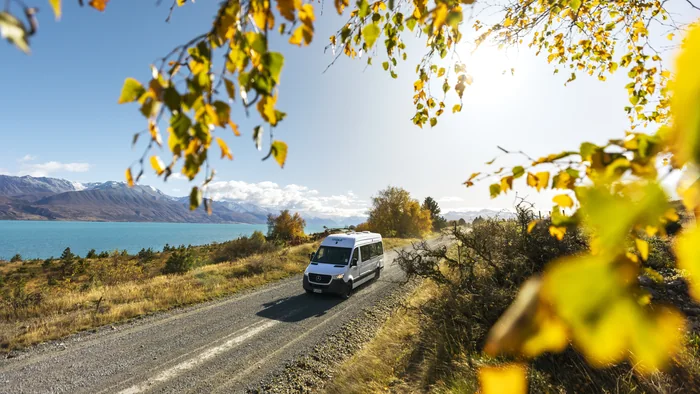
Campervan on a lakeside road near Lake Wanaka framed by golden autumn leaves
Mar–May

Autumn

10°C–20°C • Stunning foliage

Mild weather and autumn colours. March is still busy and priced close to summer; from April there are fewer visitors and prices drop.
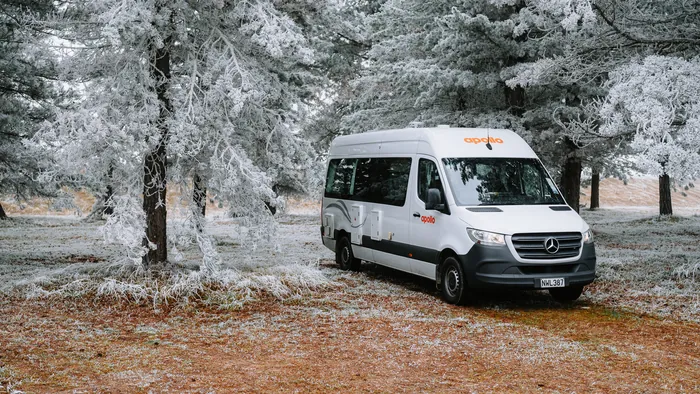
Campervan among frosted trees near Twizel on a winter morning
Jun–Aug

Winter

8°C–15°C • Ski season

Cold weather brings stunning clear skies and excellent skiing in the central plateau. Some mountain passes occasionally close, but main roads remain accessible. Lowest prices of the year and minimal tourist crowds.

Two travellers walking through an orchard in spring blossom in Central Otago
Sep–Nov

Spring

10°C–20°C • Lambing season

Spring brings wildflowers, green pastures with lambing season, and mild weather. Good availability and value as tourist season begins ramping up. All attractions open and roads excellent. Growing weather for outdoor adventures.

Photos courtesy of thl, taken in New Zealand.

Campervan on the road to Aoraki Mount Cook, South Island, New ZealandNew Zealand campervan rental prices 2026-27The full price study, by month, vehicle and company. Campervan parked under a pine tree on a seaside road on New Zealand's South IslandBest campervan rental companies in New ZealandCompanies compared by reviews, fleet and pick-up.
Explore

Best Routes & Itineraries

There are 4 itineraries with route maps, 3 to 14 days: North Island Road Trip, South Island Explorer, Milford Sound Return and West Coast Road Trip.
North Island Road Trip route mapMap of New Zealand with the North Island Road Trip route: Auckland, Coromandel, Rotorua, Tongariro, Napier, Wellington.
Open in Google Maps

North Island

North Island Road Trip

10–14 days · 1,100 km · Easy / 2WD OK

From Auckland to Wellington, covering NZ's North Island highlights: volcanic geysers in Rotorua, the Tongariro Crossing, Napier's Art Deco architecture, and natural hot springs. A first route on the North Island.

  1. Auckland
  2. Coromandel
  3. Rotorua
  4. Tongariro
  5. Napier
  6. Wellington
Open in Google Maps
Vehicle
2WD Campervan
Campsites
30+ along route
Best months
December, February
Difficulty
Easy

Fuel stops every 50–80 km.

One-way, drop-off in Wellington. One-way rentals cost more per day.

South Island Explorer route mapMap of New Zealand with the South Island Explorer route: Christchurch, Kaikoura, Abel Tasman, Franz Josef, Milford Sound, Queenstown.
Open in Google Maps

South Island

South Island Explorer

10–14 days · 1,900 km · Easy / 2WD OK

A South Island route from Christchurch to Queenstown, with whale watching at Kaikoura, the beaches of Abel Tasman, Franz Josef Glacier and Milford Sound. For nature lovers and first-time visitors.

  1. Christchurch
  2. Kaikoura
  3. Abel Tasman
  4. Franz Josef
  5. Milford Sound
  6. Queenstown
Open in Google Maps
Vehicle
2WD Campervan
Campsites
10+ along route
Best months
November, March
Difficulty
Beginner-friendly
Milford Sound Return route mapMap of New Zealand with the Milford Sound Return route: Queenstown, Te Anau, Mirror Lakes, Homer Tunnel, Milford Sound, Queenstown.
Open in Google Maps

South Island

Milford Sound Return

3–5 days · 600 km · Easy / 2WD OK

A route for photographers from Queenstown: drive to Milford Sound and back via Te Anau, Mirror Lakes and the Homer Tunnel, where waterfalls fall into the fiord. A short trip.

  1. Queenstown
  2. Te Anau
  3. Mirror Lakes
  4. Homer Tunnel
  5. Milford Sound
  6. Queenstown
Open in Google Maps
Vehicle
2WD Campervan
Campsites
Te Anau and DOC campsites on the Milford Road
Best months
November, March
Difficulty
Beginner-friendly
West Coast Road Trip route mapMap of New Zealand with the West Coast Road Trip route: Pancake Rocks, Greymouth, Franz Josef, Fox Glacier, Haast Pass, Blue Pools, Wanaka.
Open in Google Maps

South Island

West Coast Road Trip

5–7 days · 550 km · Moderate / 2WD OK

For adventurous travellers on the South Island's West Coast: Pancake Rocks, Franz Josef and Fox Glaciers, Haast Pass and the Blue Pools. A short West Coast trip.

  1. Pancake Rocks
  2. Greymouth
  3. Franz Josef
  4. Fox Glacier
  5. Haast Pass
  6. Blue Pools
  7. Wanaka
Open in Google Maps
Vehicle
2WD Campervan
Campsites
Limited, plan ahead
Best months
November, March
Difficulty
Moderate

Fur seals year-round. Gravel side roads: check your rental terms.

Fleet

Types of Campervans Available

Four sizes, from campervans for 2 to motorhomes for 6, starting at NZ$37 a day. In our price study 102 of the 111 vehicles are automatic.
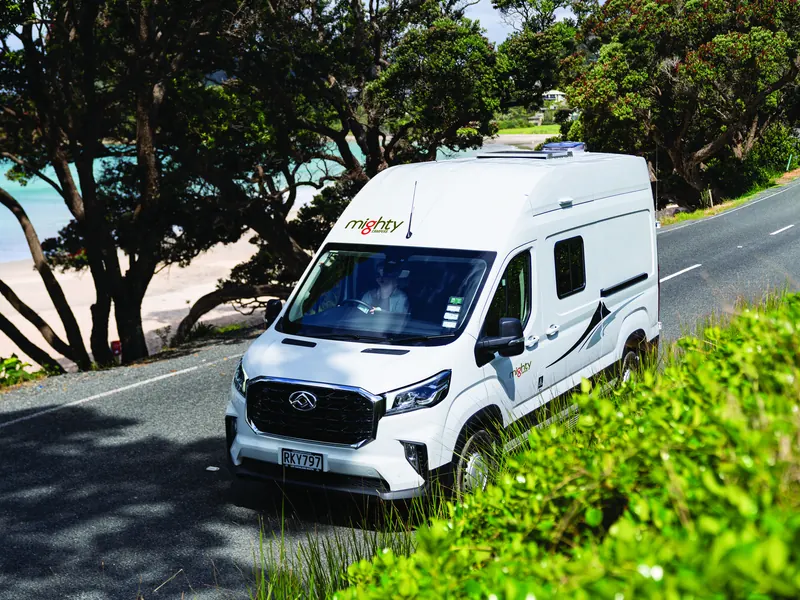
Cheapest 7-night rental for 2 in our price study of 3 November 2026.

Before you book

How booking works on CampervanPlanet

A rental company host shows two travellers around their campervan at a branch in New Zealand
  • Who you rent from

    You book on CampervanPlanet, but you rent from the company named in each offer. Your rental contract is with that company, which hands over the vehicle and applies its own terms.

  • What you pay, and when

    Many offers take a deposit online, often 10 to 20% of the price, and the rest at pick-up; others are paid in full online. At pick-up the company holds a refundable security deposit on the main driver's card, with the amount shown in the offer.

  • What the price includes

    Each offer lists what is included, such as insurance, mileage and equipment, and anything paid locally, for example a one-way fee or optional extras.

  • Real people behind the booking

    Our team answers by email and phone in your language, before and during your trip.

Prices and companies on this page are the ones you can book on CampervanPlanet. We earn a commission from the rental companies on bookings made through us. Companies we don't sell are not included, and prices can differ from booking direct.

Questions before you book? Contact us

Read the details

Every offer names the rental company. CampervanPlanet compares the companies, handles the booking and payment, and supports you in your language.

The payment plan is shown before you pay and again on your voucher.

Prices on this page come from the CampervanPlanet price study of 3 November 2026; the search shows live prices for your dates.

If you cannot find what you need, send a quote request and we ask the rental companies for you.

Questions?

New Zealand Campervan Hire FAQ

Find answers to common questions about renting a campervan in New Zealand.

Prices and companies

How much does it cost to hire a campervan in New Zealand?
A campervan typically costs NZ$163 a day from May to September and NZ$367 a day from December to February, for a 7-night rental for 2 people. June is the cheapest month (NZ$142 a day) and February the most expensive (NZ$450). A week costs about NZ$1,141 from May to September and NZ$2,571 from December to February; two weeks cost about NZ$2,125 and NZ$4,813, so the price per day is lower on longer trips. The cheapest offer we found was NZ$37 a day. Zero-excess cover, extras, fuel, campsites and the Cook Strait ferry come on top. Source: CampervanPlanet price study, 3 November 2026, 23 rental companies.
Which is the cheapest campervan rental company in New Zealand?
In our price study, 18 of the 23 companies had a campervan for 2 or 3 people from Christchurch for 9 to 16 March 2027; CamperCo, Elements RV World, McRent, Pacific Horizon and Travellers Autobarn had no price for those dates. Including cover that brings the excess to zero, the cheapest full week was at Escape Rentals: NZ$1,038. Next were Lucky Rentals (NZ$1,060), Happy Campers (NZ$1,165), Sunta Campers (NZ$1,283), Euro Campers (NZ$1,359) and Spaceships (NZ$1,463). The same week cost NZ$2,878 at Britz, NZ$3,011 at Apollo and NZ$3,898 at maui. The lower-priced companies mostly rent older vehicles: the median model year is 2004 to 2013 at Lucky Rentals, Escape Rentals, Sunta Campers and Happy Campers, against 2023 to 2024 at Britz and maui. Source: CampervanPlanet price study, 3 November 2026.
Which campervan rental companies are the best in New Zealand?
It depends on what matters most to you. For price, of the 18 companies compared that week, Escape Rentals, Lucky Rentals and Happy Campers had the lowest full weeks with zero-excess cover in our price study (NZ$1,038 to NZ$1,165, March 2027). For newer vehicles, maui, Britz and McRent had a median model year of 2023 or 2024. For a family of four, the lowest-priced 4-berth campervans in summer were the Lucky Rover (NZ$201 a day), Happy Cruise (NZ$206) and Sunta Roama (NZ$240). Our price study covers 23 rental companies in Auckland and Christchurch; our full comparison also covers companies we do not sell.
What extra costs should I budget for on top of the daily price?
Most companies count 8 calendar days for a 7-night rental. In our price study, bedding cost a median NZ$42 per rental (free at 6 of 20 companies), snow chains NZ$40 to NZ$80, child seats NZ$45 to NZ$60, and an additional driver was free at 7 of 15 companies. Diesel campervans pay New Zealand Road User Charges (RUC) for the distance you drive, usually charged at drop-off: about NZ$7.60 to NZ$8.40 per 100 km in the terms of the companies we sell. Fuel, campsites and the Cook Strait ferry come on top. Source: CampervanPlanet price study, 3 November 2026, and rental company terms.
Is it worth it to rent a campervan in New Zealand?
For a trip of a week or more, usually yes: the campervan is your transport and your bed. A typical week costs NZ$1,141 from May to September and NZ$2,571 from December to February, before zero-excess cover, fuel and campsites, so compare it with a rental car plus accommodation for your dates. From May to September the daily price is less than half the December to February price, which is when a campervan saves most. Source: CampervanPlanet price study, 3 November 2026.

Booking and payment

Do I need to book my campervan in advance?
From December to February, book 3 to 6 months ahead, as popular vehicles sell out. For March to April and October to November, 4 to 8 weeks ahead is usually enough. From May to September there is more choice at shorter notice. Last-minute bookings are possible, with fewer vehicles to choose from.
How much is the security deposit (bond), and what insurance is included?
Every rental includes basic damage cover with an excess, and the rental company holds a bond on the main driver's credit card at pick-up. With basic cover, the bond in our price study was NZ$1,000 to NZ$7,500: NZ$3,000 is common at Escape Rentals, Happy Campers, Lucky Rentals and Sunta Campers, and NZ$5,000 to NZ$7,500 at Apollo, Britz, maui and McRent. Cover that brings the excess to zero cost NZ$30 to NZ$97 a day, or NZ$240 to NZ$818 for a 7-night rental, and lowers or removes the bond; Apollo, MightyLITE and maui sell it as a pack per rental. Injuries in New Zealand are covered by the public ACC scheme, also for visitors (Source: ACC). Each offer shows the bond and cover before you book. Source: CampervanPlanet price study, 3 November 2026.
Can I cancel my booking, and what does it cost?
Yes. Each rental company sets its own cancellation terms, and you see them in the offer before you pay and again on your voucher. Many allow free cancellation until a set number of days before pick-up, with fees that increase closer to the date. To cancel or change a booking, write to us and we arrange it with the rental company; any refund follows the terms you accepted.
In which currency do I pay, and what does the price include?
Prices are shown and charged in the currency you select on the site. Each offer lists what is included, such as insurance, mileage and equipment, and any amount paid locally, for example a refundable deposit, a one-way fee or optional extras. The total shown at checkout is what you pay online, and the voucher repeats what is due at pick-up.
Can I rent a campervan for a month or longer?
Yes. The daily price usually drops for longer rentals, so enter your real dates in the search to see the exact total for your trip. For rentals of a month or more, you can also send us a quote request and we will ask the rental companies for their best long-term rate.

Pick-up and the route

How does pick-up work, and is there an airport shuttle?
Each depot sets its pick-up hours, and your voucher includes the address and instructions. Some airport depots run a shuttle or are a short taxi ride away. If your flight lands late, tell us when you book so we can confirm a time with the depot.
Can I pick up in one city and drop off in another?
Yes. In our price study, 22 of the 23 companies offer Auckland to Christchurch and 11 offer Auckland to Queenstown. One-way rentals cost more per day: a typical NZ$343 a day from Auckland to Christchurch, NZ$289 from Christchurch to Auckland and NZ$420 from Auckland to Queenstown, against NZ$258 for a round trip in the same weeks (December, March and June). Choose a different drop-off in the search to see the fee; if your route does not appear, send us a quote request.
Can I take the ferry between North and South Islands?
Yes! The Interislander Ferry and Bluebridge operate between Wellington (North Island) and Picton (South Island). Both ferries accommodate campervans - your vehicle travels with you. Journeys take 3.5 hours. Book in advance during peak season. Ferry costs vary based on season and vehicle size. This iconic crossing is a must-do for experiencing both islands in one trip. (Source: Interislander, Bluebridge)
Is mileage unlimited?
It depends on the rental company and the offer. Many include unlimited kilometres or miles, while others set a daily allowance and charge for extra distance. The mileage policy is shown on each offer before you book, so you can compare it alongside the price.
Do I need a self-contained campervan to freedom camp in New Zealand?
In most places, yes. On council land you can sleep in a vehicle outside a campsite only in a certified self-contained vehicle with a green warrant card, unless the council has set aside a site for vehicles that are not self-contained; on conservation land the Department of Conservation (DOC) sets the rules site by site. Blue warrant cards are no longer valid since 7 June 2026. Each offer says whether the vehicle is certified self-contained. A certified self-contained vehicle has a permanently fixed toilet and compliant fresh water and wastewater systems, certified by a government-appointed certification authority. Check local bylaws, as some regions restrict freedom camping, especially near popular tourist spots. Always leave no trace and respect local communities. Camping overnight in a non-certified vehicle where only certified self-contained vehicles are allowed carries a NZ$400 infringement fee. (Sources: MBIE (freedom camping), DOC, MBIE)

Drivers, roads and kids

Do I need a special licence to drive a campervan in New Zealand?
No. A valid overseas car licence is enough for a standard campervan or motorhome. If it is not in English, carry an International Driving Permit or an approved translation together with your licence. You can drive on an overseas licence for up to 12 months from arrival. (Source: NZTA)
What is the minimum age to rent a campervan in New Zealand?
It depends on the company. In our price study, 9 of the 23 companies rent from age 18, including Escape Rentals, Happy Campers, Lucky Rentals, Mighty, Spaceships and Travellers Autobarn; 12 rent from 21, and McRent and Discover NZ Motorhome Rentals from 25. Some companies charge a young driver fee or a higher cover price under 21 or 25. Source: CampervanPlanet price study, 3 November 2026.
Which side of the road do I drive on?
New Zealand drives on the LEFT side of the road, just like the UK, Australia, and Japan. This takes some adjustment if you're used to driving on the right. Take your time to adjust, especially when turning and navigating intersections. Remember that the steering wheel is on the right side of the vehicle.
Can I take a campervan on gravel roads in New Zealand?
It depends on the company. In the terms we hold, Spaceships and Pacific Horizon allow well-formed gravel roads, Mighty allows only short unsealed access roads to campgrounds and attractions, and Campervanz Rentals sealed roads only. At several companies damage on unsealed roads is covered only with the top cover option, such as Sunta Campers and Escape Rentals. The terms of Apollo, Britz, maui, Travellers Autobarn, Waka Campa and Elements RV World ban Skippers Road, Ball Hut Road and Ninety Mile Beach, and at Sunta Campers and McRent the insurance does not cover those roads; check the list in your company's terms. For back-country tracks you need a 4WD camper. See our dedicated guide: 4WD Camper Hire New Zealand. Prefer sleeping on the roof? See: Hire a Car or 4x4 with a Rooftop Tent in New Zealand.
Is a campervan a good idea in New Zealand with kids?
Yes, if the vehicle has a seat with a belt and a bed for everyone. In our price study the lowest-priced 4-berth campervans were the Lucky Rover (NZ$66 a day in winter, NZ$201 in summer), Happy Cruise (NZ$78 and NZ$206) and, in summer, Sunta Roama (NZ$240). Motorhomes for 5 or 6 people typically cost NZ$300 a day from May to September and NZ$493 from December to February. Child and booster seats cost NZ$45 to NZ$60 per rental at the 11 companies that rent them; none include them for free. Source: CampervanPlanet price study, 3 November 2026.
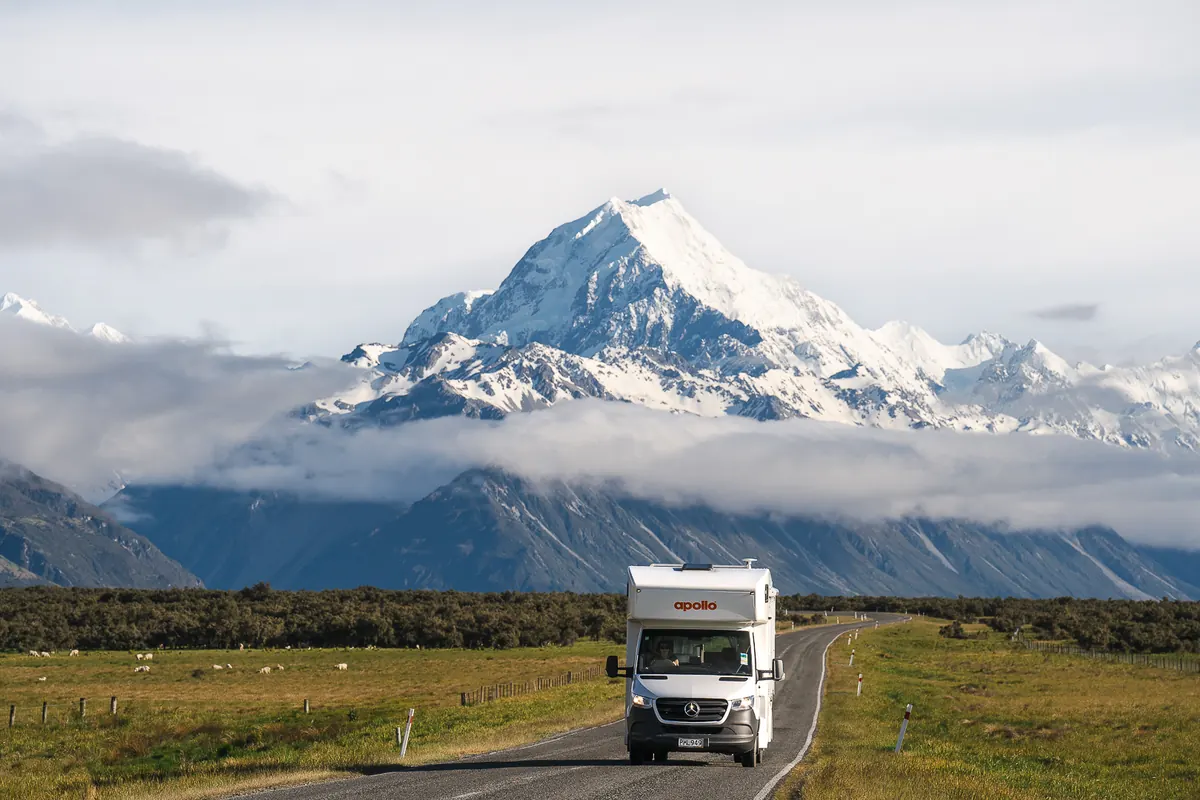
Campervan on the road to Aoraki Mount Cook, South Island, New Zealand

Ready to Explore New Zealand by Campervan?

Check live prices from the rental companies we sell in New Zealand for your dates.

Search Campervans Now

The figures on this page are from our price study of 3 November 2026.

Mount Cook Road, South Island

Beyond New Zealand

Our campervan rental destinations

Stay Updated

Get New Zealand travel tips, new deals, and route guides delivered to your inbox.

Your Road Trip Guide

Your New Zealand Road Trip

In New Zealand a campervan or motorhome takes you through very different landscapes. Whether you're driving the scenic highways or venturing into remote national parks, here's what you need to know to plan your trip.
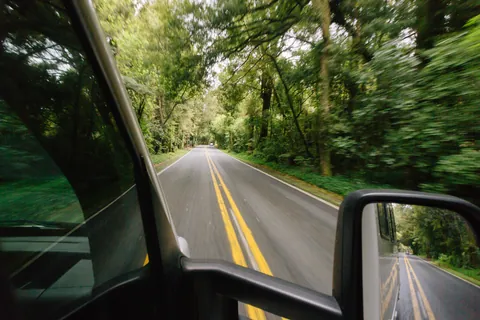
Campervan driving a sealed road through native New Zealand forest

Driving Rules

Driving rules in New Zealand

New Zealand drives on the left-hand side of the road, the same as the UK, Australia, and Japan.

Read the full guide

If you're arriving from Europe or North America, take extra care at roundabouts and intersections until you adjust. Speed limits are enforced by police and fixed speed cameras, particularly in towns and school zones. Fines start at NZ$30 and can go much higher for serious offences. (Source: NZ Police)

Here are the key traffic regulations to keep in mind when renting a campervan and driving in New Zealand:

  • Speed limits: 50 km/h in residential and urban areas, 100 km/h on open roads and highways. Some motorways have variable speed limits. Always observe posted signs and adjust for weather and road conditions. Campervans and motorhomes are not exempt from speed limits. (Source: NZTA)
  • Seatbelts mandatory: All passengers, front and rear, must wear seatbelts at all times. Children must use appropriate child seats or boosters depending on age and size. The driver is responsible for ensuring all passengers are restrained.
  • Drink driving: the legal blood alcohol limit is 0.05% for drivers aged 20 and over, and zero for drivers under 20. Penalties include heavy fines, licence suspension, and imprisonment for repeat offenders. (Source: Te Manatū Waka)
  • Roundabouts: Give way to traffic already in the roundabout. Traffic on your right has priority. Use your indicators when leaving the roundabout and watch for pedestrians.
  • One-lane bridges: common on rural roads. Most have a give-way sign: if the small red arrow points your way, give way to oncoming traffic. A few longer bridges have traffic lights.
  • Mobile phone use: Strictly prohibited while driving unless using a hands-free system. Violations carry a NZ$150 fine and 20 demerit points and can affect your license.
  • Cyclists and pedestrians: Always give cyclists at least 1 metre of space when passing. Be extra cautious around schools, shopping areas, and residential zones.
  • Parking rules: Always park in designated areas and observe posted signs. Parking illegally can result in fines of NZ$60-120 and potential vehicle immobilization.

Gravel and backcountry roads

Many of New Zealand's most scenic routes are unpaved gravel roads, particularly in the South Island's backcountry, the Catlins, and rural North Island regions. Rules on gravel roads differ between rental companies, from sealed roads only to well-formed gravel roads; see the FAQ above and your company's terms.

Gravel roads require a different driving approach: reduce speed to 60-80 km/h, increase following distance from other vehicles (flying gravel can damage windshields), and watch for loose surfaces especially at corners and on hills. Avoid braking hard on gravel as it reduces control, ease to a stop instead. Check your rental agreement carefully for permitted road types, as insurance may be void if you venture beyond approved routes.

Pro tip: Check road conditions on the NZTA Journey Planner before your trip. For emergency assistance, call 111. Always carry water, a basic tool kit, and a spare tire, especially when venturing into remote areas.

Road conditions and weather

New Zealand's weather is changeable and can shift rapidly, especially in mountainous regions and along the coasts. Summer roads are generally well-maintained, but winter (June-August) brings snow to alpine passes, particularly in the South Island. Even in summer, mountain roads can be closed due to snow or weather hazards.

  • Check weather and road conditions daily: Visit the Waka Kotahi NZTA website (nzta.govt.nz) for real-time traffic and road condition updates, including hazard alerts and closures. Download the Weather NZ app for forecasts.
  • Alpine passes: Major passes like Crown Range, Lewis Pass, and Arthur's Pass can be closed in winter without warning. Always check before attempting to cross.
  • Fog and mist: Coastal roads and mountain passes are prone to sudden fog, particularly in early morning and evening. Reduce speed and use headlights when visibility is poor.
  • Livestock on roads: Sheep and cattle regularly wander onto rural roads, especially in farming areas. Always slow down when you see animals, and be prepared for sudden movements.
  • Unsealed surfaces: Gravel roads can be slippery when wet. Reduce speed further in rain and be cautious at corners.
  • Winter driving: If driving in winter, use winter tires, carry chains or traction aids, and always check road conditions before setting out. Some roads close entirely during heavy snowfall.

Fuel and charging stations

Petrol and diesel are widely available at service stations throughout New Zealand, with fuel stops never more than 150 km apart on main routes. In very remote areas like the West Coast or Central Plateau, fuel stations can be further apart, so it's wise to refuel whenever the tank drops below half-full.

Most service stations are self-service, accepting credit and debit cards with chip and PIN. Common fuel chains include Z, BP, Caltex, and Gull. Fuel prices vary by location and season. Electric and hybrid campervans are becoming more available; charging stations are found at many campgrounds, visitor centers, and urban areas. Use the ChargeNet app to locate charging points on your route.

Pro tip: Fuel is cheaper at larger chains in urban areas. Small rural stations may charge premium prices. Download the Gaspy app to compare fuel prices across locations. Always carry cash as some very remote stations may not accept cards.

Parking, tolls, and permits

New Zealand has very few road tolls: the Northern Gateway north of Auckland, plus the Tauranga Eastern Link and Takitimu Drive near Tauranga. These are paid online through NZTA, and the rest of the state highway and regional road network is free to use. Parking in towns and cities is metered and managed by local councils; fees typically range from NZ$1-3 per hour. Parking violations result in fines of NZ$60-120.

In national parks and natural attractions (like Milford Sound, Tongariro National Park, and Mount Cook), parking is usually free or charges a small fee (NZ$5-20). Always park in designated areas, unauthorized parking on roadsides or in protected natural areas is illegal and can result in hefty fines, as New Zealand's unique ecosystems are strictly protected.
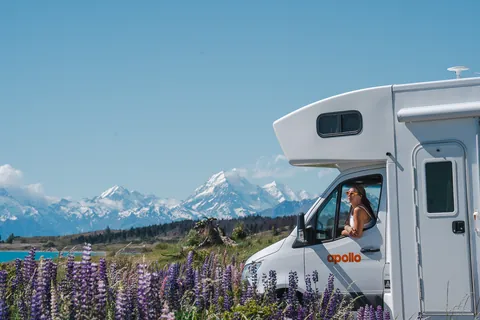
Campervan parked among lupins with Aoraki/Mount Cook behind, South Island

Camping

Camping in New Zealand

New Zealand has hundreds of managed campgrounds and freedom camping areas across both islands.

Read the full guide

Whether you're exploring Fiordland, the West Coast, or the North Island's geothermal regions, you'll find places to stay. Most commercial campsites operate year-round, and from December to February advance booking is essential.

Facilities vary by location and price. Well-equipped commercial campgrounds (like TopTen Parks) offer hot showers, flush toilets, electricity hookups, WiFi, laundry, and communal kitchens. Basic DOC campgrounds offer minimal facilities, sometimes just toilets and water. Freedom camping areas allow certified self-contained vehicles to park for free or low cost, though facilities are limited. Most campgrounds have designated spaces for campervans with flat, gravel or sealed surfaces.

Campsite costs and booking

Camping costs vary by location and facilities, and many sites charge per person rather than per vehicle, so check before booking. DOC campsite fees are listed on the DOC website (doc.govt.nz). Some sites offer weekly or monthly passes.

Book in advance from December to February, as popular campgrounds fill quickly. Use the DOC website (doc.govt.nz) and individual campground websites to reserve sites. From May to September there is more flexibility and shorter lead times. Many campsites accept payment on arrival, but popular locations increasingly require pre-payment by credit card.

Pro tip: Download the CampSites NZ app to find campgrounds, check availability, and read reviews from other travellers. Create a bookmark folder of your planned daily stops to ensure you have accommodation locked in during summer travel.

Types of camping in New Zealand

New Zealand offers diverse camping options to suit all budgets and preferences:

  • DOC (Department of Conservation) campgrounds: Basic to well-equipped sites managed by the government. Locations are stunning, many sit at trailheads for famous hikes like Milford Track, Tongariro, and Lake Rotoiti walks. DOC sites are affordable and trustworthy.
  • TopTen Holiday Parks: Premium chain with excellent facilities, hot pools, entertainment, restaurants, and modern amenities. Higher price but great for comfort-focused travellers.
  • Freedom camping areas: Designated free or low-cost parking for certified self-contained vehicles. No facilities provided. Locations range from scenic reserves to lakesides. Rules vary by local council, always check signs before parking.
  • Private farm stays: Many rural farms offer small, intimate campsites with pastoral views. Some provide farm experiences like fruit picking or farm tours. Search websites like Farmstay.co.nz.
  • National Park campsites: Located within or near Tongariro, Fiordland, Aoraki/Mount Cook, and other parks. Often fully booked in summer, plan ahead.
  • Working holiday parks: Some parks offer discounted rates (NZ$20-30/night) for backpackers willing to work a few hours. Check HelpX.net or WorkAway.info.

Freedom camping rules and regulations

New Zealand permits freedom camping in designated areas for certified self-contained vehicles (vehicles with a permanently fixed toilet plus compliant fresh water and wastewater systems). Certification alone does not give you the right to camp anywhere: council bylaws and the status of the land decide where freedom camping is allowed. The key regulations every campervan traveller must understand:

  • Self-contained certification required: Your campervan needs a certificate of self-containment issued by a certification authority appointed under the Plumbers, Gasfitters, and Drainlayers Board scheme; rental companies arrange this for their fleets, and the green warrant card displayed in the vehicle is the proof. Since 7 June 2026 only the green warrant card is valid, and the vehicle must have a permanently fixed toilet. Vehicles that are not certified can freedom camp only at sites where the council or DOC allows them; otherwise they must use campgrounds. (Source: Plumbers, Gasfitters and Drainlayers Board)
  • Only designated areas: Freedom camping is allowed only in designated areas, check local council bylaws as rules vary by region. Popular tourist areas (Queenstown, Arrowtown, etc.) often have strict restrictions.
  • No freedom camping in national parks unless specifically designated.
  • Environmental responsibility: You must use your onboard toilet, never dispose of waste on land, and pack out all rubbish. Contaminating natural areas can result in heavy fines.
  • Respect local communities: Park discreetly, avoid noise, and leave sites pristine. Irresponsible freedom camping has led councils to restrict or eliminate sites.

Pro tip: Use the CamperMate app to find freedom camping areas and check local regulations. Read reviews from other travellers to find best-value sites. Always carry spare water, remote sites may not have facilities.

Top campgrounds for New Zealand campervan travellers

These standout campsites offer exceptional value, locations, or facilities:

  • Milford Sound DOC Campground (South Island): Nestled between towering peaks at the entrance to Milford Fjord. Basic facilities. Book months in advance.
  • Glenorchy DOC Campground (South Island): Lake Wakatipu views with access to Routeburn Track and Dart River adventures. Popular with trampers and adventure seekers.
  • Tongariro National Park (North Island): Located at the start of New Zealand's most famous walk. Hot pools and geothermal areas nearby. DOC sites fill quickly in summer.
  • Waikaremoana DOC Campground (North Island): Lake camping in the remote Urewera ranges. Stunning wilderness with walking tracks and excellent fishing.
  • Abel Tasman National Park (South Island): Gateway to beaches, coastal hikes, and the famous Great Walk. Multiple campgrounds with access to golden sand beaches.
  • Aoraki/Mount Cook DOC Village (South Island): Alpine setting with restaurant and hot showers, below the mountains.

Waste disposal and environmental responsibility

All commercial campgrounds and DOC sites provide waste water disposal (grey water dump) and chemical toilet emptying facilities. It is illegal and environmentally destructive to dump waste anywhere else. New Zealand's waterways and native ecosystems are protected by strict environmental laws, and breaking them can lead to fines.

Recycle wherever possible. Most towns have recycling stations (separate for glass, plastic, paper, and metals). Campsites often have recycling services, ask at arrival. Never leave rubbish behind, pack it out or find appropriate bins in towns. Leave every site exactly as you found it.
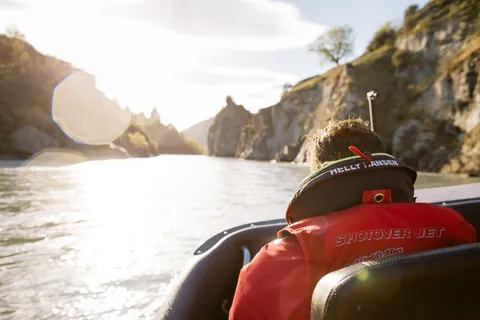
Shotover Jet boat ride through a river canyon near Queenstown

Activities

Best activities and adventures in New Zealand

New Zealand is known for adventure sports and outdoor activities in its natural landscapes.

Read the full guide

From hiking active volcanoes to bungee jumping and jet boating, the country offers adventures for every adrenaline level. With a campervan, you can base yourself near activity starting points, save on accommodation, and access trailheads early before crowds arrive.

Most outdoor activities can be booked online through operators like Viator, GetYourGuide, or local visitor information centres. Booking 1–2 weeks ahead is recommended for popular activities like Milford Sound and adventure sports in peak summer season. Many tours include hotel pickup, but campervan travellers can arrange direct pickup at nearby sites for the same cost.

Great Walks and hiking

New Zealand's Great Walks are nine multi-day tramping trails. The most famous is the Milford Track (South Island, 54km, 4 days), walk from Glade House to Milford Sound. The Routeburn Track (3 days) crosses the Darran Mountains with alpine views. The Tongariro Northern Circuit (North Island, 4 days) loops through volcanic terrain with active geothermal features.

Popular day hikes: Roys Peak (Wanaka, 16km), Ben Lomond (Queenstown, 14km), and the Tongariro Alpine Crossing (17km, can be done in one day). Book Great Walk tramps 3–6 months ahead via the DOC website, accommodation in mountain huts fills quickly in summer (December-February).

Pro tip: All tramping requires sturdy boots, layered clothing, and rain gear. New Zealand weather changes rapidly, even summer walks can encounter snow on alpine sections. Carry the 1:50,000 DOC map and download offline maps on your phone for remote areas.

Adventure sports and thrill activities

Queenstown (South Island) is the adventure capital of New Zealand. Activities include bungee jumping, jet boating, whitewater rafting, paragliding, and skydiving. The Kawarau Bridge Bungy (43m jump) is New Zealand's original bungy with suspension bridge views. Shotover Jet is a heart-pounding jet boat ride through tight river canyons. Prices range from NZ$50-300 depending on activity.

Rotorua (North Island) specializes in geothermal activities: zip-lining through redwood forests, geothermal mudding, and hot spring visits. Lake Taupo offers skydiving with volcano views. Most adventure companies pick up from central locations with budget accommodation, so campervan travellers can often join tours at the activity location directly.

Fiordland and marine experiences

Milford Sound is New Zealand's most visited natural attraction, a day cruise through a UNESCO World Heritage fjord with towering cliffs, waterfalls, and rainforest. Boats depart from Milford Sound Visitor Centre (2 hours from Te Anau). Cruises run year-round, with 2–3 departures daily in summer. Cost: NZ$75-150 per person.

Doubtful Sound is a more remote and peaceful alternative requiring a coach journey from Te Anau and overnight cruise options. Scenic cruises in Marlborough Sounds (South Island) explore waterways with wildlife spotting opportunities. All cruises are campervan-friendly with ample parking.

Wildlife encounters

New Zealand's unique wildlife includes kiwi birds, penguins, seals, and dolphins. Kiwi bird viewing is available at sanctuaries and predator-free reserves around the country. Yellow-eyed penguin (hoiho) viewing occurs at Oamaru (South Island) at sunset when penguins return from the sea, viewing is free from designated public viewing areas.

  • Dolphin spotting: Swim with Hector's dolphins in Akaroa (Banks Peninsula, South Island) or Doubtful Sound. Tours: NZ$150-200.
  • Seal colony tours: Cape Foulwind or Oamaru. Walk to colonies and observe in natural habitat. Free or small donation.
  • Whalewatching: Bay of Islands (North Island) from September-May. Humpback and sperm whales migrate. Tours: NZ$100-150.
  • Glow worm caves: Waitomo Caves (North Island), boat through underground cave lit by thousands of glow worms. Tours: NZ$50-100.

Geothermal and thermal activities

The Rotorua area features geothermal wonders: Waiotapu thermal park with colourful hot springs and mud pools, Lady Knox Geyser erupting daily at 10:15 AM, and the Orakei Korako "hidden valley" with geothermal features. Hot Water Beach on the Coromandel Peninsula (North Island) is a unique experience, dig a hot pool in the sand at low tide.

Soaking in natural hot pools is popular nationwide: Tekapo Hot Pools, Hanmer Springs, and various DOC sites offer free or low-cost natural thermal soaking. Many campgrounds have natural hot pools nearby, ask locals for recommendations.

Pro tip: Book major activities (Milford Sound, adventure sports) online before peak season. Day hikes don't require permits but can get crowded, start early (7–8 AM) to avoid parking and track congestion at popular locations like Roys Peak and Tongariro Crossing.

Couple walking a forest track in layered outdoor clothing

Travel Tips

Essential travel tips for driving New Zealand in a campervan

Driving a campervan around New Zealand is a rewarding way to see the country.

Read the full guide

The main highways are well-maintained and accessible to all campervan types, but the country's diverse terrain, mountains, coastlines, fiords, and wine regions, requires careful planning. One island takes 10 to 14 days at a comfortable pace, and both islands at least three weeks. Shorter trips focusing on specific regions (Fiordland, Bay of Islands, Queenstown area) work equally well.

Best time to visit New Zealand by campervan

The ideal time for a campervan trip depends on your weather tolerance and activity preferences:

  • December–February (summer): The most popular season. Temperatures 18–25°C, longest daylight hours, all attractions open, brilliant for hiking and outdoor activities. The downside: higher rental prices, busier campgrounds, and peak tourist crowds. Popular camping areas fill quickly.
  • March to May (autumn): Mild weather and autumn colours. March is still priced close to summer; prices drop from April and fewer tourists travel. Hiking conditions are excellent, and most attractions and campgrounds are still fully operational.
  • June–August (winter): Cool temperatures (8–15°C), shorter days, potential snow on alpine passes, but fewer tourists and budget rental prices. Skiing available in the Southern Alps. Requires more planning for road closures and cooler conditions.
  • September–November (spring): Days lengthen rapidly, wildflowers bloom, migrating birds return, and spring adventures begin. Prices start rising towards peak season. A sweet spot for many travellers.

Weather and what to pack

New Zealand's weather is changeable, especially in mountainous regions and exposed coastal areas. The saying "four seasons in one day" is often accurate, particularly in alpine regions. Layering is essential:

  • Base layer: Merino wool or synthetic moisture-wicking layers for comfort in varying conditions.
  • Mid layer: Fleece jacket or down vest for insulation, particularly for alpine hiking and evening temperatures.
  • Outer layer: Windproof and waterproof jacket and trousers, essential for both North and South Islands. Many hikes can encounter sudden weather changes.
  • Footwear: Sturdy hiking boots for tramping. Bring lighter shoes for driving and campsite use. Waterproof boots recommended for winter hiking or any extended outdoor time.
  • Accessories: Hat, gloves, sunglasses, and high-SPF sunscreen (UV levels are intense in New Zealand). Buff or neck gaiter for wind protection.

Pro tip: The major cities (Auckland, Wellington, Christchurch, Dunedin) have excellent outdoor retailers like Kathmandu and Macpac if you need to buy or replace gear. Small provincial towns have limited shopping, stock up in major cities before heading to remote areas.

Money, costs, and budgeting

New Zealand uses the New Zealand dollar (NZ$). Credit and debit cards are accepted almost everywhere, including small towns, DOC campsites, and petrol stations. Cash is still useful at some farmers' markets and small cafés. ATMs are widespread in towns but scarce in remote areas.

New Zealand offers good value for camping travellers. Here's a realistic daily budget breakdown for a couple travelling by campervan:

  • Campervan rental: typically NZ$163 a day from May to September and NZ$367 from December to February (CampervanPlanet price study, 3 November 2026), plus zero-excess cover at NZ$30 to NZ$97 a day.
  • Fuel: depends on distances and fuel efficiency. Budget more for mountainous South Island driving.
  • Campsite: fees vary by site and are often charged per person; freedom camping is free where it is allowed.
  • Groceries: NZ$40–80/day cooking in your campervan. Shop at supermarkets like Woolworths, New World, or Pak'nSave for better prices.
  • Eating out (occasional): NZ$15–35 per main course at casual restaurants. Coffee and café food: NZ$5–8.
  • Activities: NZ$50–200 per person per activity (depends on activity, tramping is free, adventure sports are pricey).

Internet and connectivity

Mobile network coverage is excellent in towns and along main highways, but limited in remote areas like the West Coast, Central Plateau, and rural South Island. The major providers are Spark, One NZ, and 2degrees. Spark generally has the most extensive rural coverage.

  • Tourist SIM cards: Available at the airport and in major cities. A prepaid data SIM typically costs NZ$30–50 for several gigabytes of data and can be cheaper than roaming on your home plan.
  • Campsite WiFi: Many commercial campgrounds offer free WiFi, but speeds and reliability vary. DOC campgrounds rarely have WiFi.
  • Offline maps: Download Google Maps, Maps.me, or OMaps offline maps covering New Zealand before your trip. Essential for remote areas with no signal.
  • Emergency help: Call 111 for emergencies. Text 111 if unable to call. Location services on your phone will help rescue crews find you.

Health, safety, and insurance

New Zealand is a safe country with low violent crime. However, the natural environment presents genuine risks that require respect:

  • Beach safety: Many NZ beaches have strong currents and rips. Swim between the patrolled flag markers. Cold ocean temperatures can cause hypothermia quickly even in summer.
  • Hiking hazards: Rapidly changing weather, slippery terrain, and river crossings require proper preparation. Take hikes seriously, people have died from underestimating conditions.
  • Wildlife: New Zealand has no dangerous land animals. However, avoid disturbing seals, penguins, and birds at rest. Insect-borne diseases are not a concern.
  • Driving hazards: One-lane bridges, sharp mountain curves, and livestock on rural roads require cautious driving. Fatigue is a common cause of crashes, pull over and rest if tired.
  • Health and travel insurance: Travel insurance is highly recommended. New Zealand's healthcare is excellent for residents but expensive for visitors. Ensure your policy covers adventure activities like tramping and adventure sports.

Pro tip: Save money at supermarkets like Woolworths and New World. Buy fresh produce from local farmers markets and wine at vineyard cellar doors. Many regional i-SITE visitor centres can suggest free activities and scenic drives. The Frommer's New Zealand guidebook and AA New Zealand have excellent campground reviews.

Māori cultural performance inside a carved meeting house at Te Puia, Rotorua

Events & Festivals

Popular events and festivals in New Zealand

New Zealand's cultural calendar is full of exciting events throughout the year.

Read the full guide

From outdoor festivals to cultural celebrations and sports events, timing your campervan trip to coincide with one of these occasions is a wonderful way to experience Kiwi culture and community spirit.

Consider incorporating one of these annual events into your New Zealand campervan itinerary:

  • Summer Festival Season (December–February): Cities and towns host outdoor concerts, food festivals, and cultural events during peak summer. Summer arts festivals, outdoor concerts and food events in cities nationwide attract thousands. Many are free or low-cost outdoor events perfect for campervan travellers.
  • Waitangi Day (February 6): New Zealand's national day celebrating the Treaty of Waitangi (1840). Waitangi Treaty Grounds near Paihia (North Island) hosts a major ceremony with cultural performances, speeches, and celebrations. Many towns hold parades and civic events. A deeply meaningful day in Kiwi culture.
  • New Zealand Cup and Show Week (November, Christchurch): Marquee horse racing event. While primarily a sporting event, it features the iconic Cup Parade with carnival atmosphere, live music, and festivities. Even if you're not into racing, the cultural celebration is vibrant.
  • Easter Events (March/April): The main cultural Easter celebrations include family festivals across towns. Regional Easter markets and weekend festivals nationwide feature markets, rides, concerts, and food festivals. Timing aligns with NZ school holidays, expect busier campgrounds.
  • Autumn Harvest Festivals (March–May): Wine country harvest festivals in Marlborough, Hawkes Bay, and Central Otago celebrate grape picking and wine. Wineries open their doors, live music, food stalls, and wine tastings. Perfect for exploring wine regions by campervan.
  • Matariki (Maori New Year, June/July): New Zealand's Maori New Year is increasingly celebrated nationwide with cultural performances, traditional feasts, and community gatherings. Significant celebrations in cities and towns nationwide. A culturally important time to experience Maori traditions.
  • New Zealand Winter Food & Wine Shows (July/August): A major celebration of NZ food and wine culture. Features cooking demonstrations, wine tastings, and market stalls. Attracts food and wine enthusiasts from across the country.
  • New Zealand Fashion Week (late August/September): A showcase of the country's fashion designers. As a highlight of the national design calendar, the cultural significance and street fashion makes it interesting. Auckland has an energetic atmosphere and multiple street events.
  • December Holiday Festival Season: Every town hosts Christmas markets, carols, and summer celebrations. Christmas in the Park concerts (in cities nationwide) feature free outdoor music and festival atmosphere. Summer holidays mean family-friendly activities everywhere.

New Zealand culture and traditions

Understanding Kiwi cultural norms will enhance your campervan experience significantly. New Zealand has a uniquely relaxed, egalitarian culture with strong outdoor heritage and Maori cultural traditions woven throughout national life.

The "number 8 wire" mentality defines Kiwi culture, an attitude of resourcefulness and "make-do" creativity that's admired nationwide. Campervanning itself embodies this spirit of adventure and self-reliance. Kiwis value straight talk, authenticity, and don't take themselves too seriously. Environmental respect is core to Kiwi identity, "leave no trace" and respect for nature are deeply ingrained.

  • Maori culture: New Zealand is bicultural. Maori language (Te Reo Maori) is increasingly used in everyday life. Learning basic Maori phrases like "Kia ora" (hello/thanks) and "Haere mai" (welcome) is appreciated. Place names, personal names, and greetings often incorporate Maori language.
  • Outdoor lifestyle: Kiwis are outdoors enthusiasts. Hiking, tramping, and outdoor adventure are central to identity. DOC (Department of Conservation) trails and parks are national treasures. Respecting these spaces is important, stick to marked tracks and pack out all rubbish.
  • Friendly culture: New Zealanders are genuinely friendly and enjoy conversations. Striking up a conversation at a pub, campground, or trail is welcomed. Locals love sharing tips about hidden gems and good camping spots.
  • Tipping: Not customary in New Zealand. Service charges are included in listed prices. Tipping is not expected, though it's appreciated for exceptional service.
  • Public pools and hot pools: Like geothermal pools in New Zealand, hot spring and thermal pools are beloved community gathering places. Hot pools like Rotorua's Kuirau Park, Hanmer Springs, and Lake Tekapo offer affordable soaking. Many are free or low-cost.

Kiwi food to try on your road trip

New Zealand's food culture reflects its agricultural heritage and multicultural population. While cooking in your campervan, enjoy these iconic Kiwi foods when eating out:

  • Fish and chips: Fresh fish caught locally and hand-cut chips. Every coastal town has excellent fish and chip shops. Try snapper, barracouta, or blue cod, caught and cooked the same day.
  • Pavlova: A creamy meringue dessert topped with whipped cream and fruit, claimed by both NZ and Australia but part of Kiwi food culture. Often served at summer barbecues and celebrations.
  • Hokey pokey ice cream: Vanilla ice cream with honeycomb chocolate chunks. A uniquely Kiwi flavour available everywhere.
  • Meat pies: Iconic Kiwi food. Steak and cheese pies are available at every bakery, petrol station, and café. Try different regional variations.
  • Vegemite or Marmite on toast: More Australian, but part of Kiwi breakfast culture. Go light, a little goes a long way!
  • Green-lipped mussels: Fresh from Marlborough Sounds and served at restaurants throughout the South Island. Sweet, tender, and delicious.
  • Feijoa: A subtropical fruit unique to NZ. Creamy, sweet, and unusual. Available fresh in season (March–May).

Pro tip: Visit farmers markets in major cities (the Saturday farmers' markets found in most towns and cities) for fresh local produce, artisan foods, and craft products. Wineries often have lunch cafés where you can combine wine tasting with casual meals. Many regional towns have excellent cafés and bakeries despite their small size, locals will enthusiastically recommend their favourite spots.

Compare all New Zealand campervan rental companies →All New Zealand rental companies compared, including companies we do not sell: fleets, bonds, conditions and reviews

Popular Destinations for Campervan Rental

Explore the best places to rent a campervan, motorhome, or RV worldwide
North America
Europe
Rest of World
All Destinations
CampervanPlanet
Finding the best deals for you...
Comparing prices from top rental companies