Limited time only! Get a free 1GB eSIM* with your campervan booking. T&Cs apply.
Call us
Language & Currency
Language
Campervan and motorhome rental in the United Kingdom English
EnglishDefault

Currency
GDAY50Save AUD 50 on your first trip

4x4 with Rooftop Tent Hire Broome

Rooftop tent 4x4s from Broome, your dry-season gateway to the Kimberley.

First trip to Australia? 50 AUD off·GDAY50

Pick-up 15 Jun 2026
MoTuWeThFrSaSu
Drop-off 25 Jun 2026
MoTuWeThFrSaSu
Best Price
Guaranteed
4.7 ★★★★★TrustpilotWorld's Leading
RV Rental Agency
What you’re hiring

A Full 4x4 with the Tent Already on Top

This is not a tent you strap to your own car: you hire the whole vehicle with the rooftop tent fitted, bedding inside and the kitchen kit in the back. Climb the ladder, sleep above the ground, fold it away and drive.

Setup in minutes

Quick to put up and quicker to fold away, with no hunting for level ground to pitch on. The exact drill varies by model, so give it one practice run at pick-up.

Sleeps 2 to 4

Most rooftop tents sleep two, and the bigger setups take four with an annexe. Check the exact berth count on each vehicle’s card before booking.

Windy nights

Rooftop tents handle normal camping weather well; in genuinely strong wind the sensible move is to fold it down, as with any tent. Plan exposed coastal nights accordingly.

The rules

Where It Can Camp and Where It Can Drive

Two rulebooks apply: the parks decide where you sleep, and the rental contract decides where you drive. Both are friendlier than you fear if you play them straight.

Contract limits

Every hire contract draws the same lines: the Simpson Desert and Old Telegraph Track are off-limits, beach driving is barred, and remote legends like the Oodnadatta Track need the operator's written permission first. The tent on the roof changes none of that, so plan routes the contract actually allows.

The dry season

Broome runs on the dry season: May to October is the travel window, with warm days, cool nights and open roads. When the wet arrives, tracks close, humidity climbs and campgrounds empty.

Why this beats a van

You sleep upstairs wherever a car can legally camp, and in town you park like a car. The trade: no standing room and no built-in bathroom on most models. You live outside, which is rather the point.

Fleet

The Rooftop-Tent Fleet You Can Compare Today

We only list what our booking engine confirms with the rooftop-tent filter on. Broome is a small depot: three models today, the Grip 4x4 and Desert Sands from Campervan Village and the Voyager - 4 Berth from Britz, so book early for dry-season dates.

Verified for Broome pick-up

Voyager - 4 Berth

4 adultsSleeps 4Toilet & showerUnlimited km

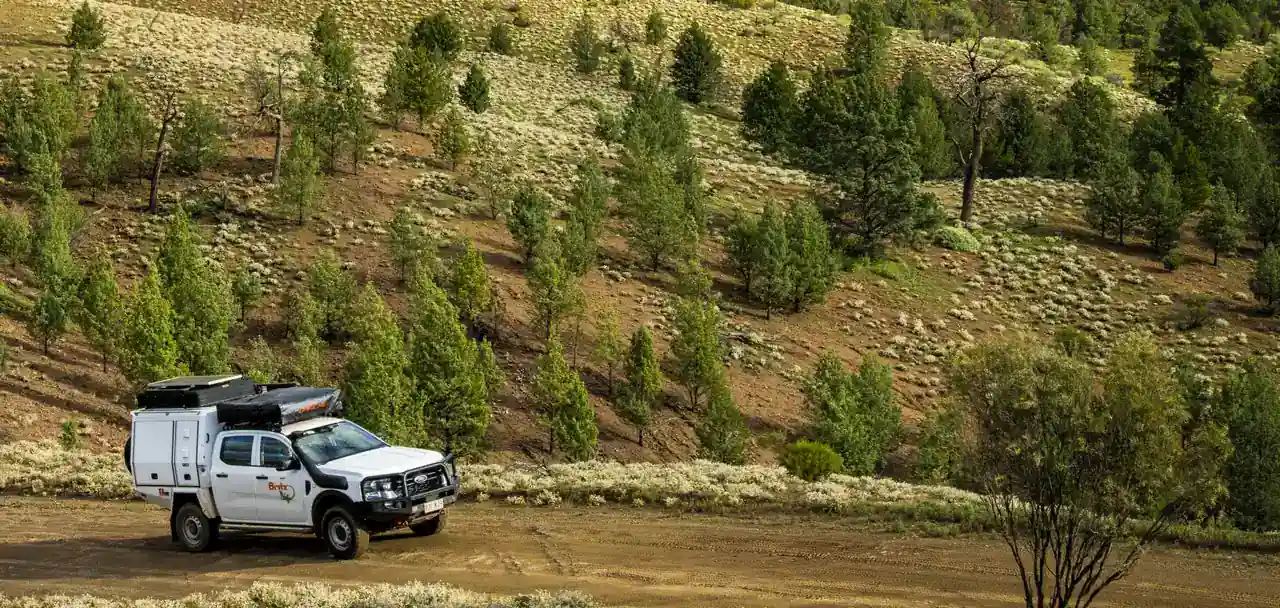
The flagship of Broome’s small rooftop-tent fleet: a Britz 4WD with rooftop tent, annexe, portable toilet and shower kit. Campervan Village’s Grip 4x4 and Desert Sands round out the three models bookable here; check your dates for live prices on each.

From about
€194/day
Voyager - 4 Berth, November dates, Broome pick-up
Routes

Three Trips Made for a Rooftop Tent

Broome shakedown

Cable Beach • Gantheaume Point • 2–3 days

Sunset over Cable Beach, red cliffs at Gantheaume Point and a campground close to town while you learn the tent. Park up and walk onto the sand: hire contracts bar beach driving.

Dampier Peninsula

Broome • Cape Leveque • 3–5 days

The road to Cape Leveque is now sealed, so the peninsula’s red pindan cliffs and white beaches are within easy reach. Book campgrounds and any community access ahead; capacity up there is small.

South down the coast

Broome • Eighty Mile Beach • 4–6 days

The sealed Great Northern Highway south, with station stays and the endless shell-strewn sweep of Eighty Mile Beach along the way. Long legs between fuel stops, so plan them.

Questions

Rooftop Tent Hire Broome FAQ

Which rooftop tent 4x4s can I actually hire in Broome?+
Three models today: the Grip 4x4 and Desert Sands from Campervan Village, and the Voyager - 4 Berth from Britz, each with the tent already mounted on the roof. It is a small fleet, so for dry-season dates book well ahead rather than hoping for a walk-up.
When is the best time for a rooftop tent trip from Broome?+
The dry season, roughly May to October: warm days, cool nights up in the tent and open roads. In the wet, unsealed tracks close, humidity climbs and many campgrounds wind down, so plan a sealed-road trip or a different season.
Can I drive the Gibb River Road in a rooftop tent 4x4?+
Usually not: the Gibb is excluded or restricted by most hire contracts, even for rooftop tent 4x4s, in line with the standard exclusions on big unsealed routes. If it matters to you, ask the operator for written permission before booking, and have a sealed-road plan B.
Can I take the rooftop tent camper to Cape Leveque and the Dampier Peninsula?+
Yes, the main road to Cape Leveque is now sealed, which puts the peninsula within reach of a normal hire contract, with the tent packed down for the drive and open in minutes at camp. Some side tracks to communities and beaches remain unsealed, and access or camping may need booking ahead, so check before you commit.
Can I drive the rooftop tent 4x4 on Cable Beach?+
Not in a hire vehicle: beach driving is barred under the rental agreements, even where locals take their own 4WDs onto the sand. Park up with the tent packed down, walk on and watch the sunset; the tent will still be there when you get back.
Am I hiring just the tent, or the whole rooftop tent camper?+
The whole vehicle, with the rooftop tent already fitted and the camping kit included. We do not rent stand-alone tents for your own car; if that is what you are searching for, this is not that.
Can I drive with the rooftop tent open?+
No. The tent travels folded and secured, per the vehicle manual and every rental agreement. Opening it is a two-minute job when you arrive, closing it is part of leaving.
How many people can sleep in the rooftop tent?+
Typically two in the tent itself, and up to four on setups with an annexe: the Voyager - 4 Berth sleeps four. Check the berth count on the exact vehicle card before you book.
Can I free camp with the rooftop tent in national parks near Broome?+
Generally no: Australian national parks require you to pitch up in designated campgrounds, and several states sell camping permits online per person and per night, so that is where the tent opens for the night. Around Broome you also have caravan parks and station stays; outside the parks, rules vary by council, so check locally rather than assuming.
Does the rooftop tent handle the heat and the weather up here?+
Rooftop tents are built for normal camping weather, and dry-season nights in the Kimberley are genuinely pleasant up in the tent. Coastal campgrounds around Cable Beach can be exposed to sea breezes, and in strong wind the sensible move is to fold the tent down and wait it out, exactly as you would with any tent.
How is a rooftop tent camper different from a campervan?+
You sleep in the tent above the vehicle instead of inside it, which buys you real 4WD access and car-like driving in town. The trade is space: no standing room and, on most models, no built-in bathroom, you live outdoors.

Ready to Explore the Kimberley?

Start your adventure today. Compare rooftop-tent 4x4s, find the best deal, and drive the roads less travelled.

Search Rooftop Tent Campers Now

Our best rooftop tent hire destinations

Sydney Opera House at dusk, Australia
4x4 & Rooftop Tent Hire
Australia
See more
Rooftop tent camper beside a New Zealand lake
Rooftop Tent Hire
New Zealand
See more
4WD camper on an Australian outback track
4WD Camper Hire
Australia 4WD
See more

Stay Updated

Get Australia travel tips, new deals, and route guides delivered to your inbox.

Your Rooftop Tent Trip Guide

Your Australia Rooftop Tent Road Trip

Sealed-road Australia is covered by our general campervan guide. This one is about doing it with your bed on the roof: driving with the tent folded down, picking a level spot at the end of the day, and the small habits that make rooftop camping easy to live with.

Driving with your bedroom on the roof

Rule one is not negotiable: the tent travels folded and latched, every time. Opening it is a job for camp, never for the road. Even folded, it is a solid box up top, so the vehicle carries a higher centre of gravity and catches more wind than the same 4x4 bare. None of that is dramatic on tar or gravel, it just rewards smooth, unhurried driving.

  • Wind and road trains: expect a nudge in strong crosswinds and when big trucks pass. When a road train approaches on gravel, pull over, let it go by, and give the dust a minute to settle before driving on.
  • Corrugations: find the speed where the vehicle stops rattling apart, and check the tent latches, cover straps and ladder mounts at every stop. Vibration works roof fittings loose before anything else.
  • Water crossings: know the depth before you enter. In the Top End that does not mean wading in: in croc country you never walk a crossing, you watch, ask locals, or wait.
  • Wildlife: kangaroos move at dawn and dusk. Plan your driving for full daylight, it is the single best accident-prevention rule in the outback, and it conveniently leaves you light to set up camp.
Before every leg: check the state road-condition reports. Tracks open and close with the weather, and your rental agreement expects you to know.

Making camp when the tent lives upstairs

This is where the rooftop tent earns its keep. Setup is a few minutes once you have done it twice: unlatch, fold out, climb the ladder. There is no hunting for a flat, rock-free tent pad, because your floor is the vehicle. What matters instead is where the wheels sit: a level parking spot beats a pretty one, since every degree of lean under the tyres becomes a slope under your mattress.

  • Park level first: choose the flattest spot in the campground before the one with the view. Sleeping off the ground already spares you the heat radiating up, the insects, the mud and the uneven earth, so the parking spot is the only comfort decision left.
  • National parks: Australian parks require designated campgrounds, most remote ones are book-ahead even when they look empty online, and several states sell camping permits per person per night.
  • Wind at camp: rooftop tents handle normal weather, rain included, but in genuinely strong wind the sensible move is to fold down and wait it out. Nose the vehicle into the wind rather than side-on.
  • Fires and leave no trace: seasonal fire bans are common and absolute, so if in doubt cook on the supplied stove. Carry your rubbish out and leave gates as you found them.
Small habit, big payoff: take everything you will want overnight up the ladder in one trip, torch, water, warm layer. Once you are in bed, downstairs is downstairs. And book the fixed points of your route in the dry season, the famous campgrounds fill exactly when the weather is best.

The permits your trip may need

Government permits and your rental company’s own approval are two separate layers. Clearing one does not clear the other, and the second one is the one that voids your cover if ignored. With a rooftop tent vehicle the operator’s list of barred routes does most of the deciding, so read it before you sketch the route.

  • K’gari (Fraser Island): Vehicle Access Permit from the Queensland Government, about A$58 per month, before you board the ferry, with the camping permit separate. But check your operator first: rooftop tent rentals commonly bar beach driving, which rules the island out regardless of the permit.
  • Mereenie Loop (Red Centre Way): transit pass for crossing Aboriginal land, a few dollars, valid 3 days, sold locally in Alice Springs, Kings Canyon and Hermannsburg.
  • Simpson Desert: Desert Parks Pass on the South Australian side, plus the seasonal closure from 1 December to 15 March. In practice it is academic here, the desert sits on the standard exclusion list for these vehicles.
  • Cape York: rental fleets bar it from December to May and require written approval in season. The Old Telegraph Track is banned outright, and iconic unsealed routes like the Oodnadatta need the operator’s written permission.
The golden rule: declare your route to the rental company at pick-up. Britz requires written permission for the big tracks, Apollo wants remote routes declared at the branch, and if you go off-plan on an off-road trail, the damage is on you.

Fuel, water and staying reachable

Outback trip planning is logistics, not navigation. The roads are obvious, the distances are not: stretches between roadhouses can run to hundreds of kilometres, and mobile coverage drops away fast once you leave the highways. The tent adds one small line to the daily routine, pack-down before you move, and it is a few minutes with the bedding folded away inside.

  • Fuel: refuel at every opportunity once you are off the coastal corridors, and know your vehicle’s realistic range on corrugations, it is worse than on tar, and the tent’s wind drag does not help at highway speed.
  • Water: carry more than you think you need. Heat plus a breakdown is the scenario every outback checklist is written for, and you sleep above your water supply, not next to a tap.
  • Coverage: download offline maps before you leave town, and tell someone your route and expected arrival for the remote legs.
  • Insurance: read the unsealed-road clauses before you choose an offer, some cover excludes tyre, windscreen or underbody damage on gravel even with the top package.
At pick-up: photograph the vehicle and the tent inside and out, have the staff run the open-and-close drill with you twice, and get the operator’s rules for your exact route in writing.

Getting vehicle and tent ready for the trip

A hired rooftop tent setup comes ready to sleep in, but what is in the back varies by operator, and the habits that keep the tent dry and the roof happy are yours to bring.

  • Roof-load sense: the tent is the roof load. Do not strap extra gear on top of or beside it, heavy kit goes low in the back, nothing loose in the cabin. Corrugations turn loose items into projectiles.
  • Tyre pressures: lowering pressures for sand and corrugations is standard practice, follow the operator’s guidance and re-inflate for the highway.
  • Condensation: warm sleepers in cool night air means damp canvas by morning. Crack the vents overnight, air the tent before folding, and open it to dry at the first sunny stop if you packed it wet.
  • Know the drill: practise the full open and close at the depot, ladder included, and confirm what comes with the vehicle, bedding, annexe, camp chairs, kitchen kit.
Book early: the rooftop tent fleet is a fraction of the size of the regular campervan one, around eight models nationwide. For May-to-September pick-ups in Darwin or Cairns, months ahead is normal, not cautious.

Popular Destinations for Campervan Hire

Explore the best places to rent a campervan, motorhome, or RV worldwide

North America
Europe
Rest of World
All Destinations
CampervanPlanet
Finding the best deals for you...
Comparing prices from top rental companies